If nurses can better describe and measure the threat of cognitive burden causing patient harm and ‘burn-out’, managers may finally have a way to understand and address it through better systems.
That’s the view of nurse researcher, Anu Surendran who has spent nearly a decade studying Cognitive Mental Workload (CMW).
Picture an emergency nurse triaging patients while keeping an eye on the waiting room, responding to alarms, answering questions and mentally prioritising who needs help first.
Across the country, a remote area nurse has a patient entering the clinic with chest pain and is suddenly managing a cardiac arrest, making split-second decisions that could mean life or death, co-opting an admin officer to do CPR while she phones the Royal Flying Doctor Service.
This is the world of high CMW in the nursing sphere: the mental effort involved in processing information, making decisions, prioritising, remembering, filtering distractions and carrying out tasks.
“My aim is to make this invisible problem visible and spread awareness,” says Anu, who is in the final stages of a PhD aimed at developing a nursing-specific tool to measure the hidden labour that is been inadvertently forgotten during healthcare system planning.
“It will give nurses a subjective tool that gives them language to describe what they experience during crucial patient care and to help managers and policymakers understand the invisible pressures they face.
“My goal is for policymakers to integrate the insights stemming from my research to strengthen healthcare infrastructure.”
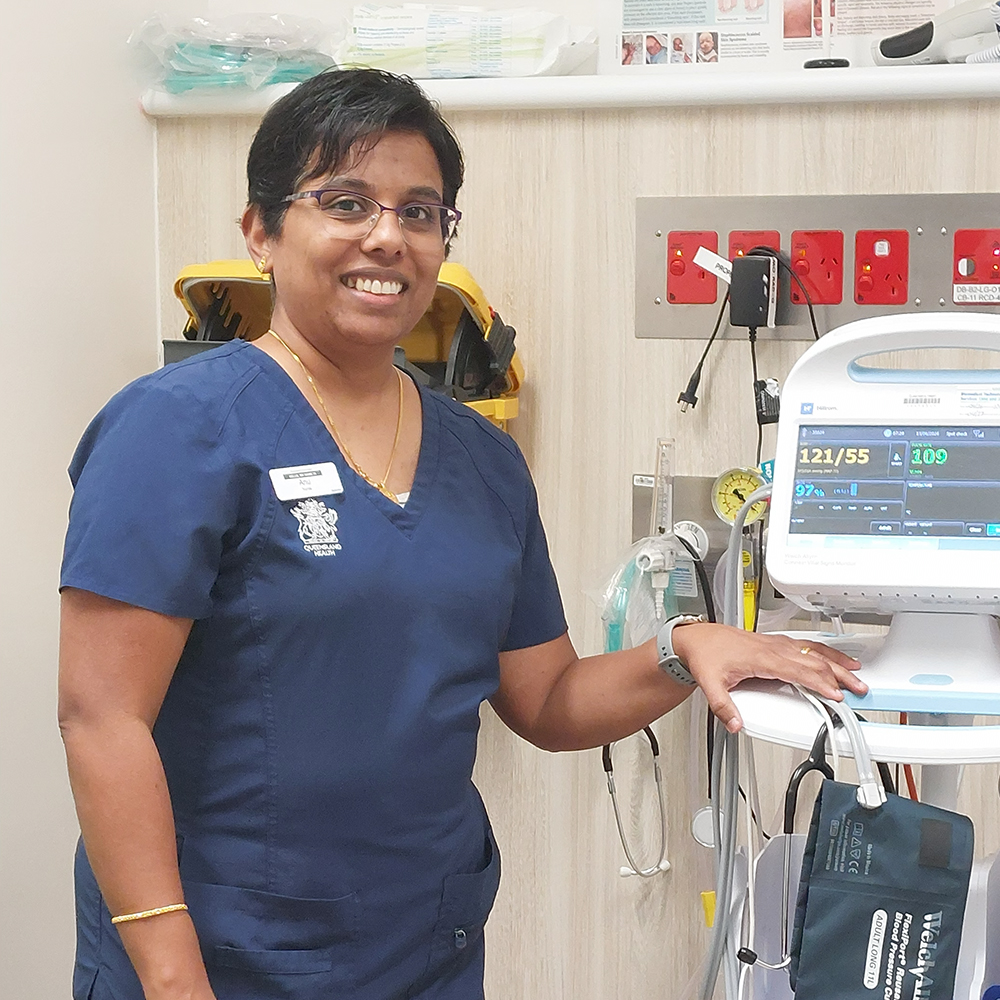
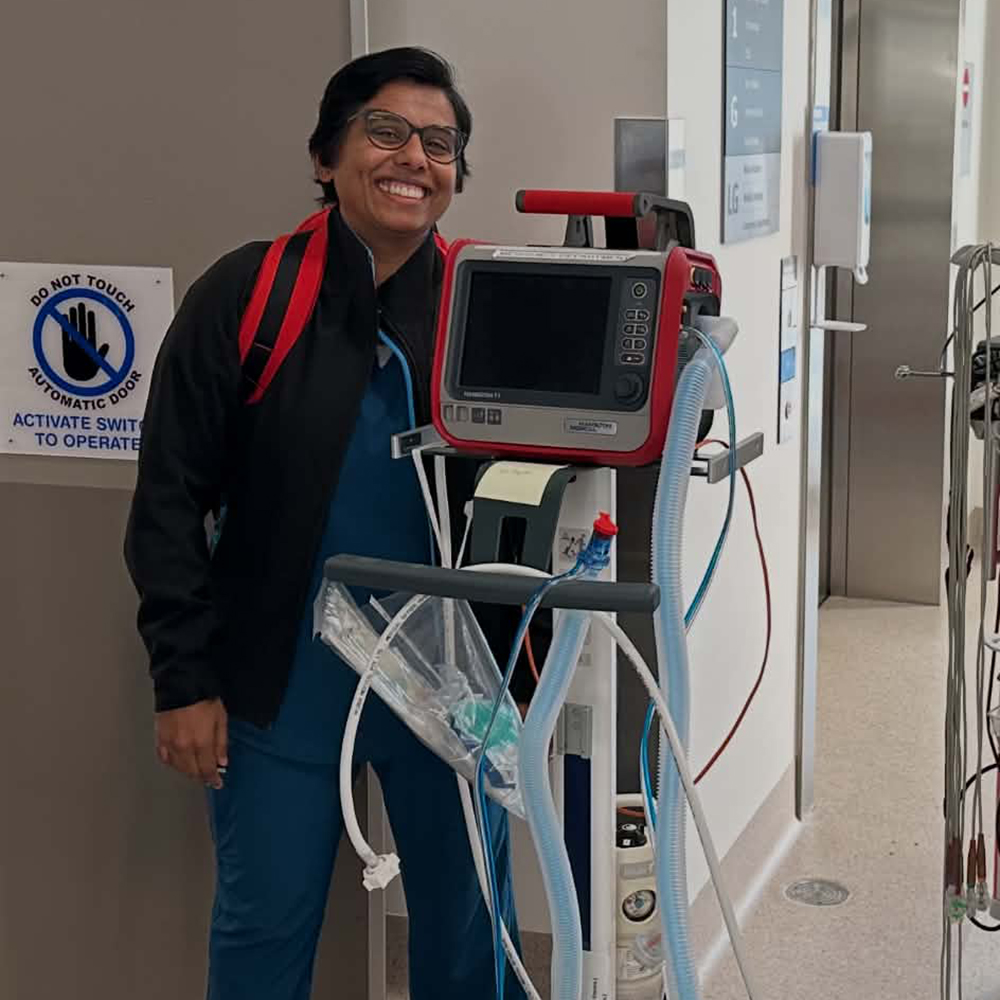
Anu, who works as a telehealth nurse practitioner for hubMed, and a casual nurse in a rural emergency department in Queensland, says her focus is driven partly by seeing fellow nurses leave the profession, and by her own burnout during COVID-19.
“A certain amount of CMW is essential,” she says. “But problems arise when demands exceed the brain’s available mental resources. That is when performance decline, burnout and patient harm begin to suffer.”
She believes understanding nurses’ CMW, measur- ing, spreading awareness and optimising it could shift focus away from individual blame, towards designing safer systems to reduce errors.
To her and a team of expert researchers from University of Southern Queensland, addressing CMW overload to improve care and support nurses’ wellbeing isn’t about individual coping or simply working harder. Rather it requires broader, systemic solutions.
“We need to start asking different questions: from asking, ‘Who made that mistake?’ to ‘What in the system created conditions where mistakes became more likely?’ and ‘What can be done?’”
“To err, after all, is human.”
Healthcare often talks about workload in terms of patient numbers or staffing ratios. But Anu says those measures can miss the invisible load inside a clinician’s head.
“One critically ill patient in a tiny remote facility may create a much greater CMW to a remote nurse than several routine patients in a larger urban hospital with multiple staff and resources.”
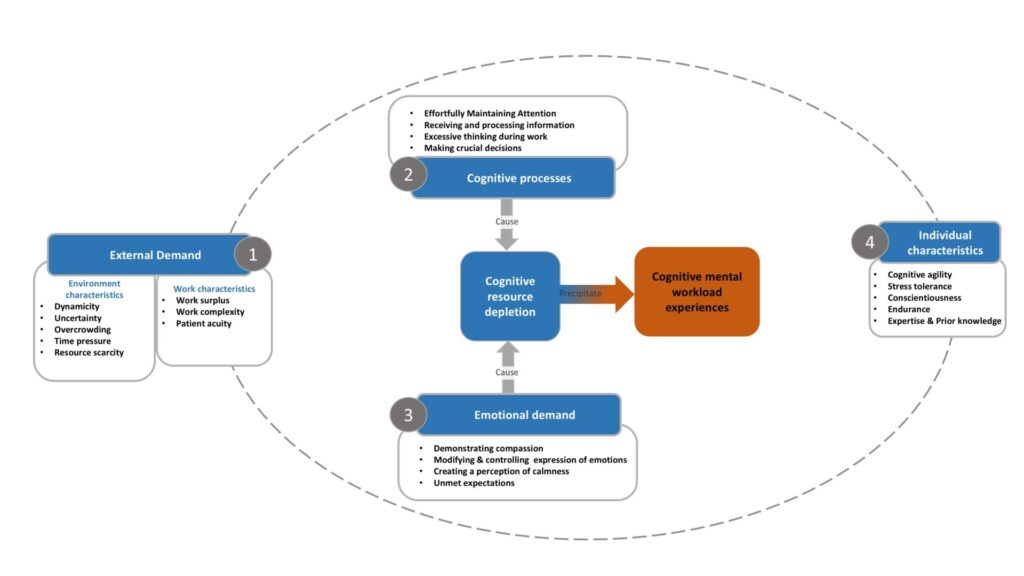
Many industries have long recognised the importance of reducing CMW for best performance and have developed systems to optimise it. Although the consequence of CMW of nurses and patients are severe, the health care sector is still to catch up.
For example, one system, NASA TLX, is popularly used among pilots, space explorers and nuclear operators to measure their CMW and they have multiple methods to reduce their cognitive load.
Nearing the end of her own research and design phase, Anu is seeking help from 100 nurses to complete a 10–15 minute survey, adding to the 130-plus responses she has gathered so far.
She is very much aware of the irony, saying, “It’s a lot to ask someone busy to add something to their list of things to do.”
In the meantime, Anu lists some simple tools and strategies that make systems simple, streamlined and supportive, removing unnecessary mental effort, allowing clinicians to focus on their patients.
- Clear guidelines and checklists are invaluable during emergencies because they reduce the need to remember everything under pressure.
- Quick-reference charts and bedside cognitive aids help offload mental effort.
- Reliable digital decision-support tools, especially those that work offline, can be particularly useful in remote settings where internet access may be patchy.
- Good documentation and effective hand-overs matter too. Write it down if possible.
Anu also points out that sharing the load through telehealth support, contacting retrieval services such as RFDS early and even calling a colleague for a chat can help.
And her final piece of advice: pause briefly during a busy shift, clarify priorities, plan ahead and share responsibilities whenever possible.
A reminder to the rural and remote health workforce and their families: the CRANAplus Bush Support Line offers free, confidential counselling 24 hours a day, 365 days a year. Call 1800 805 391 at any time to speak with a psychologist experienced in the unique challenges of rural and remote life and work.