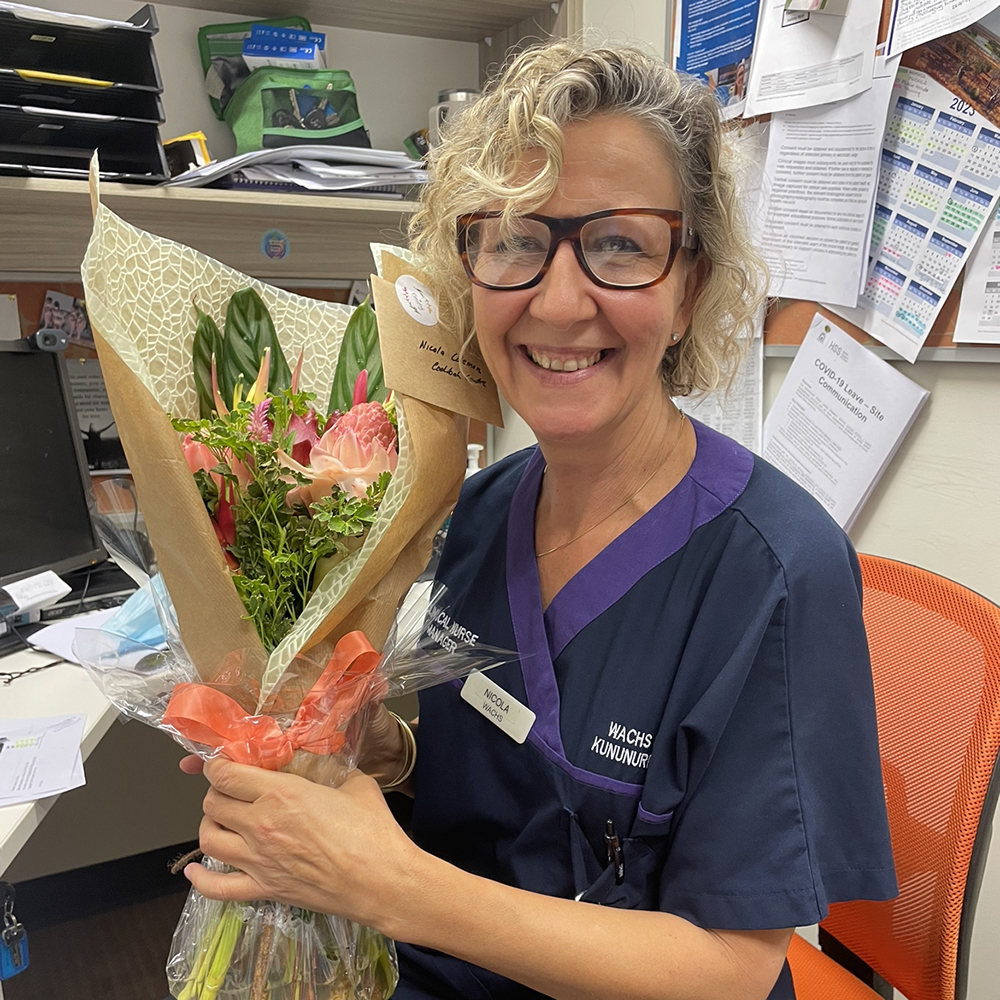
With stories about how she managed lockdown on Home Island and advocated for a second air-conditioner in a sweltering laundry, Nicola Coleman illustrates the complexities of remote health management. In this tough but rewarding field, there’s clearly a need for leadership and WHS training, and the scholarships like CARPA’s that make it more accessible.
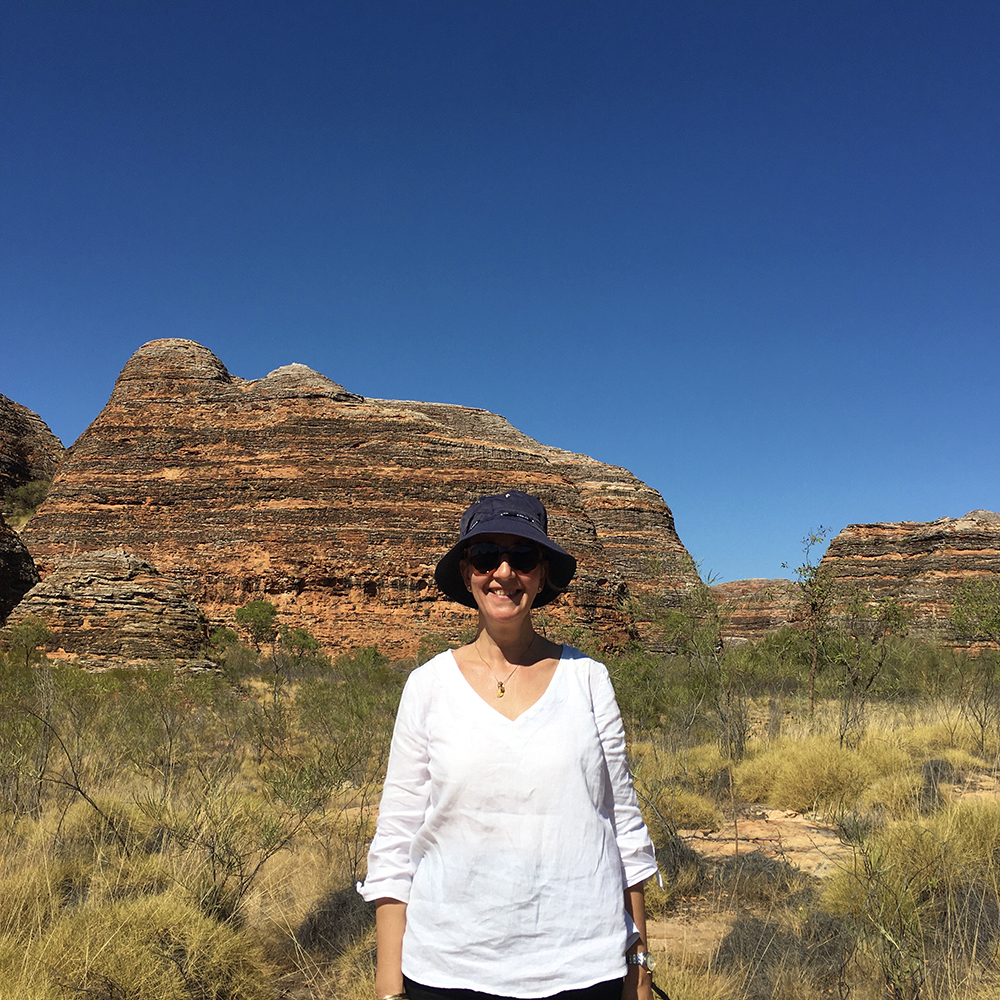
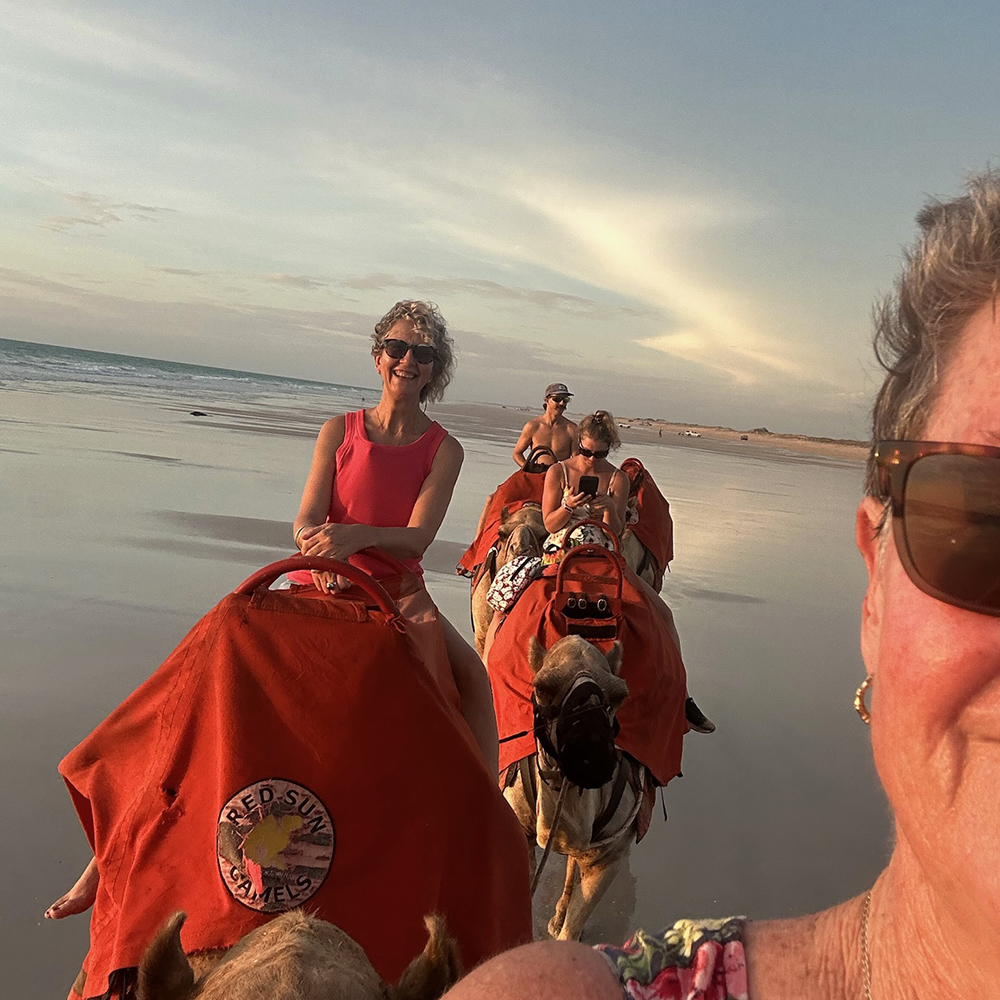
Nicola grew up in the Pacific Islands and trained as a nurse in London’s hospitals before relocating to Australia to work in some of nursing’s most remote postings – from Groote Eylandt to the Cocos (Keeling) Islands.
When I connect with her over the phone, she’s preparing for her next move, packing boxes in her Kalbarri home during an unusually rainy day.
Someone so widely travelled and with 40 years of nursing experience might be expected to know it all. But Nicola recognises that learning is a lifelong process.
That’s why she applied for the CARPA Remote Health Leadership, Management & WHS Scholarship, which offers up to $2,000 to help successful applicants complete a course.
As a successful applicant, Nicola undertook a Diploma in Leadership and Management through the Australian Institute of Management, which involved online learning and face-to-face intensives in Perth.
“It’s given me more confidence to do what I do in management; it’s given me the theory background,” she says.
“Nursing is theoretical, which you learn in your head. But how you deliver it is through your personality, through your heart.”
The complexities of remote leadership go beyond clinical skills, she says. Managers must contend with levels of complexity that their metropolitan counterparts rarely face.
Facing this complexity, at times alone, can make a manager feel isolated.
“It can be very lonely as a manager, because you’re sort of the meat in the sandwich,” she says.
“You’re trying to follow direction and support budgets from above while your team at the coalface just want to get on and do their job [and access what they need to do the job well].”
A story from a previous posting illustrates how leadership in remote health often means solving problems from the middle.
“The outside laundry was in a very old building that was early 19th century,” she says, “with single brick walls, glass louvres, one massive industrial size tumble-dryer, and just one wall-mounted air-conditioner blowing on it.
“When the temperature got to 44 degrees outside, even with that air conditioner on, the temperature in there was still 42 degrees minimum.
“When I came in, I asked: what are the yucky bits about working here? The bottom line is it’s not safe for you to work in here and you’re working in isolation on your own. If you were to faint or pass out or were to be bitten by a snake, nobody’s checking on you regularly. I need to put it in language like this to make a change.
“I went about it from a work health and safety perspective, but it also then helped my team know that I was listening to them and that
I was going to do something about it.”
By raising it in risk meetings, making a main-tenance request, and a preparing a safety risk report with reference to a risk matrix, Nicola was able to get a second air-conditioner over the line.
“[By adding that there are] middle aged menopausal women working in there, [the additional air-con unit] got approved straight away!” she laughs.
“That demonstrated to my team that I’m here as your manager. I need everybody to feel safe so that they come to work, do the best work they can, and go home looking forward to coming back.”
Nicola shares another story that illustrates the complexities of remote health management.
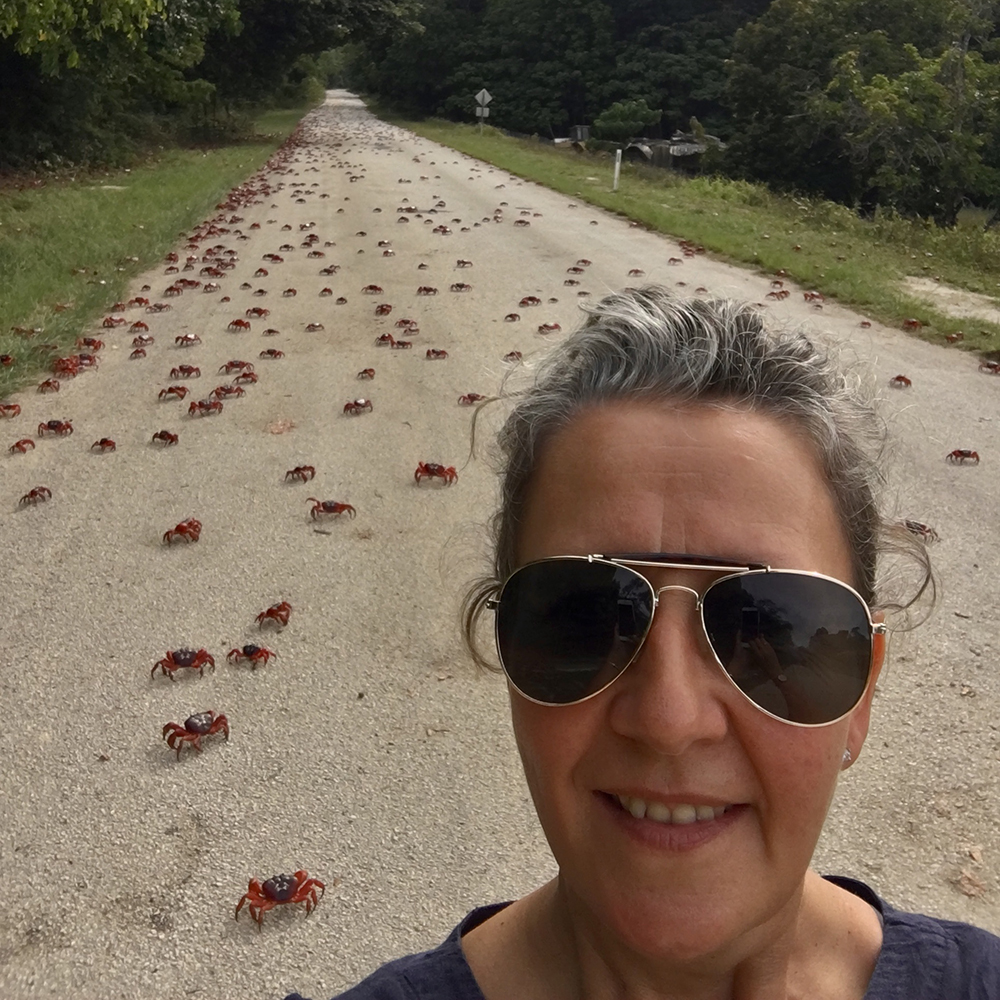
Acting as nurse manager on the Cocos (Keeling) Islands with the Indian Ocean Health Service when COVID-19 hit in early 2020, she played a key role in helping lead Home Island’s 450 Malay Muslim residents into what Nicola recalls as the first community lockdown in Australia.
The logistics were staggering. To prepare, she had to imagine the worst-case scenarios and ask herself: how to convert the cyclone shelter into a makeshift hospital? How to respect the cultural practice of quick burial with limited human resourcing and soft sand and crabs to contend with? How to make do with a small morgue?
However, the biggest challenge wasn’t logistical, but social. How do you implement a lockdown in a close-knit Muslim community where the mosque sits at the centre of daily life and people gather for prayer five times a day?
Community trust has to be earned. Fortunately, Nicola had gained that already. When a woman had presented with a severe allergic reaction during Ramadan and refused antihistamines on religious grounds, Nicola suggested they say a prayer together asking for forgiveness before she took the tablet. Her cultural respect and handling of the situation earned her respect in turn and prevented an evacuation.
By the time Nicola stood up to announce the lock- down, the community was ready to trust her.
It is exactly the kind of situation, Nicola reflects, where formal management training proves its worth. It gives you the frameworks to think clearly under pressure, communicate up the chain, and bring people with you.
The CARPA Remote Health Leadership, Management & WHS Scholarship is open to remote health practitioners working in MMM 6–7 locations and is accepting applications until 30 September 2026.
It offers up to $2000 to assist with the cost of approved health leadership, management or WHS training/course fees.