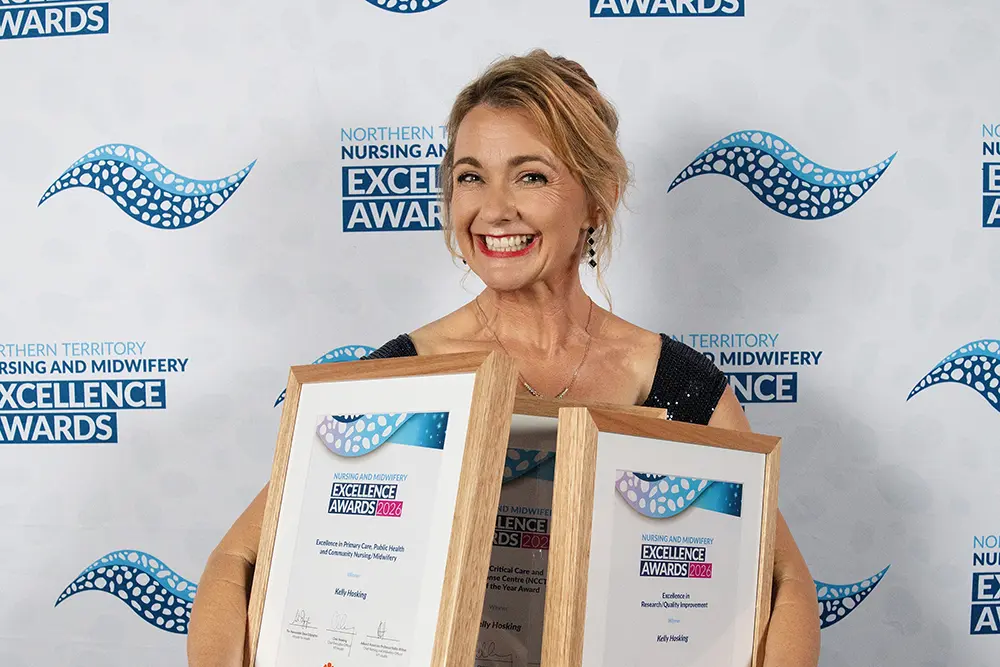
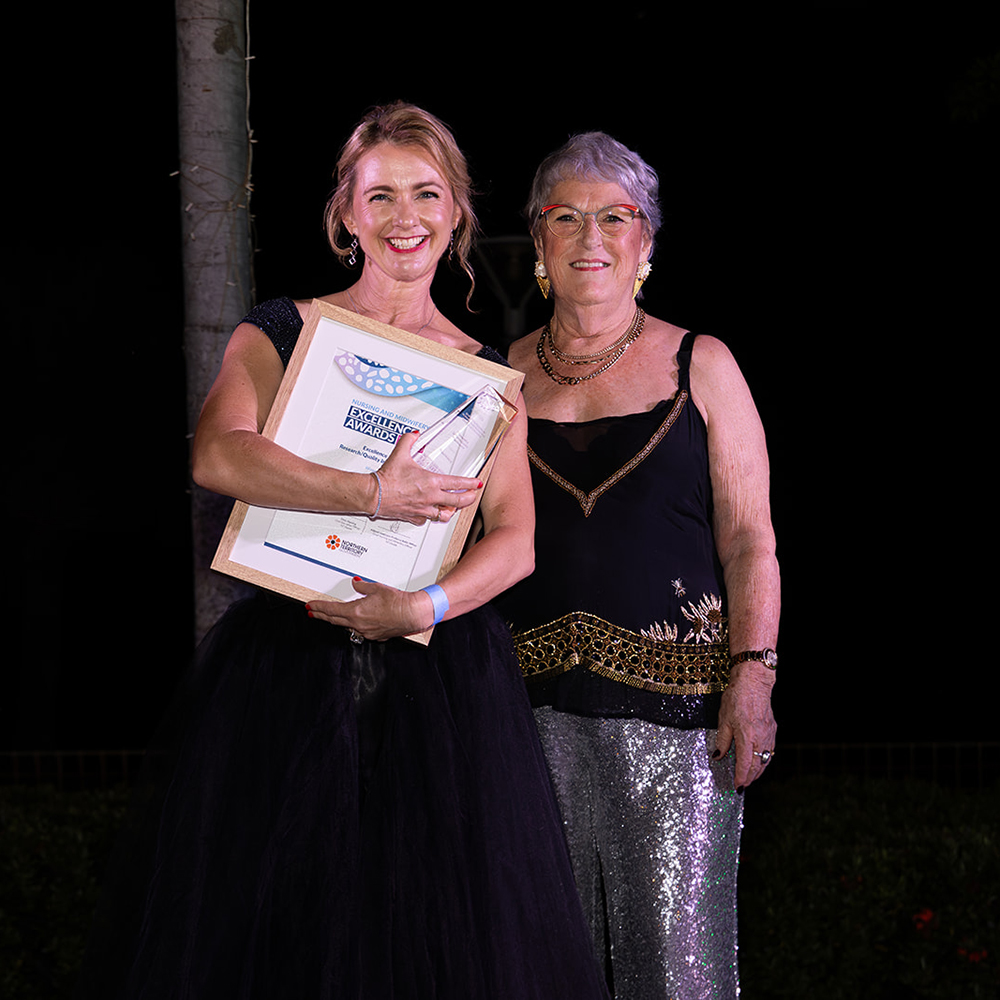
Three framed awards line Kelly Hosking’s office windowsill – a quiet reminder of an extraordinary evening at the 2026 NT Nursing and Midwifery Excellence Awards. While they reflect her success, Kelly spoke about them with humility, focusing instead on
the impact behind them.
“It was an honour and I really appreciated the acknowledgement, especially for the public health and research side of things,” Kelly says.
“But I think as a nurse, and as health professionals, we’re not doing our work for personal recognition, we do it to improve health outcomes … it was incredibly humbling.”
The three awards – the Excellence in Research/Quality Improvement Award, proudly sponsored by CRANAplus, the Excellence in Primary Care, Public Health and Community Nursing/Midwifery Award, and the NCCTRC Nurse of the Year Award – recognise an extraordinary career. But they also reflect a lifelong commitment to partnership, culturally safe practice and improving health outcomes for communities.
Kelly is the Director of Sexual Health and Blood-Borne Viruses Strategy and Policy Unit at NT Health and Co-Deputy Director of Viral Hepatitis Programs at Menzies School of Health Research, working at the intersection of policy, research, education and clinical practice.
“I have a lot of different aspects to my role. I kind of get FOMOW – fear of missing out on work. I just collect all of the things that I love, and do them all!”
While the responsibilities are diverse, they are united by a common purpose to improve health outcomes through genuine partnership with communities.
“I really enjoy bridging the gap between policy, strategy, operations, research and practice.
“The goal is to ensure decisions are evidence-informed, equity-focused and genuinely driven by community priorities,” she says.
Her influence also extends beyond the NT. Kelly chairs the National Blood Borne Virus and Sexually Transmissible Infections Standing Committee, which provides expert advice to the Australian Health Protection Committee.
“I just love being part of the national public health discussions, absorbing and learning from the expertise from all the massive brains around the country, and also having a voice there, ensuring that the NT priorities and perspectives are represented,” she says.
For Kelly, having a seat at one of Australia’s highest public health tables is also an opportunity to demonstrate the breadth of nursing.
“Nursing is such a diverse profession. I am very proud to be a nurse. I think we should recognise the breadth of opportunity available to us, and we shouldn’t just pigeonhole ourselves. Nurses bring unique perspectives to leadership, policy and public health and absolutely belong at decision-making tables.”
After graduating in 1996, Kelly worked in oncology before discovering a passion for prevention, public health and remote practice. Experiences in Laos, post-tsunami Indonesia, Fiji and the Torres Strait shaped her philosophy of working alongside communities rather than leading them.
“Whether we’re working as nurses internationally or in a remote community, we are not the experts. We are there as guests. We need to listen, build relationships, trust and support the communities to achieve their priorities. They have the answers, knowledge and strength that drive sustainable change.”
That lesson continues to guide her work today, particularly in Aboriginal and Torres Strait Islander health. Kelly believes meaningful improvements can only happen through genuine partnerships and co-design with communities.
Those principles underpin the Hep B PAST program, where Kelly has played a leading role in improving Hep B care across the NT. Through her PhD and ongoing work, Kelly helped identify people living with Hep B, connect them to care and build the capability of the Aboriginal and Torres Strait Islander health workforce.
Today, the Northern Territory is the only place in Australia meeting and exceeding national Hep B elimination targets.
For Kelly, however, the statistics tell only part of the story.
One of the moments that stands out most came after an Aboriginal Health Practitioner completed one of the program’s education courses. Returning to their community, they were able to identify someone who had been difficult to reach for years, organise testing, explain the diagnosis in the person’s preferred language and connect them to care. They also traced family members who required follow-up, demonstrating the powerful impact that culturally safe education and local leadership can have on health outcomes.
Building the confidence and capability of the Aboriginal and Torres Strait Islander health workforce has become one of Kelly’s greatest passions. Her education model emphasises shared learning, respect and culturally safe environments, recognising people learn best when they feel safe, connected and supported.
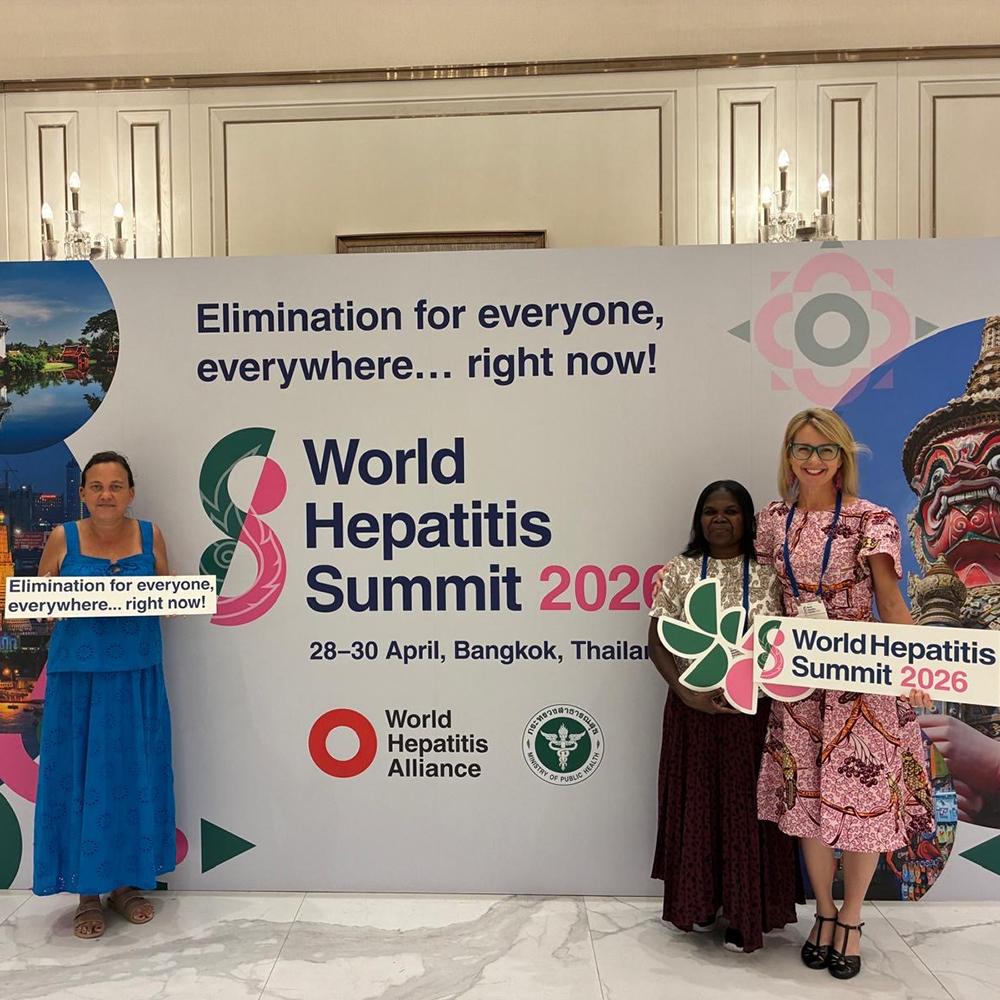
The Hep B PAST model has since been recognised internationally, with Kelly presenting alongside Aboriginal Health Practitioners in Portugal and Bangkok, and the program informing similar work overseas.
Despite these achievements, Kelly remains quick to credit the people around her.
“We never do anything by ourselves in health, do we? All of our successes are a group effort.”
That collaborative mindset has helped transform research into real-world change, something Kelly says has always been essential to her work.
“I could not have done research that’s not implemented and where you can’t actually see change,” she says.
“We can achieve things. Meaningful change takes time, but we have to start, and we have to do that alongside Aboriginal and Torres Strait Islander colleagues and communities.
“Not everything works, and we have to reflect, learn and adapt along the way, but there are ways forward and solutions, and we just need to find approaches that improve outcomes, and when we find them, we should celebrate and build on those successes.”