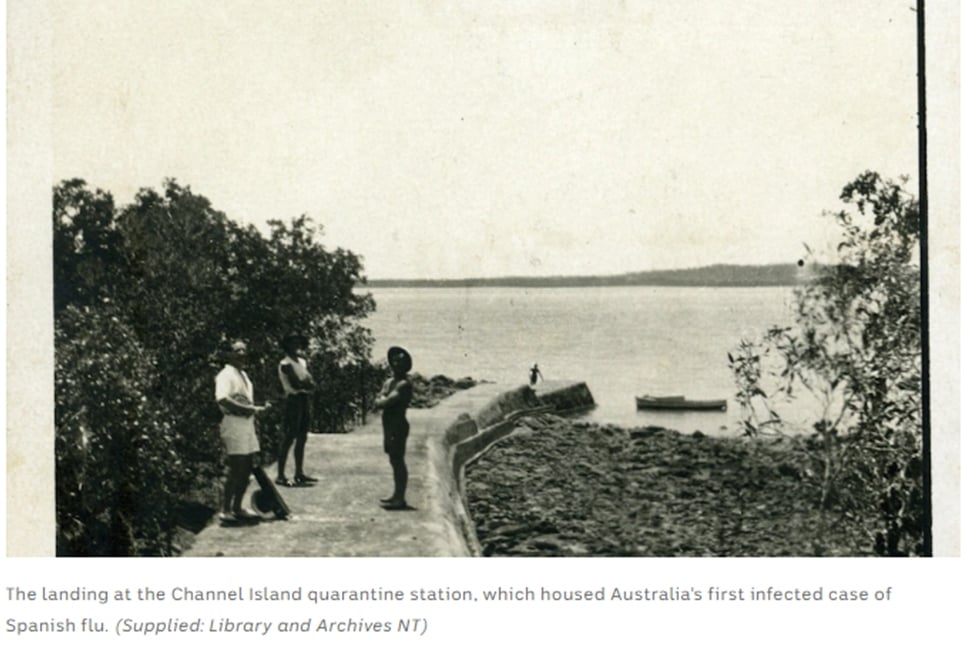
Did you know, the first case of the Spanish flu pandemic of 1918 arrived in Australia in Darwin? Due to quarantine policies, the case was isolated at Channel Island and the flu never spread to the community. It was not until 1919 when a ship from interstate brought the virus to NT soils that Spanish flu spread across the Territory (interstate vessels not required to quarantine).¹
Sound familiar?
In modern history, we no longer saw a need for quarantine. This was thanks to public health actions such as vaccinations, and established and enforced customs and border policies and processes. COVID-19 re-introduced quarantine practices to Australia and the world, but it was problematic to see where this service belonged.
In some parts of Australia, it was managed by police; in others, by the health department. Quarantine appeared in hotels, special care hostels and stand-alone facilities, each offering varying levels of health support for residents. It was confusing for staff, caused anxiety and fear for residents and in some cases led to large outbreaks of COVID-19 into the wider community.²
As we are aware it is not a matter of if, but a matter of when the next pandemic occurs and we owe it to health staff and communities to be better prepared next time. This means preplanning for a coherent quarantine service response.
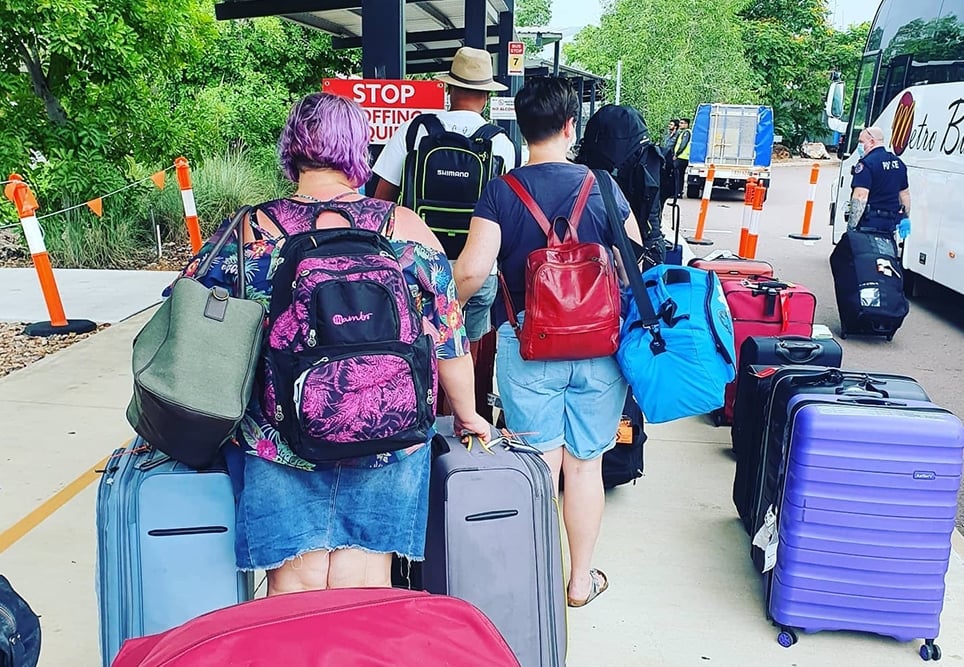
Howard Springs Quarantine Facility
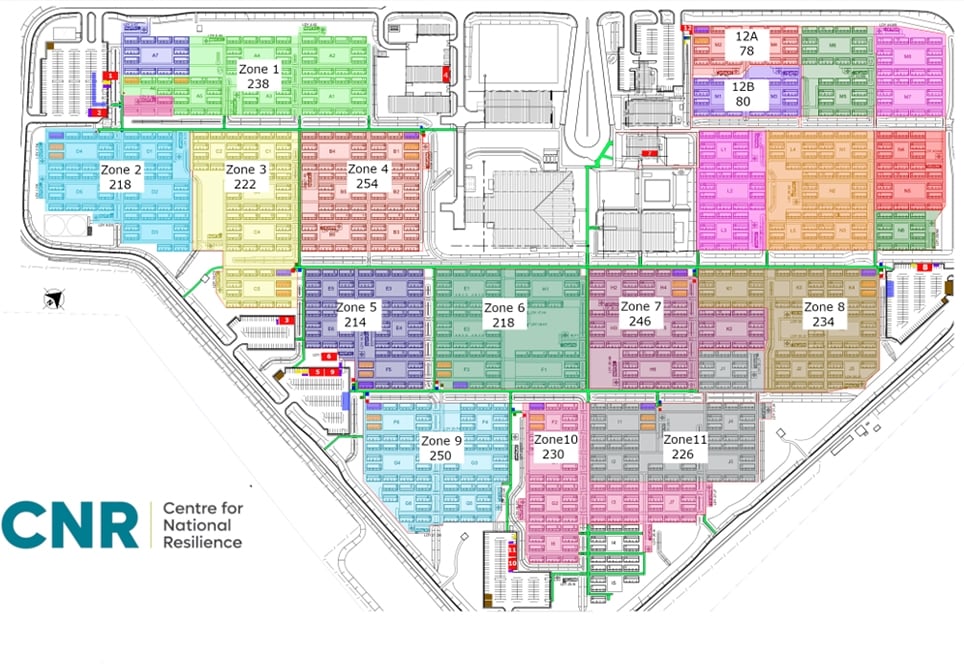
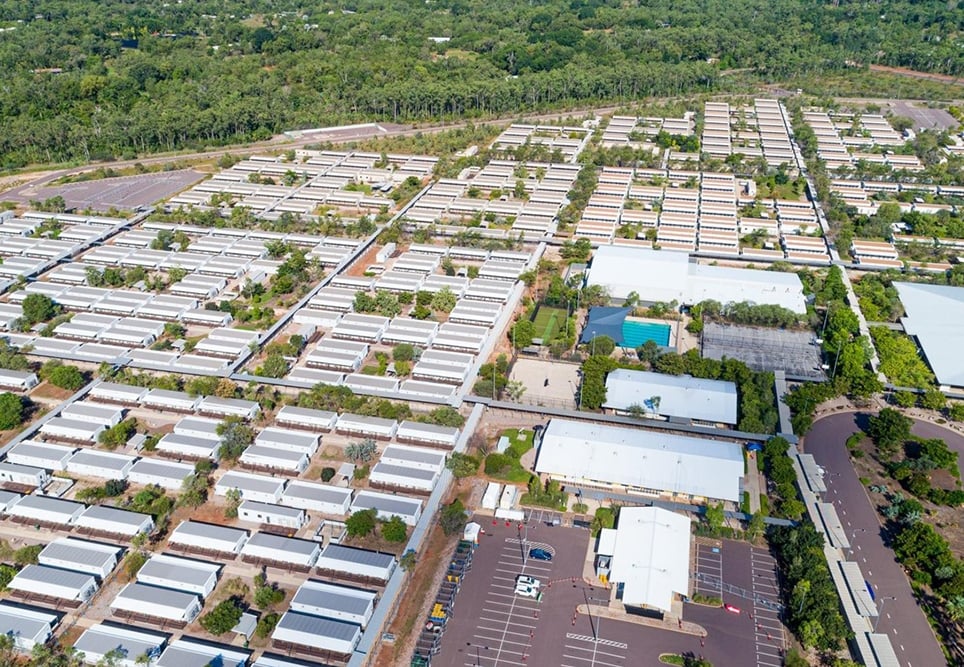
Located approximately 30km out of Darwin, The Centre for National Resilience (CNR), Howard Springs Quarantine Facility was originally Ichthys LNG Project’s Manigurr-ma Village (workers camp) able to hold around 3,500 workers.³
On completion of the Ichthys LNG project the site was handed over to the NT Government in early 2019 and was vacant at the time the COVID-19 pandemic arrived.
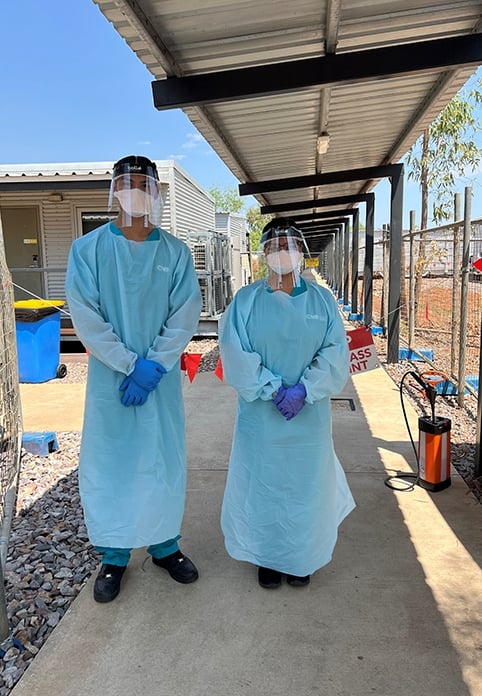
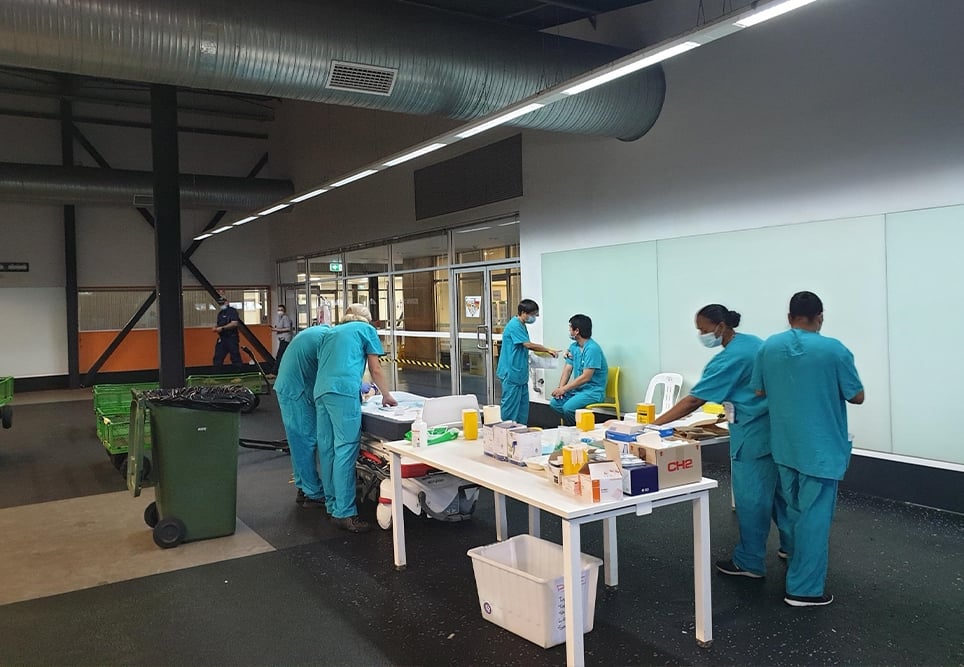
Reflecting the diverse and innovative pandemic responses of health staff, the site consisted of a large health and nursing leadership team and provided residents access to basic primary health services.
Senior nursing staff received CRANAplus ALS, REC and MEC training to assist with onsite resident emergencies and a primary health-based transition to practice nursing course was established with the Australian Primary Health Care Nurses Association.
New health team models were introduced, with hybrid approaches of non-health/administration staff trained to work alongside nursing staff and the site saw the introduction of the Assistant in Nursing role, bringing student nurses officially into the NT Health workforce for the first time.
The site quarantined over 33,000 residents from humanitarian flights such as Afghan refugees, repatriated Australians from across the world, international travellers inclusive of CDU students and fruit pickers, and domestic residents.
At its peak, the site hosted 2,600 residents onsite with over 500 staff.
Despite having staff working in a hot tropical region with risk of heat stroke, resident snakes, and many other challenges in this unique health workforce environment, the site upon its closure in June 2022 had no record of COVID-19 transmission from residents to staff.
Applying the lessons learned
At Charles Darwin University, Menzies School of Medicine, a project team set out to determine what was required for a coherent and supportive quarantine service with a focus on the Centre For National Resilience (CNR), Howard Springs Quarantine Facility.
This project sought to learn from CNR’s quarantine service delivery and resident care that contributed to its success and present these as an open-access resource for use in future pandemics; a quarantine 101 guide. Ultimately, it’s the resource we never want to use but know we need to have.
The outcomes of the project have now been collated to inform a set of six guidelines presented for use as an open-access web resource across:
1. Processes, infrastructure and communication
2. Infection prevention and control
3. Health Workforce
4. Resident care
5. Health, wellbeing and clinical care
6. NT COVID-19 response
The guidelines are testament to the diligence of the site’s workforce to establish coherent policy and processes.
They present a resource that can be used locally and globally, not just for future pandemics but for any health disaster or emergency where isolation or quarantine is required.
References
1. Libraries and archives NT. Spanish Flu in the Territory, 1918-1919. (n.d.) Territory Stories. https://lant.nt.gov.au/explore-nt-history/spanish-flu-territory
2. Australian Government, D. o. H. a. A. C. (2020). National Review of Hotel Quarantine. Australia: Department of Health and Aged Care. https://www.health.gov.au/resources/publications/national-review-of-hotel-quarantine?language=en
3. INPEX Media Releases. (2013, Sept 18). Ichthys LNG Project’s Manigurr-ma Village open for business. https://www.inpex.com. au/news-and-updates/media-centre/media-releases/ichthys-lng-project-s-manigurr-ma-village-open-for-business/