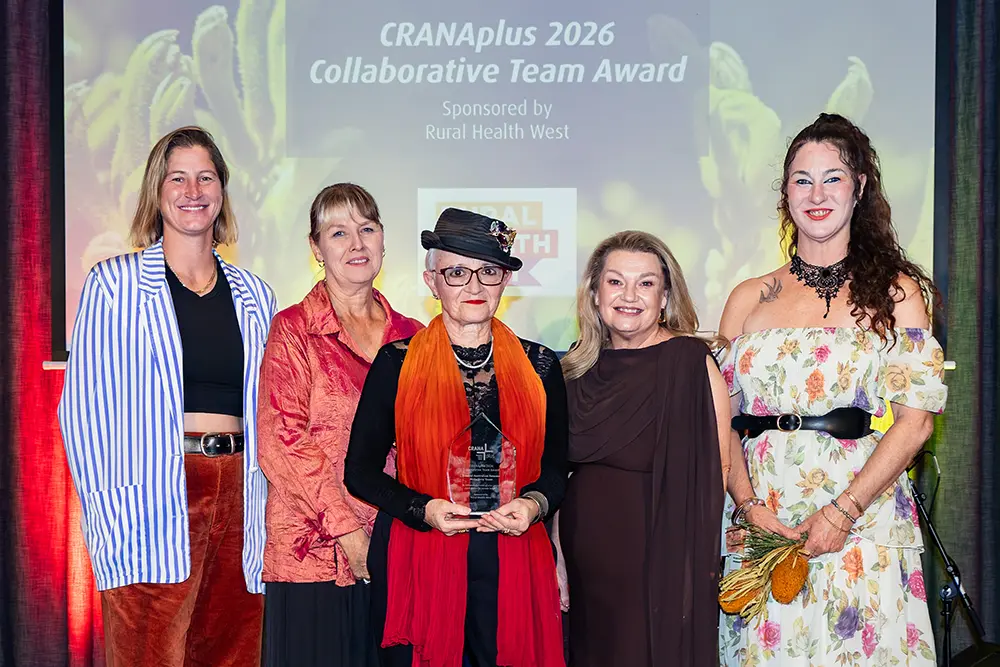
The Central Australian Remote Midwifery Team travels vast distances to ensure women can access continuity of midwifery care in community. It’s work that demands flexibility, collaboration and deep community connection, which has been recognised with the Collaborative Team Award at the 2026 Australian Remote Health Awards.
This team of six midwives provide care to 18 remote communities across Central Australia, covering 600,000 km2 and 40 per cent of the Northern Territory.
Together, Katrina Molloy, Jane Christmas, Marilla (Milly) Grigg, Katherine Goulliart and Sally Halton, led by manager Glenda Gleeson, deliver maternity, reproductive and sexual health care to women within their remote communities, bringing women-led midwifery continuity.
Milly says, “The Remote Midwifery Team has been running for over 20 years, ensuring remote women during their health lifespan have access to culturally safe, considered and consulted care, working with Aboriginal care providers and stakeholders providing excellence in clinical care, community-led women’s health and autonomy.”
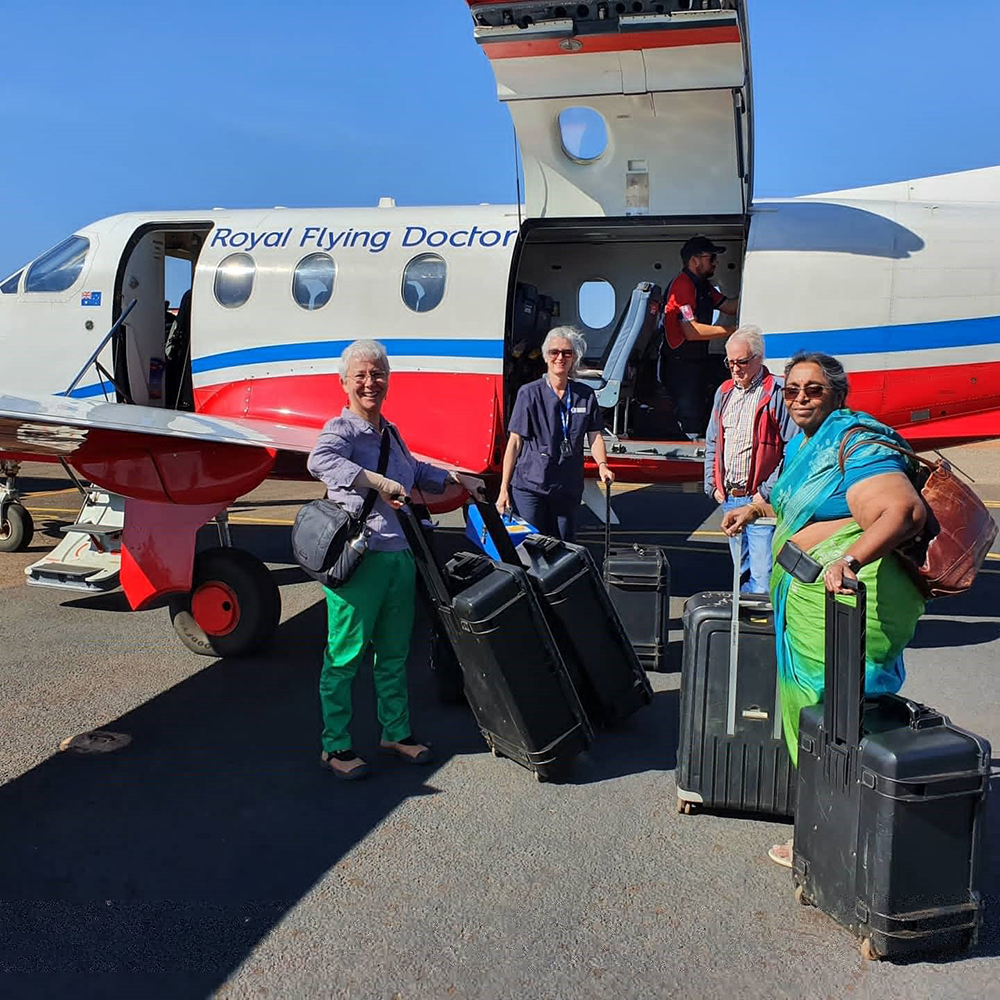
Some midwives are based within remote communities, while others travel out to provide care. Reaching women and babies can mean hours behind the wheel or, for the most distant communities, travelling by charter flight.
Glenda says, “Accommodation for health staff in remote communities is limited and at times weather events prevent road and air travel. Midwives are continually planning and adjusting their visits to communities depending on all the factors that are necessary to come together.”
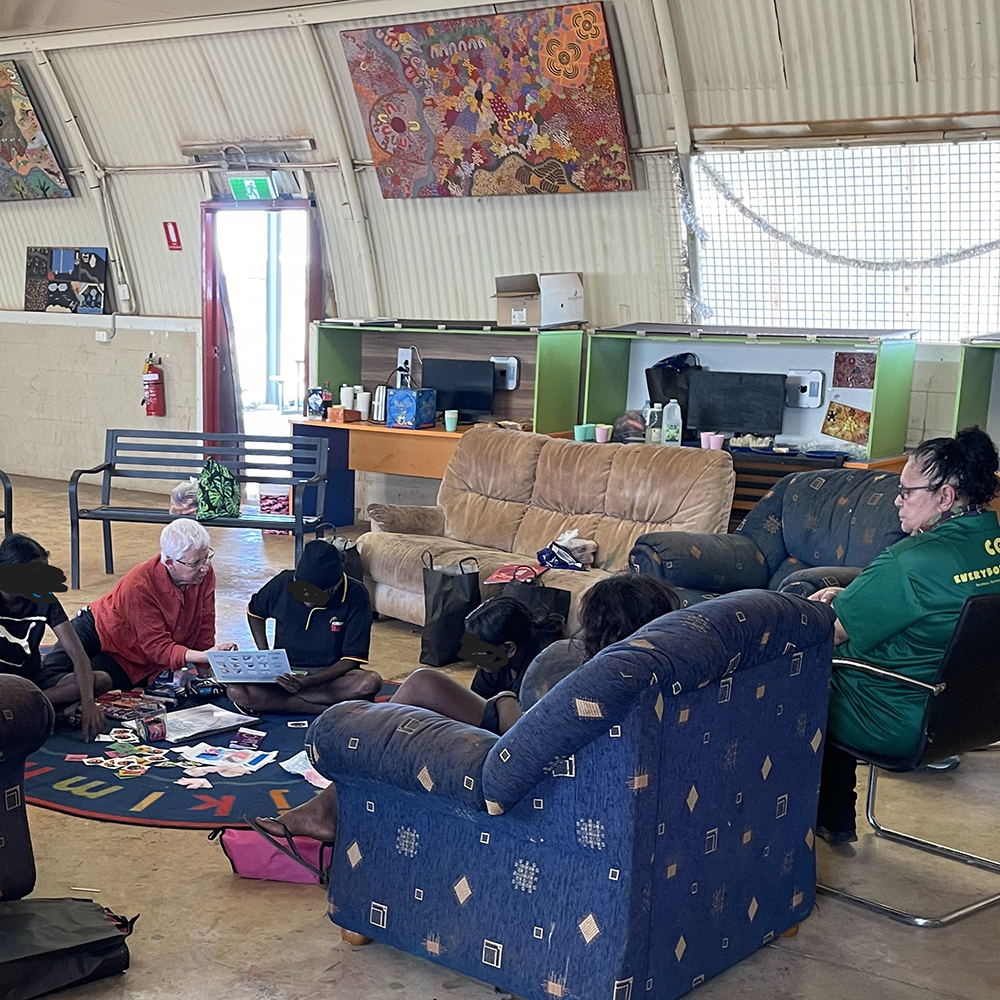
Despite the logistical challenges, providing care in community makes a significant difference for women and their families.
Jane explains, “It reduces their travel time to town. We can do a lot of their antenatal and postnatal care out in community, so it helps build safe relationships and get to know the families and the communities, and also the clinic staff that we work with.”
Katherine says those relationships are central to the team’s success.
“We need to spend lots of time onsite to create those relationships, and once it works, it’s absolutely fantastic.”
When face-to-face care isn’t possible, technology helps bridge the distance.
Glenda says, “The other main bonus in the care of women with the midwives is the use of the mobile phone.
“The women get the midwives telephone number, and the midwives have the woman’s telephone number, and they quite often are calling each other, or they are on text message, just updating on management care plan. What is the plan? When do the women need to have blood tests? When do the women need to be visiting Alice Springs to see a consultant or have a scan or something like that? Really, the mobile phone has transformed life in Central Australia.”
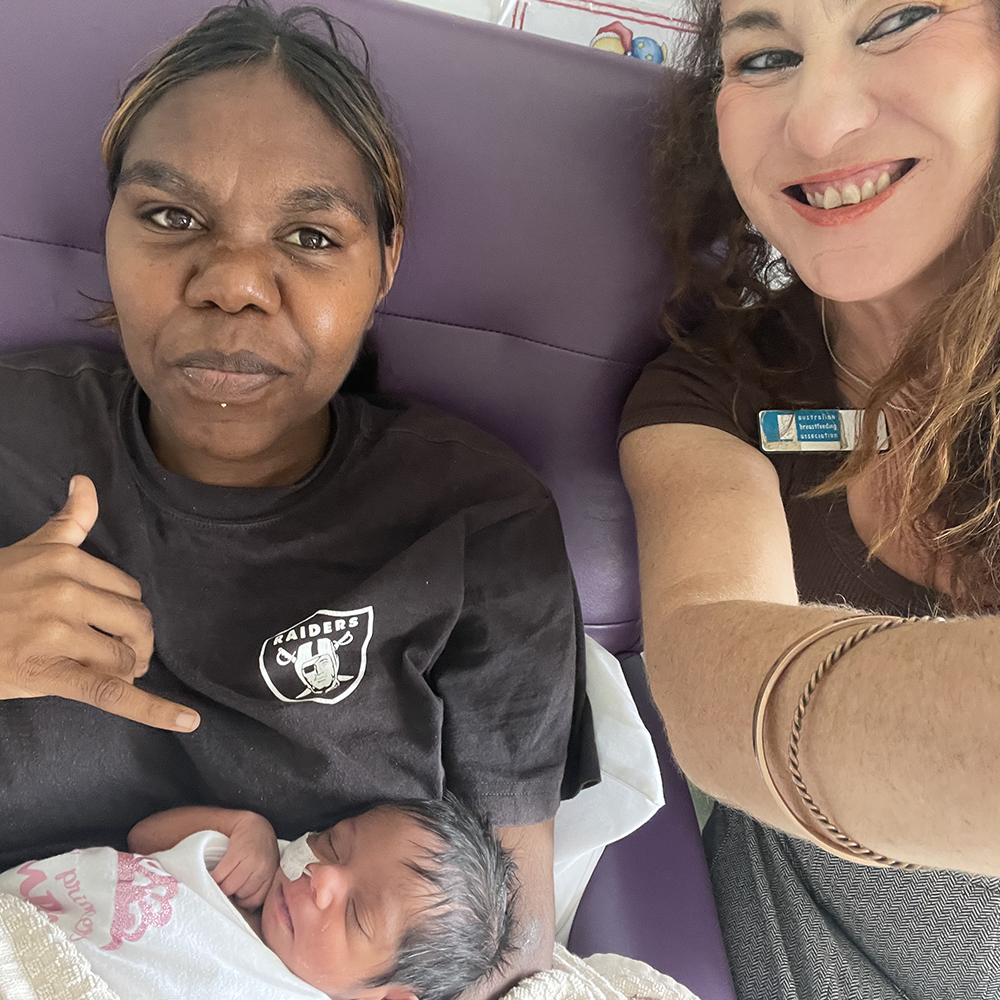
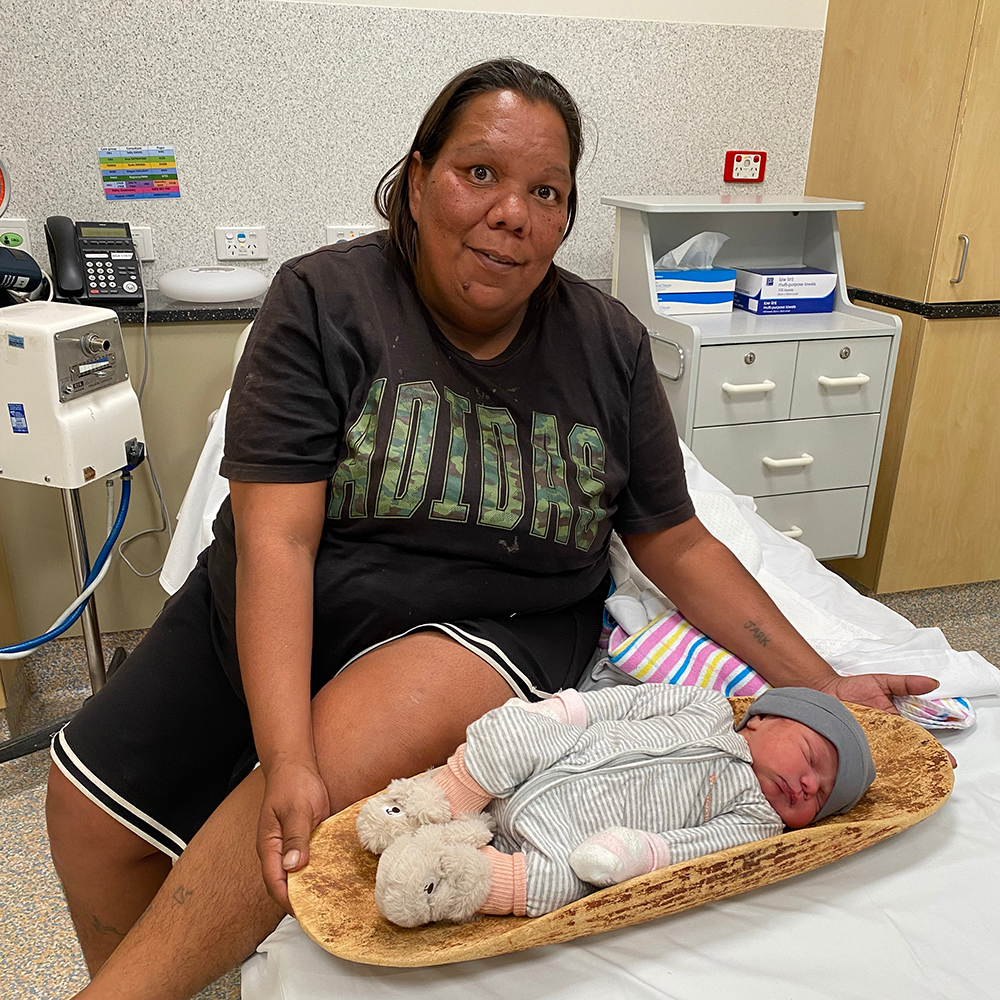
Glenda says that the complexity of women’s care, as well as being able to engage with women in their home environments, gives the remote midwives a meaningful and rewarding role.
“It is a joy seeing a woman achieve a pregnancy to the best of her health status, resulting in the birth of a healthy newborn.”
Milly agrees, “I just love my work. I love my team, and the community really embrace us.”
The team were awarded the CRANAplus Collaborative Team Award, sponsored by Rural Health West, at the 2026 Australian Remote Health Awards. They each say they were honoured to receive this recognition.
Katherine says, “I am feeling very happy to be noted, because this is a job that is asking a lot. As much as it is absolutely fantastic, there’s no job like this job, but we are so busy driving left, right and centre that we probably feel at times that we are not noted.”
Katrina adds, “I’m really proud to be a part of this team. I’m really proud of the work we do. It feels really good to be recognised by CRANAplus. We all work really hard, we care about the work that we do and the people we provide care for, and it’s nice to be recognised for that.”
For the team, the award is ultimately a recognition of the relationships they’ve built with women, families and communities across Central Australia.
Milly says, “We are proud to accept this award and dedicate it to all the families who we work with, past, present and future … it is an honour and a privilege to work in these communities.”