After almost 30 years in health, Yidinji woman Kirsty Leo who acknowledges the Darumbal Land and peoples as
a caretaker on their land, has built a career spanning Aboriginal health, remote clinics, and now correctional health. Across every role, one thread has remained constant – advocating for equitable healthcare.
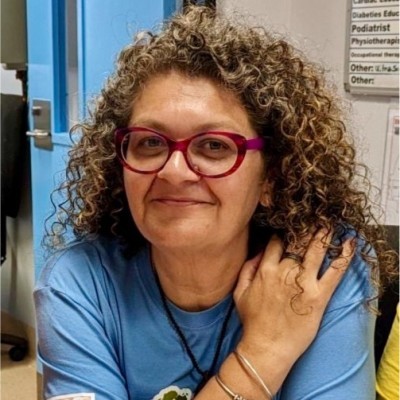
As Nursing Director of the Capricornia Offender Health Service with Central Queensland Hospital and Health Service (CQHHS), Kirsty says correctional nursing has brought together the skills she developed over decades working in rural and remote Australia.
Beginning her career as an Aboriginal Health Worker in the 90s, Kirsty was exposed early to remote practice, and has since spent almost 20 years as a registered nurse.
Today, she leads this multidisciplinary primary healthcare service caring for around 1,300 men. The service manages everything from chronic disease and opioid treatment programs to dental care, allied health and emergency responses, with close to 40 nurses providing 24-hour care.
Clients come from all over Queensland, from the Torres Strait right down to Brisbane and out to the west. The population reflects many of the inequities and challenges seen across Australia’s correctional services. There is significant overrepresentation of First Nations people, high rates of chronic disease, and more than 300 people receiving opioid dependence treatment.
Although correctional nursing presents unique challenges such as correctional operations impacting patient movements, lockdowns interrupting schedules and complex discharge planning, Kirsty believes many rural and remote nurses already have the skills to thrive in the environment, and she finds the work familiar.
“My work probably hasn’t changed that much, just the environment in which I have to manoeuvre has changed.”
Much of the work focuses on primary health care, and managing chronic disease.
“Many of these guys have unfortunately been involved in high-risk behaviour in terms of their health and wellbeing, and that sometimes is extended usage around alcohol and other drugs. Then, it’s not congruent with good eating patterns, good sleep hygiene, all of those sort of things that go with that,” Kirsty explains, which has led to an overrepresentation of chronic health issues.
Every consultation is an opportunity to build health literacy, recognising patients may be transferred or released into the community with little notice.
“It’s really important with our chronic health patients that at every opportunity we’re actually having these clinical yarns, these clinical interventions and education [sessions], because we really don’t know how long we will have them with us.”
Also like remote nursing, correctional health requires strong advocacy to ensure people in custody receive the same standard of healthcare as anyone else.
“We need to keep the fact that all of our clients, regardless of whether they’re in prison or not, should be expected to receive the same level of care as anyone out in the community.”
Providing person-centred care within a correctional environment can challenge assumptions, but Kirsty says the culture within her team remains firmly focused on equitable healthcare. Building that culture requires close collaboration with the corrective services while remaining focused on the rights and healthcare needs of individuals.
“I’m not saying we’re perfect, but I think, in terms of our clientele, we do really well. We nurse with kindness and compassion, which at the end of the day is what you want all of our nursing teams to be able to work with.”
For Kirsty, advocacy also means shaping the systems in which care is delivered. As a First Nations nurse leader, she believes culturally safe leadership and representation are critical, particularly given the overrepresentation of First Nations people in correctional settings.
“I think in all honesty, just having First Nations nursing leadership probably goes a really long way in regards to actually eliminating racism, and that’s certainly our equity agenda within Queensland Health. We’re not naive to how difficult it will be to do that, but it’s definitely a goal of ours.”
Kirsty is the first First Nations Nursing Director appointed within CQHHS, a milestone she hopes will encourage greater representation across all levels of nursing leadership.
She believes visible leadership in mainstream executive roles creates opportunities to challenge assumptions and influence organisational culture.
“When I go into a room, I’m not just there as the Nursing Director, I have a First Nations background.
“I think it’s really important to understand the impact that nurses have in this space and that First Nations people need to take up roles at all levels.”
Kirsty’s commitment to leadership and rural and remote nursing continues through her involvement with the CRANAplus Nursing & Midwifery Roundtable.
Having relied on CRANAplus education for her teams in the past, she sees the Roundtable as an opportunity to contribute to the future of the profession.
“It’s a professional opportunity to actually sit somewhere where it’s not directly related [to your role], but you’re contributing to the whole of the nursing and midwifery remote/rural space.
“We need to be sitting on there and sharing our knowledge.”