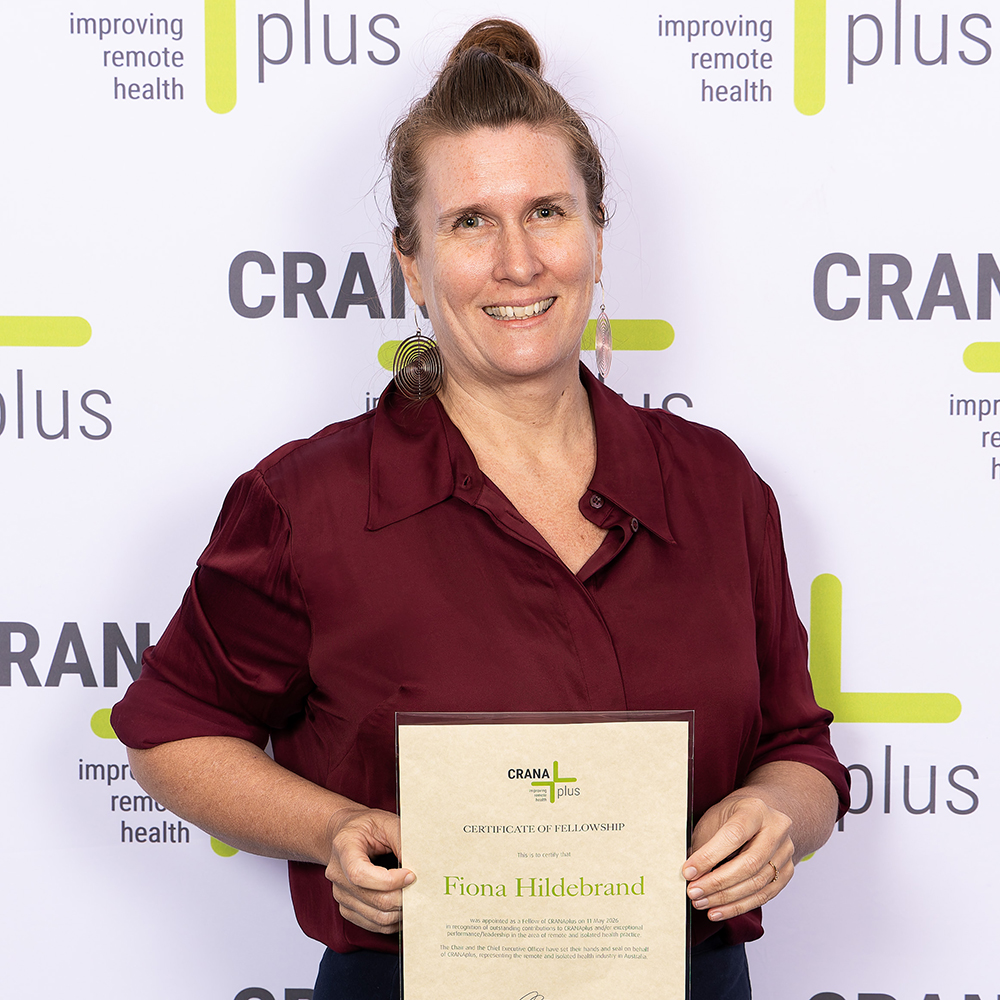
For Fiona Hildebrand, the most important lesson she learned as a graduate nurse was the value of structured systems to support nurses in their goal to provide high-quality care. She is now a nurse education and research consultant, and never forgot that lesson. Here is Fiona’s story.
During her nursing career, Fiona Hildebrand saw the rewards of successful support systems but, more usually, she saw nurses in remote locations who didn’t feel adequately supported. She decided to do something about that.
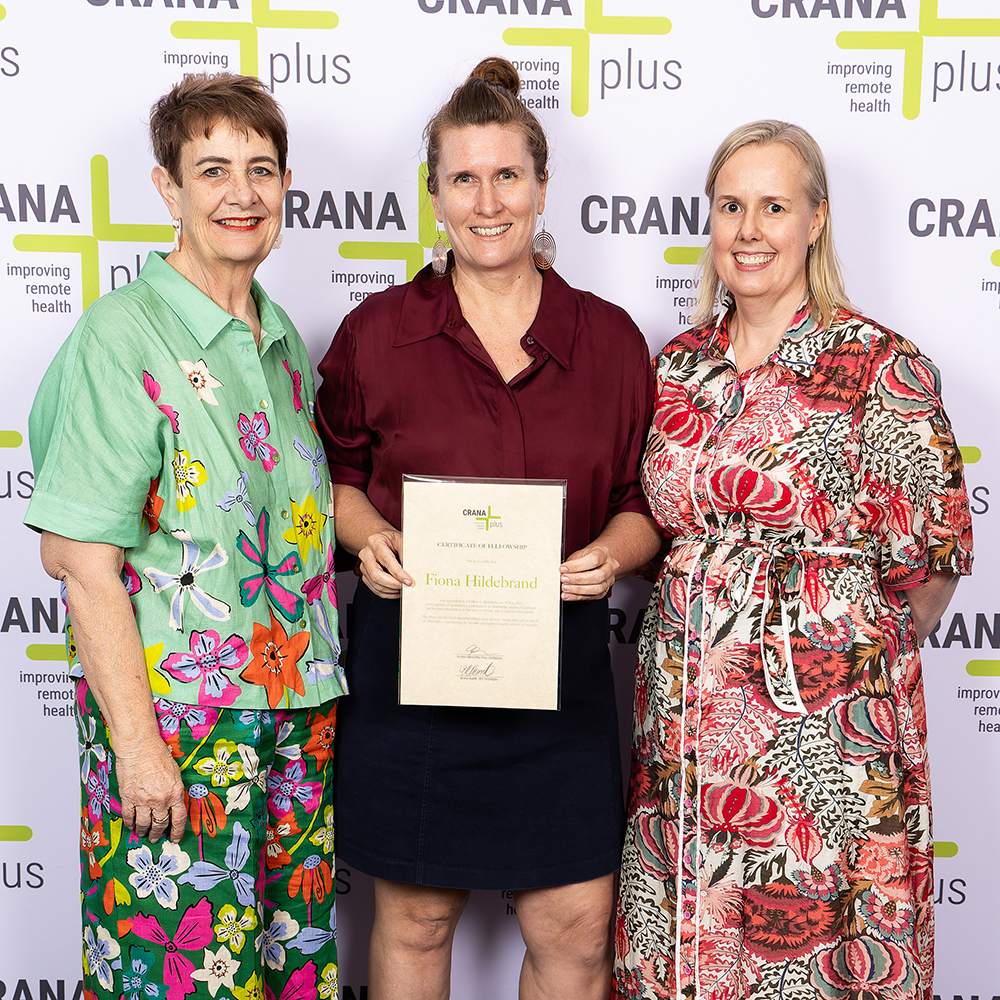
Now, with more than 20 years’ experience in remote communities and this year named a CRANAplus Fellow for her commitment to nurses working in some of Australia’s most isolated communities, she is ready to test a system she has developed called BRANCHES, which she believes can strengthen clinical confidence, improve nurse retention and improve care for people living in remote communities.
“Remote nurses are taking on increasingly complex roles, and the systems that support them need to evolve as well.”
Australia is currently exploring who delivers healthcare and how; assessing the scope of practice for everyone involved in primary health care; and who can take on expanded responsibilities. The reason for this review is because of the burden now facing doctors, such as increasing numbers of patients with chronic diseases.
“This is the perfect time to recognise the urgent need to reform educational support systems for remote area nurses,” says Fiona, “and provide funding for those systems, similar to those already in place for other health professionals.
“Remote nurses are at the forefront of primary care in outback communities, already demonstrating advanced and generalist skills and asked to do increasingly complex work.
“They are already working beyond their scope of practice. That’s what RANs have become, because there is a need in communities for someone, anyone, to be able to provide our service and the nurses and Aboriginal Health Practitioners are the ones on the ground.”
“But it’s not necessarily recognised by the wider public or by governing bodies that that’s the work they’re doing. These communities deserve the highest quality care and remote area nurses deserve a supportive education system to provide it with confidence and competence.
“Successful clinical supervision programs already exist in medicine. Remote nursing deserves similar investment.”
“We already fund structured supervision and support programs for doctors working in rural and remote Australia. Why wouldn’t we test whether similar support benefits remote nurses?”
A pilot of her BRANCHES model, tested in remote communities, could provide the evidence to show what that support might look like.
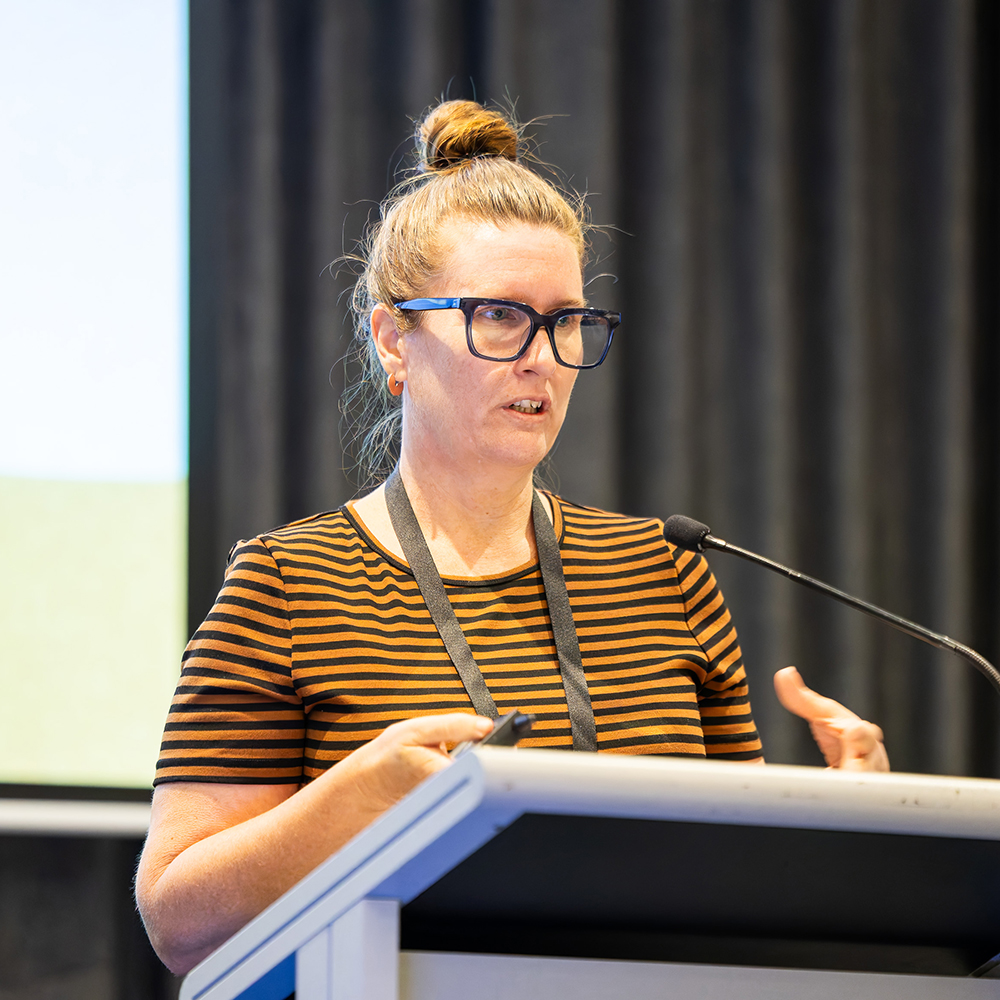
“I’ve spent years researching RANs perspectives on this and here’s what could work,” she said, presenting details of her system at the 2026 CRANAplus conference earlier this year.
Remote area nurses assess, identify, treat, educate, counsel and respond to emergency and non-emergency situations, says Fiona, in communities where health services are stretched and specialist support may be hundreds of kilometres away.
They may have experience in some clinical areas, but they need to work beyond what they feel comfortable doing, often in isolation, and the system assumes they will somehow educate and support themselves.
Fiona, who has always seen education as a key, says she was shocked the culture of learning she enjoyed in her graduate training years at Fremantle Hospital was not apparent everywhere.
“A positive learning culture is essential for nurses. But that doesn’t just happen automatically. Much of the time there needs to be a lot of calculated initiatives to ensure a positive learning culture grows.”
“There are two main ingredients to provide a supportive space: giving people protected time off the floor to learn, plus a psychologically safe environment where it’s fine to be vulnerable and say, ‘I don’t know this,’ and, ‘I really want to learn this.’”
Which components of BRANCHES adopted in each situation would be dependent, says Fiona, on what the nurse brings and what the supervisor and the nurse negotiate on what would be the appropriate course to take.
The first option in the model is based on a general practitioner’s clinical supervision model, and provides up to ten-days in-person clinical supervision at the nurse’s place of work.
“That first option is difficult to achieve but not unachievable,” Fiona asserts.
“This is based on something I’ve witnessed in action for nurses, and the results were amazing. You saw people go from apprehensive to absolutely calm and confident.”
Other components are virtual due to the logistical issues facing remote area nurses. Using a strengths-based approach, the other components include group, individual, immediate or delayed supervision sessions, with an avenue to discuss topical or current cases. There is also a strong emphasis on developing supervision skills and collegial support.
Securing funding to pilot her clinical supervision model is the next goal for Fiona who developed BRANCHES as part of her PhD studies and now wants to road test it in those real situations in real time.
“A funder who steps forward could be a health service, a government organisation, a charity: if there’s someone interested in funding the pilot, I’d love to hear from them.”
“It would build the evidence to prove the case to show government and research bodies that the model works, and justify funding.
“And that is my ultimate goal – for remote area nurses to have opportunities to improve and expand the care they provide to the people who need it the most”.