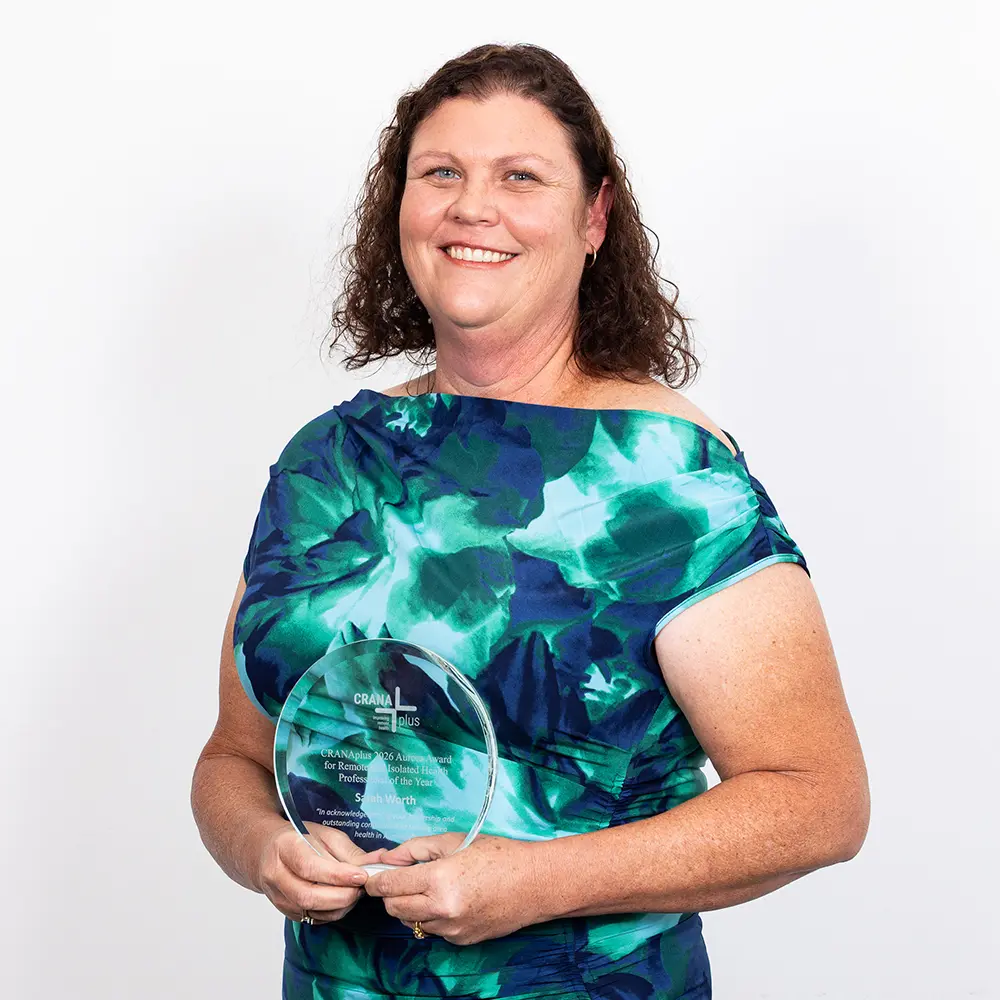
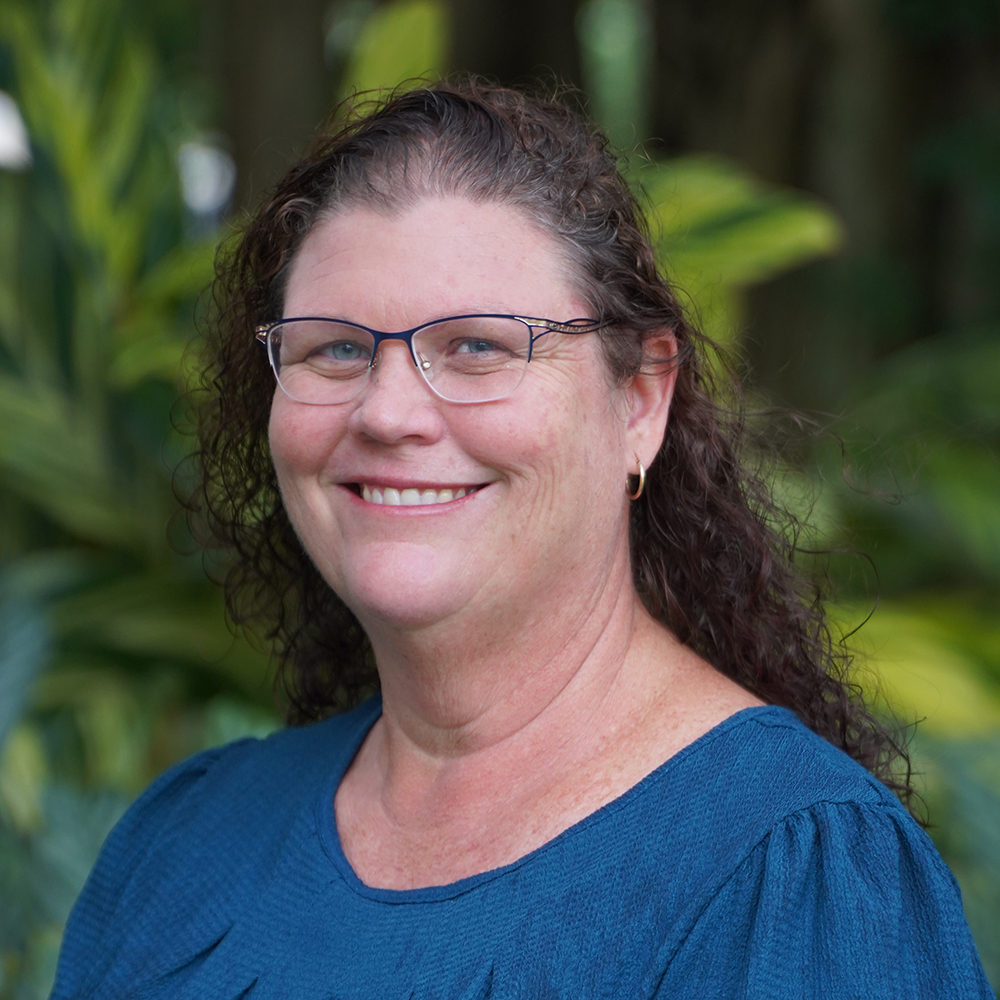
Having worked in Far North Queensland for over 23 years, Sarah Worth has spent the last few building a Transition to Remote Practice Program to bolster the region’s workforce. Her efforts have earned her recognition as the Remote and Isolated Health Professional of the Year.
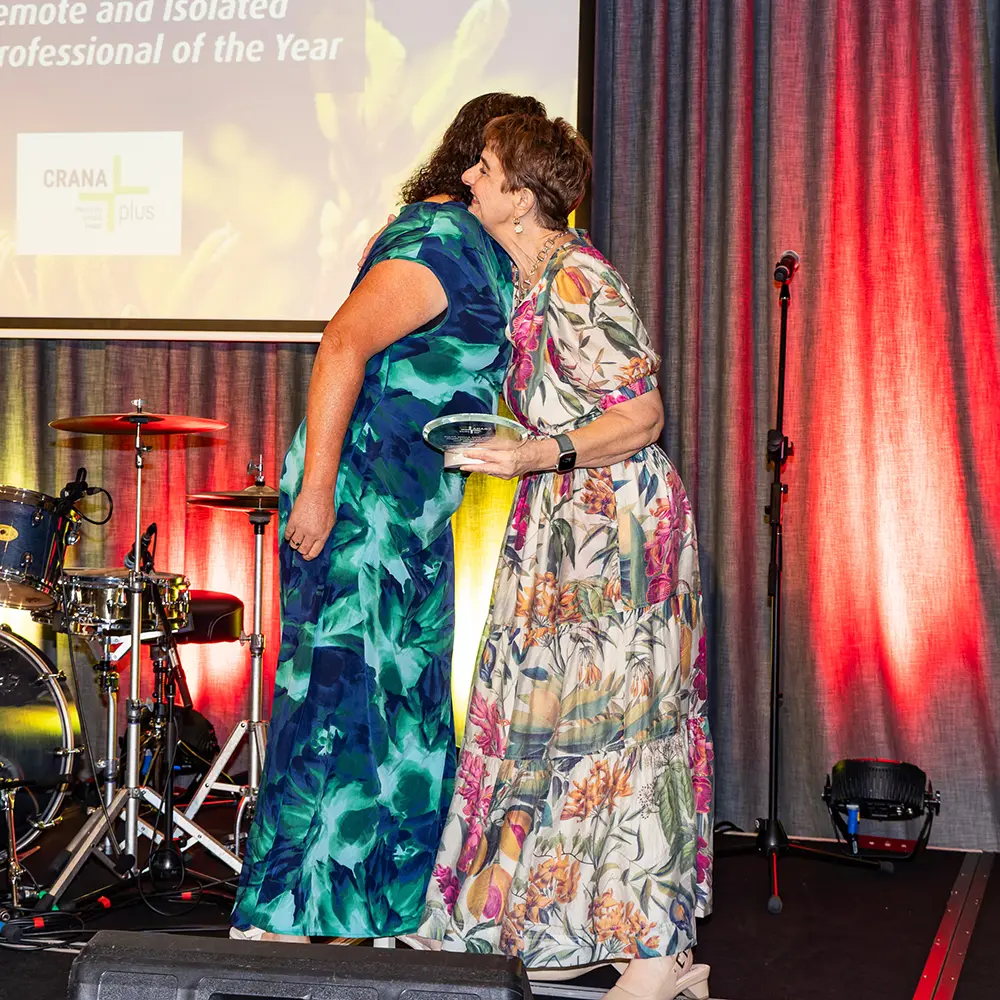
When Sarah Worth (Director of Nursing – Clinical Education, Torres and Cape Hospital and Health Service (TCHHS)) received the phone call from CRANAplus telling her she had won the Aurora Award, she initially thought it was a prank call.
“I was so humbled and grateful for the recognition,” she says. “A little overwhelmed, really, because I love doing what I do.”
As a matter of fact, it was love at first sight. 25 years ago, as a graduate nurse walking the wards on the Gold Coast, she could feel that there was something more out there; something that offered greater autonomy and connection.
“Something was missing. So I went searching for what that might be.”
Her first role was on Palm Island, and she was swept off her feet. After Palm Island came Woomera, continuing Sarah’s wandering upbringing, which saw her live in Sydney, Cairns, Tasmania and the Gold Coast.
But she soon found a permanent home. Following her postgraduate studies in education, she taught the enrolled Diploma of Nursing with TAFE, and travelled to Bamaga for an 18-month posting.
Sarah then joined Torres and Cape Hospital and Health Service in 2010 in a nursing role at the Weipa Integrated Health Service, before moving into a Nurse Educator position.
In 2018, she took on her current role as Director of Nursing – Clinical Education.
Sarah and her colleagues soon found that some new-to-remote health professionals, attracted to the career, were quickly falling out of love with it. That is, their traditional training, focused on acute skills, was setting them up for heartbreak.
“Going in as a very young nurse, it was a very steep learning curve,” she recalls.
“I always reflect on that – what is it that people actually need to become a remote nurse, and how do we encourage people from the metro areas to come and have the opportunities that remote nursing can give them?”
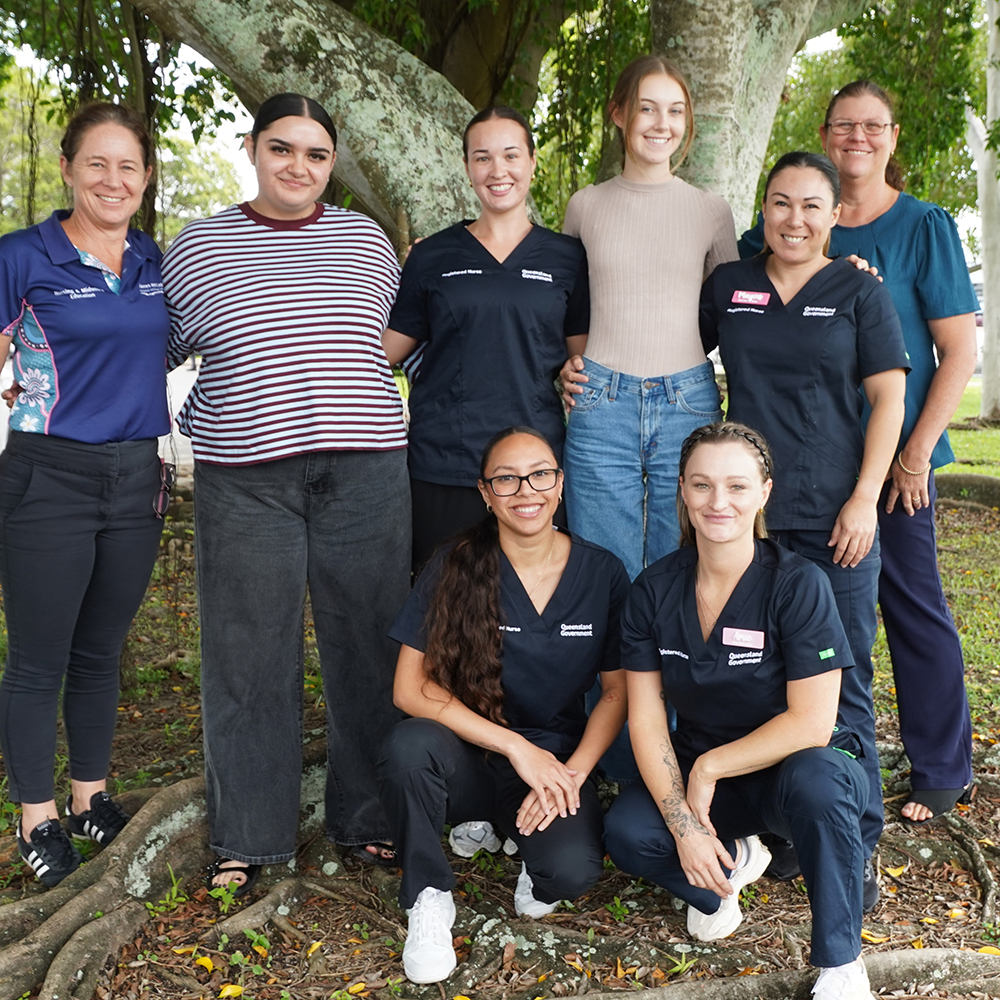
With these questions in mind, Sarah and her peers developed the Transition to Remote Practice (TRP) Program, a 12-month scaffolded pathway that includes contextualised simulation, on-country education and structured mentorship and is co-designed with First Nations Leaders and Remote Directors of Nursing.
Early evaluation of the program has shown promising results – with managers consistently rating graduates as >4/5 for clinical proficiency, and >4.5/5 for team integration and Cultural Safety.
Participants also reported feeling significantly more confident. At Lockhart River, three participants have since accepted permanent positions. One later joined Sarah at a statewide rural and remote nursing forum, sharing how the program gave her the confidence to leave city practice and build a career in the community she now calls home.
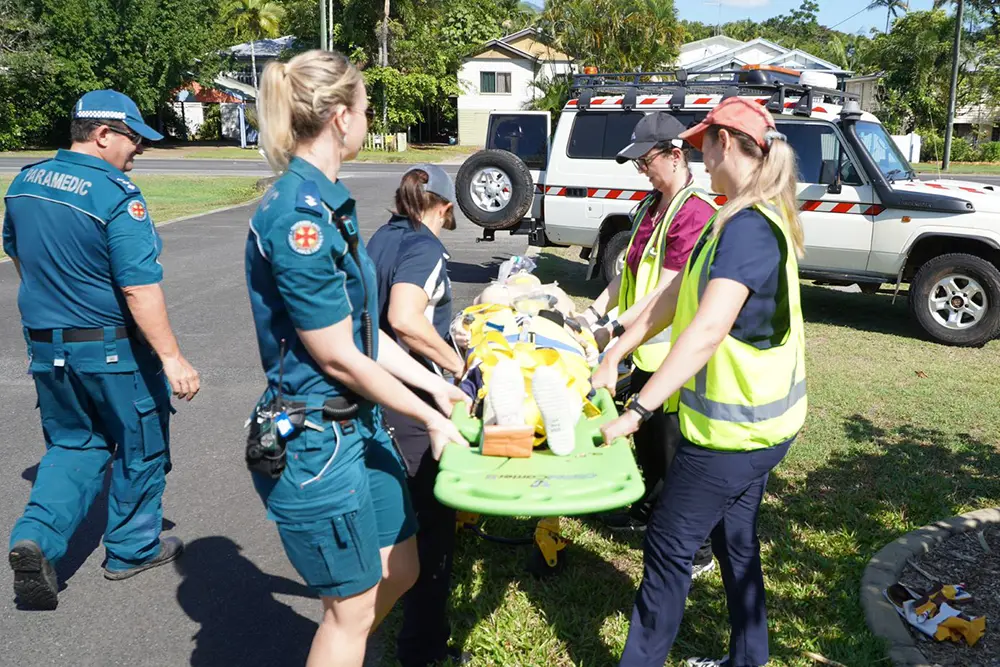
“The goal with contextualised simulation is to get you familiar on site,” Sarah explains.
“We take the equipment out and involve the whole clinic in a simulation.
“How do you get [a heavy client] from the toilet to the emergency bay? What is it you do then, who do you need to escalate to? It’s moving that theoretical knowledge they may have into practice.
“We can’t teach everything that you’re going to face; you know, you’re going to care for people across the lifespan from birth to death to acute illnesses to chronic illness.
“What we want to teach you is to have critical thinking skills and problem solving skills to know what you need to do, take a step back and think about how you’re going to achieve it, and then implement safe care using the guidelines available to you.”
This isn’t the only program Sarah has been involved with. The graduate program she has been a part of is also helping to grow the service’s First Nations Workforce capability in a meaningful way. In all of her work, she is quick to acknowledge her colleagues.
“You’ll notice I say ‘we’ because you can’t do anything alone.”
“I am so fortunate to have the privilege to work in TCHHS, with an amazing team and support from strategic leads to implement innovative education and workforce capacity building.”
Sarah has been attending CRANAplus conferences since around 2012, and says the organisation has only grown more important to her across her career.
“I think it’s really important to recognise the specialty that remote and isolated practice is.”
“Having [an organisation] like CRANAplus, celebrating remote and rural nurses, midwives and others – I can’t put a price on that. It gives us our identity.”
Her goals from here are an extension of the work already underway: to help health professionals discover and fall in love with remote health practice, and thrive beyond the honeymoon period.
“[All with the goal that] we can provide the best possible, culturally safe care to those we serve, and live alongside,” she says.