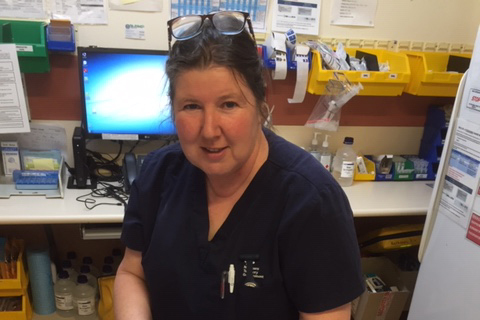
Lyn Byers, Nurse Practitioner, remote area nurse, midwife and mental health nurse, is passionate about the educational resources offered by CRANAplus, stressing that it is an important platform for clinicians in rural and particularly remote areas to have access to.
“The resources are now there so that when clinicians go remote, they have the opportunity to do the groundwork before they go,” she says. “For older nurses, it’s important to remain curious – it’s so easy to slip into habits – and CRANAplus provides not only face to face emergency courses, but also webinars and online updates to keep members curious and interested in upskilling. Patients out there deserve the best possible care.”
Lyn practices this philosophy. “During the pandemic, I realised I could learn more about infectious diseases: how to manage things, learn about supports around to help, and ways we can learn to put our knowledge into practice.
“You don’t know what you don’t know,” says Lyn. “Clinicans go out into remote and discover they may be expert in their sphere – but out there, they realise there are gaps in their knowledge. The CRANAplus Remote Area Nursing certification helps nurses to pinpoint those gaps.
“I believe, at the very least, people going remote should do the certification we offer. They can measure their knowledge against the framework and see the standards required. They are assessed by remote peers and a bonus is that the certification also goes towards their professional development points.”
The online facilities for education has proved extremely useful, says Lyn. “People have very busy lives. I know people miss the personal contact and interaction and since our education courses returned to face-to-face workshops, there’s been a huge demand. But the online facilities are crucial for many, offering such resources as webinars and self-paced learning.
“I suggest to everyone in remote, when you have down time, and in the remote setting maybe not a lot of things to do, use that down time, at least some of it, for yourself, for your education.
“CRANAplus has certainly grown from its grassroots beginnings,” says Lyn, “but still retains the strengths of its origins.
“In my time on the Board, I’ve seen the organisation become more politically powerful. People in Canberra initiate contact, which is what we want. And to meet the needs of the members, we have had to become much more sophisticated, and pay much more attention to governance.”
Lyn’s work on the Board has also brought into focus for her the valuable work of Bush Support Services and Professional Services.
“Bush Support Services (BSS) also offers a variety of access options, helping us to manage our life-work balance. Remote is a very stressful area to work in and people absolutely need the support and encouragement that BSS offers.
“The advocacy work with government and the submissions regarding policy written by Professional Services can fly under the radar, but it’s important work – and I’d suggest to members that they may like to consider, for example, contributing to submissions when the calls go out.”
Lyn, based in Alice Springs, is currently the clinical nurse consultant at Nganampa Health Council, working in the APY Lands in SA. Her patch stretches from the Stuart Highway to the WA border.
“People have different arrangements that suit them,” she says. “Some go remote for extended periods, others do short-term relief work.
“For everyone, it’s important to recognise that you can become desensitised to normality. You can’t just pop down the road for a coffee or to get your haircut. You need to remember the reason for being in the remote setting is to work. You are in the minority, and you need to leave that setting regularly to refresh and rejuvenate.”
In addition to her job and Board work, Lyn is the chair of the editorial committee for the Remote Primary Health Care Manuals, currently under review. New editions are planned for publication in late 2022.
“These manuals are crucial for the care of patients in remote communities, health workers couldn’t operate without them,” says Lyn. “They are periodically reviewed and assessed by RANs to make sure the guidelines are practical and useable. They provide guidance on clinical care in the remote context from women’s business to health promotion and screening, from chronic disease to sexual health, and how-to procedures for every imaginable medical situation. Importantly they guide practitioners in assessing a medical situation such as abdominal pain and fever in children, and then how to manage and communicate the situation to others.