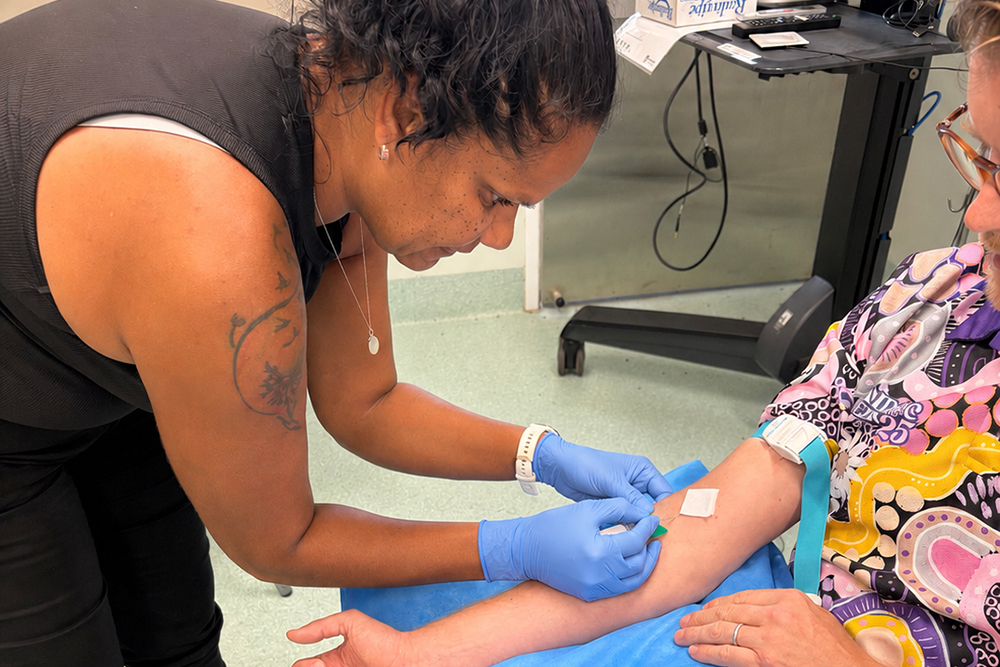
I remember sitting at Westmead Hospital during my final intensive for my Master’s in HIV and STIs when I told another Nurse Practitioner in the room that I had applied to commence a Master of Nurse Practitioner. She turned to me and said, “You think this is hard? That will break you,” writes Laura Berry, CRANAplus Workforce Support Coordinator.
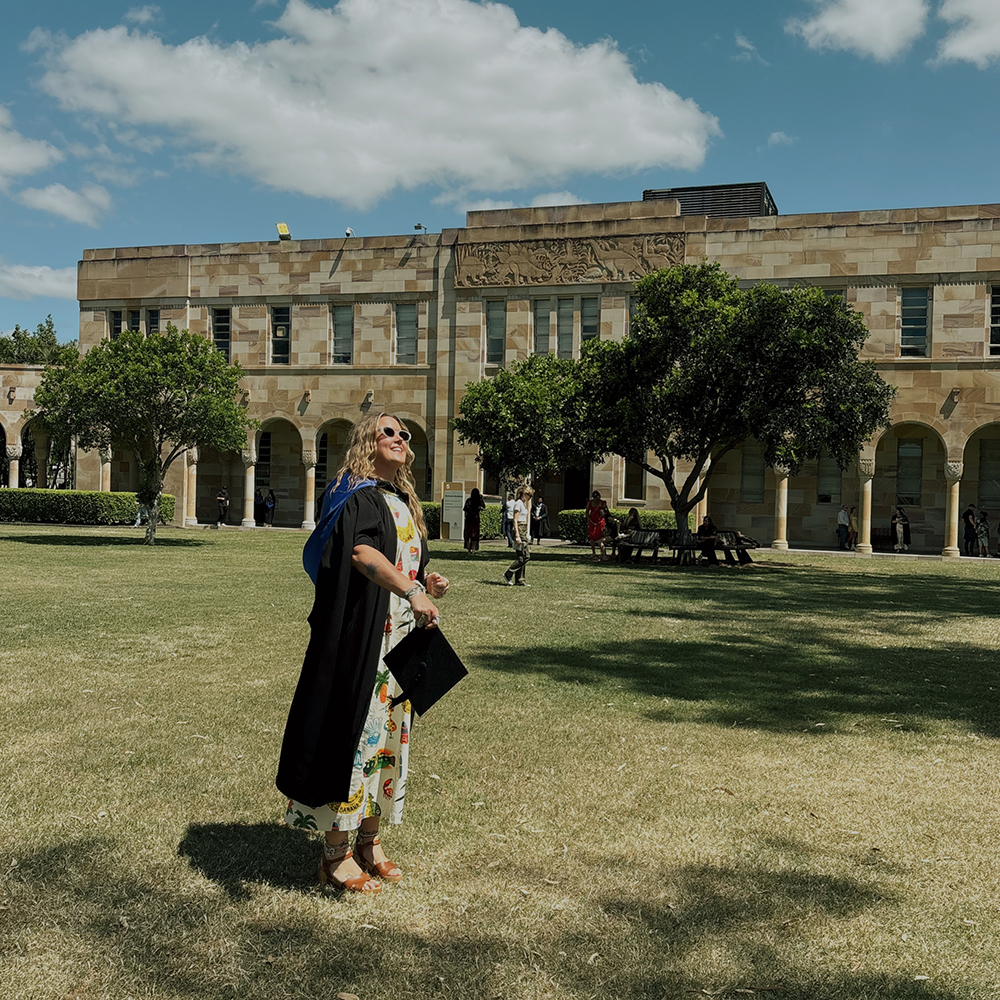
At the time, I didn’t think much of it, though she was absolutely correct, just not in the way I initially interpreted. I assumed she was referring to the academic workload or the intensity of the study. I now understand what she truly meant.
Before I go on – this is not a tale of deterrence. If you are currently studying, considering Nurse Practitioner (NP) training, or already knee-deep in it, I urge you not to skip this article. I’m writing from a place of vulnerability in the hope that something here resonates or perhaps validates thoughts you’ve been quietly or not so quietly carrying.
Before commencing my NP journey, I had no idea how political the landscape was. As a UK-trained nurse, I came from a system where NPs are well established and widely accepted. It wasn’t until I became immersed in the Australian training and endorsement pathway that I truly understood the scale of the barriers – not just to completing the degree, but to navigating placement and workplace support from both organisations and individuals.
In Australia, there are a few different pathways to completing a MSc NP and gaining endorsement. Broadly, these include structured candidacy models, or completing study while independently coordinating placements, mentorship, and advanced practice hours around work and life. Both pathways are demanding, and neither is straightforward.
Although I didn’t realise it at the time, my journey toward becoming an NP began in 2019 when I took a role with the North Queensland Syphilis Register. There, I worked alongside an extraordinary nurse who has since become one of my greatest mentors and friends.
Early on, she asked whether I planned to undertake postgraduate study. I told her I’d started – but withdrawn from a Graduate Certificate in Remote Health Practice.
I was afraid of failing. I had scraped through two previous postgraduate units, and I carried a long-held belief that I was the “stupid one”. The person who was unable to focus, unable to finish things, and certainly unable to do them well.
She looked at me and said, “It’s really important that you finish this degree.”
Reluctantly, I listened. I chipped away at the remaining units, and, in 2020, I completed the Graduate Certificate. Importantly, this had planted a seed.
The following year, I went on to enrol in a Master’s in Sexual and Reproductive Health at the University of Sydney.
Studying in this space felt aligned in a way education never had before. For the first time, my results reflected distinctions and high distinctions. Slowly…very slowly, that critical internal voice began to quieten and I didn’t miss her.
For my capstone project, I undertook a small research study in a community where I was working, focusing on improving sexual health literacy among primary health clinicians to increase screening. When I saw the outcomes on paper, reflecting real-world change driven by my work, something shifted.
That was the first time I truly thought, “Maybe I could do this. Maybe I could be a Nurse Practitioner.”
I applied to the University of Queensland – not fully believing I’d be accepted, but believing I owed it to myself to try.
Around the same time, my husband and I packed up our lives, loaded the dogs into the car, and set off to travel Australia for 12 months. Somewhere along that journey, UQ offered me a place.
While travelling, I wasn’t engaged in advanced sexual health practice, and the practical realities of undertaking NP study from the road quickly became apparent. We eventually secured roles in the East Kimberley, an experience that was professionally and personally enriching.
However, after my first NP intensive in Brisbane, it became clear just how much clinical and professional support I would need to survive the degree, particularly as someone who lives with high anxiety. We were faced with an impossible choice: return to Cairns or give up my place in the course.
We chose to move back.
It was during this period that I encountered my first real experience of the structural barriers facing NP students: withdrawn support, a lack of understanding of the NP role, and fragile mentorship arrangements. With just two weeks’ notice before semester two commenced, key placement and mentorship support were abruptly withdrawn. I was devastated.
We had just left secure employment in the Kimberley, relocated back to Cairns, and deferral was not an option. In desperation, I reached out to clinicians, colleagues and mentors in my network. A doctor I had known for years immediately offered one day a week of supervision. Several nurse practitioners stepped forward. Many of these people are now close friends.
What followed was one of the hardest periods of my professional life, but also one of the most formative.
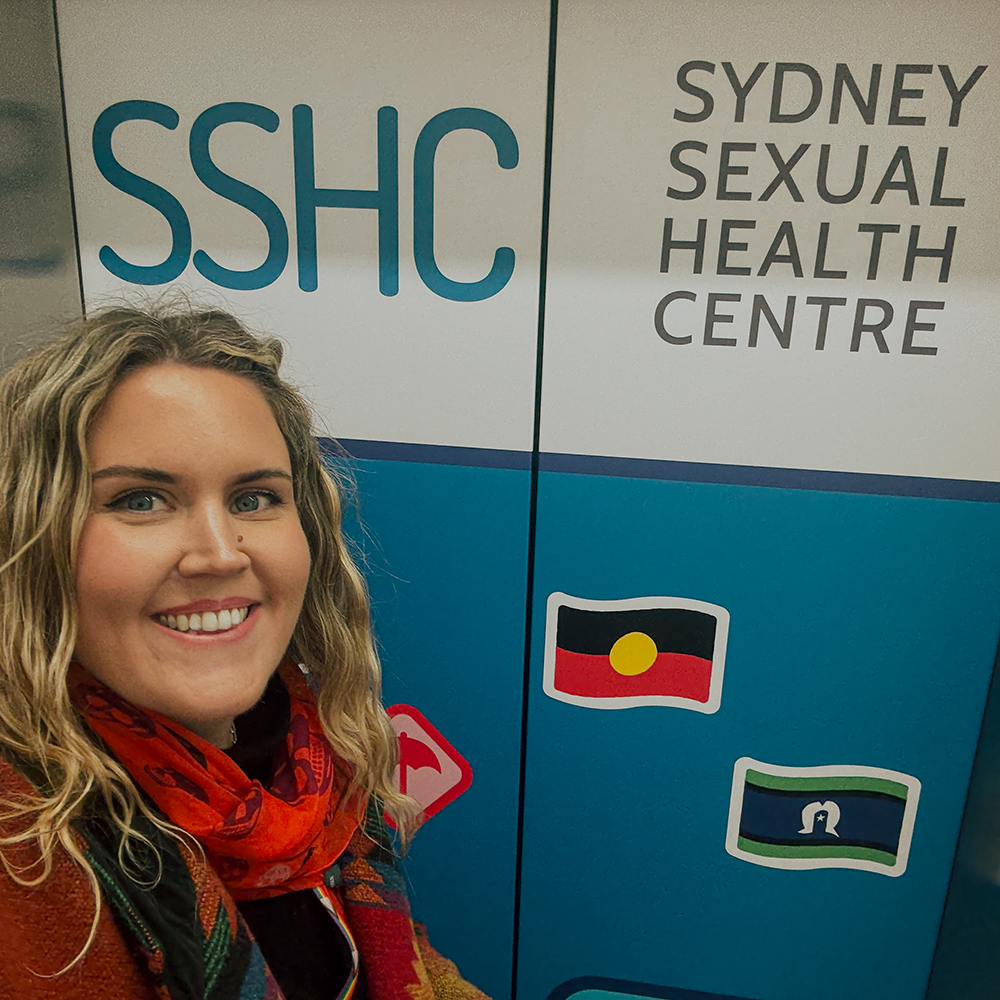
I completed placements at Mackay Sexual Health, Sydney Sexual Health, PrEP Connect, and TRUE Reproductive Health. Learning across diverse models of care expanded my scope in ways I could never have anticipated.
What initially felt like failure slowly revealed itself as growth.
The road since has not been easy: financial pressure, administrative burden, and periods of limited workplace support tested me deeply. Still, I would not do it differently.
I have emerged with a resilience I didn’t know I possessed while holding onto my softness, compassion, and sense of purpose. That balance is something I continue to learn how to protect.
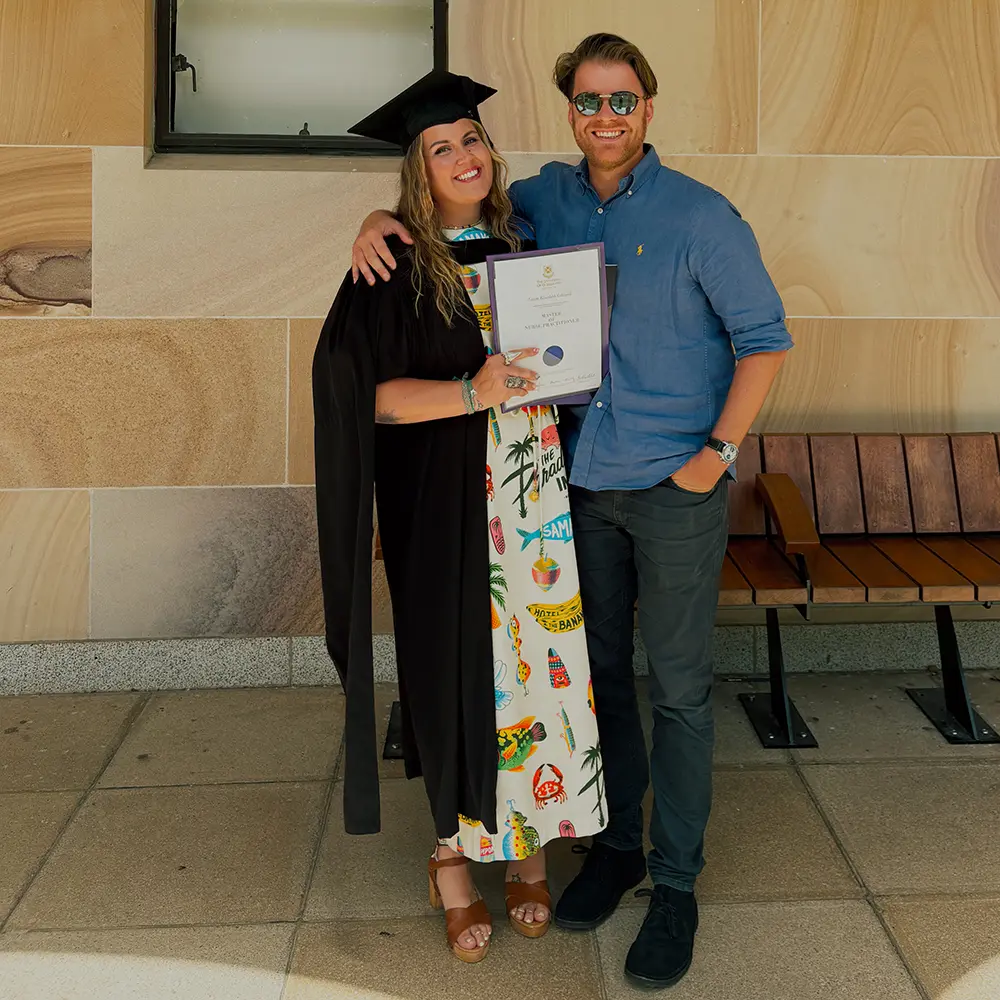
As I now sit writing this article, endorsement in hand, applying for my prescriber and provider number, I feel something different from relief. It is not pride in a title, but pride in my endurance and determination. In backing myself when it would have been easier to walk away. In allowing the journey to shape me without hardening me.
So, what I want to say is this – if you are considering this pathway, please know that there will be obstacles that feel insurmountable. There will be moments where you question whether you can continue. But I promise you that you can and you will get over those hurdles.
On the other side is not just a new career, but a new confidence, a new community, and a deeper belief in what you are capable of.
What I wish I’d known
- The NP pathway is as political as it is academic.
Success depends not only on clinical skill and study, but on systems, structures, and support that are often inconsistent or poorly understood. - Self-doubt does not mean you don’t belong.
Many NP candidates carry long histories of imposter syndrome. Growth often begins when someone else believes in you before you believe in yourself. - Support networks are not optional; they are essential.
Mentors, peers, and allies can make the difference between progressing and walking away. Actively seek them out and hold onto them tightly. They are the ones who pulled me through when I felt like I couldn’t continue. - Disruption can be formative.
Unexpected barriers and detours may ultimately broaden your scope, strengthen your practice, and shape you into a more adaptable clinician. - The journey changes you not just professionally, but personally.
Becoming an NP builds resilience, confidence, and a deeper sense of purpose, but protecting your compassion and softness matters just as much as proving your capability.