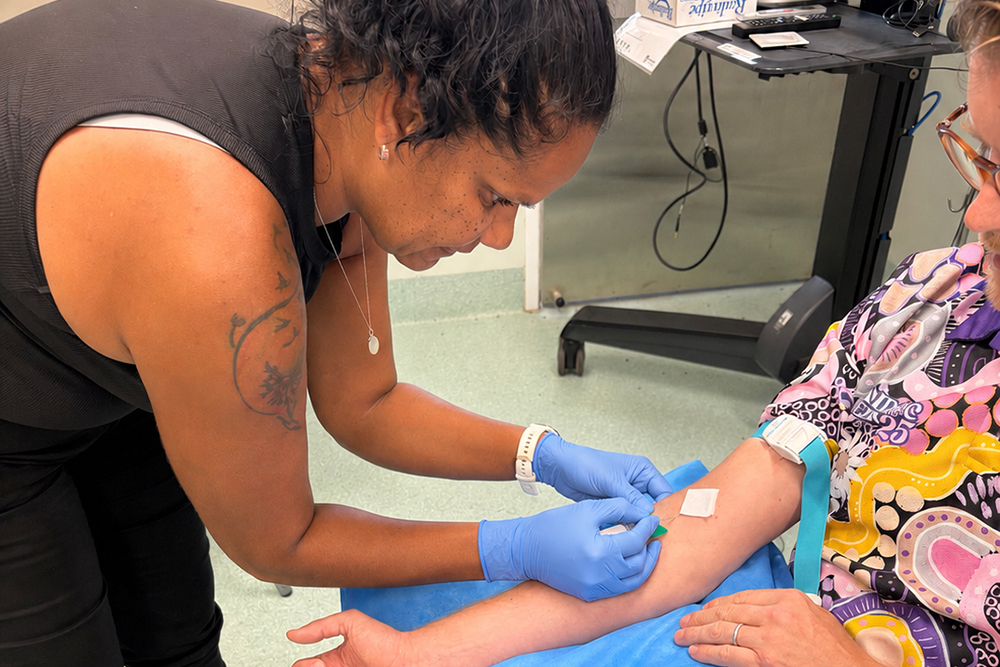
Two new-to-remote RANs, Meg Lewis and Carmel Killen, assisted with the delivery of a baby in community, just two weeks after completing their Maternity Emergency Care (MEC) course, and share how the knowledge helped them appreciate the beauty of birth.
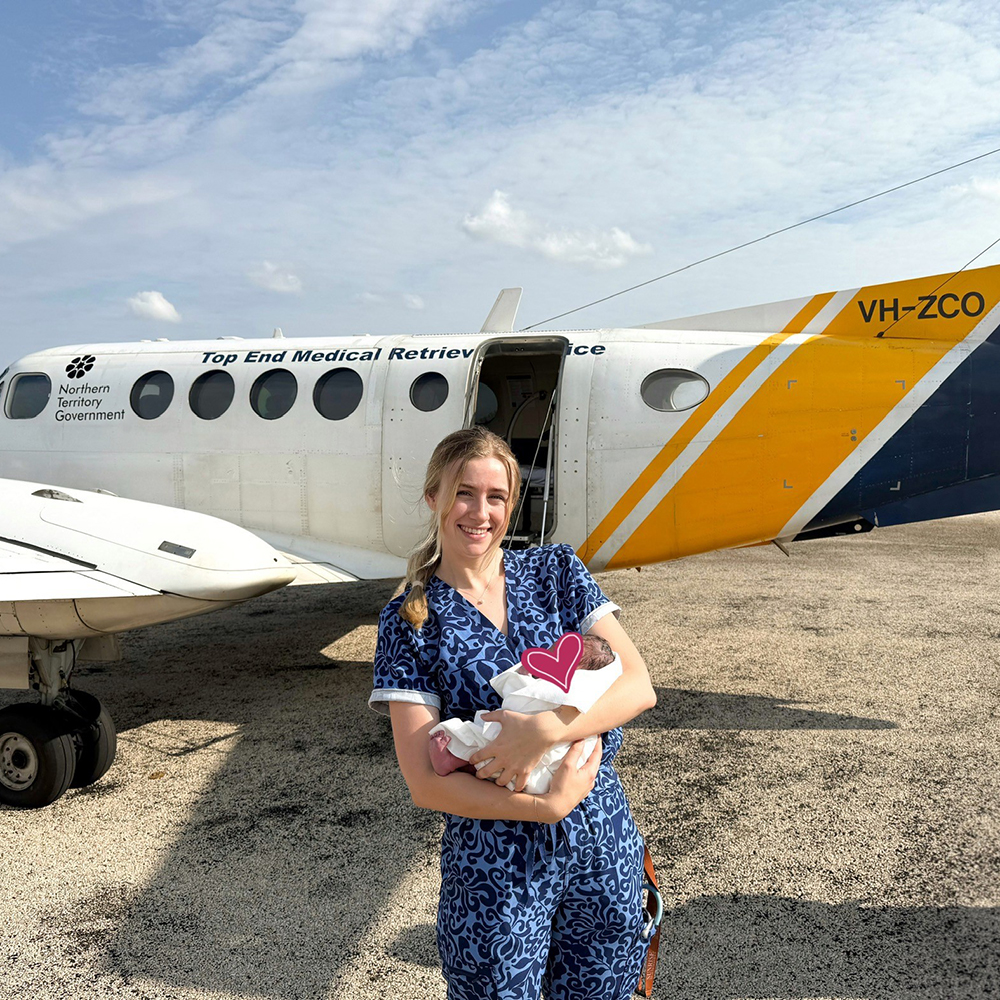
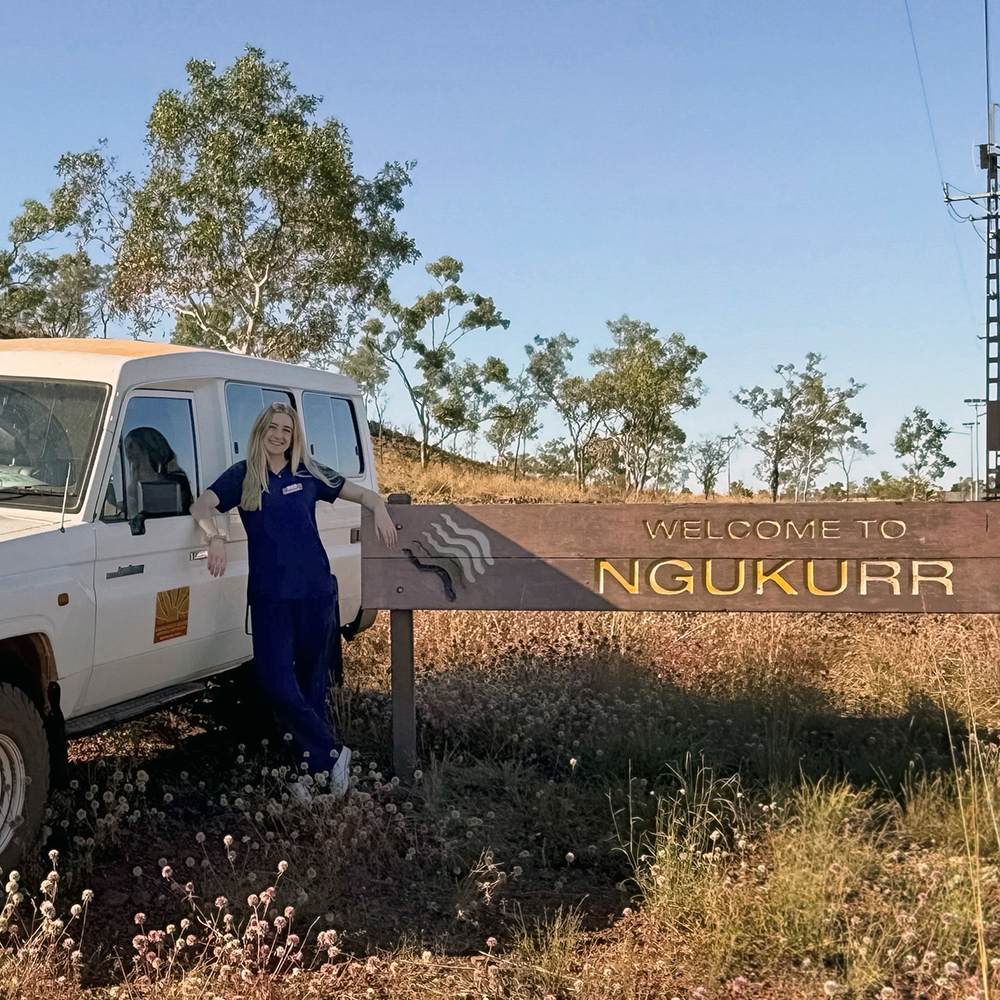
Meg and Carmel had spent six months working in remote communities when they found themselves preparing to deliver their first baby.
Two weeks prior, they were in Dubbo completing their MEC with CRANAplus.
Meg says, “After our first contract, we thought we should definitely get [MEC] done, you never know.
“Everyone in the MEC course had some story about a birth, and me and Carmel were like, ‘Oh my god, that’d be so stressful.’ Everything in the MEC course was new, and it was really, really interesting, but the whole time I was thinking, ‘I hope this never happens.’”
A fortnight later back in community, Carmel was woken at 2am to screams down the phone from a lady whose waters had broken. Picking Meg up on the way, the pair arrived to a patient ready to give birth to her third child.
Carmel explains, “Her waters had broken, but she wasn’t having contractions. And then it just progressed. She started having some serious contractions, and they were getting closer and closer together.”
Meg adds, “A cyclone was in Darwin, so CareFlight said, ‘We might not be able to get out.’”
It was at this point that Carmel realised, “I think we’re going to deliver a baby.”
“Luckily, we’ve got a good baby box there that I had recently reorganised, so we had everything, like our little baby resus station and all the drugs lined up and labelled. Because of MEC, we just knew kind of what to do.”
Meg says, “I think it was really interesting as well, because it was still so fresh in our minds, it’s not like we were scrambling trying to think, ‘What did we learn in that course?’ We were like, ‘Cool, yes, you have to crush this, and you have to do that, and take it 20 minutes apart.’ We knew.”


The plane did get through in the end, and the patient was assessed by a midwife at the airstrip.
Carmel says, “He had an internal feel, and said he could feel the head, and that we had to go back to the clinic.
“So, we came back to the clinic, and then very quickly delivered the baby.
“Meg and I got to do all the things we’d learnt in MEC, but with the guidance of having a beautiful midwife there.”
Mum had no complications and bub came out great. The RANs got to celebrate the joy with the whole community.
Meg says, “It was so amazing. I popped out and everyone was sitting outside the clinic and looked at me. I said, ‘Everything’s good! It’s a boy!’ and everyone cheered.”
Carmel says, “Everyone was up all night. When the baby was born, we went out the front and showed the baby to all the kids and they’re all jumping and screaming and going, ‘Yay!’ It was really, really sweet.”
Meg adds, “After, when we were trying to get her back into the troop carrier, it took like 20 minutes because everyone was saying, ‘Let me see the baby!’ and taking photos and hugging mum. There’s such a sense of community. Everyone’s connected. It was really special.”
Both nurses put their confidence in the situation down to having completed the MEC course.
Carmel says, “If I hadn’t have done MEC, I would have had no idea. I would have been freaking out. But I felt very comfortable having done it. I didn’t have the physical experience, but I had the mental knowledge.”
Having that level of preparation turned fear into awe.
Meg says, “It made a really stressful situation more manageable, and something that we could take in a bit more. I was able to appreciate the beauty of it, because I wasn’t going into it completely blind.
“I guess in these communities you just get it done and listen to the DMO and hold it together, but I don’t think I would have been able to appreciate nearly as much just how beautiful it was.
“In my RAN career, that is only six months long so far, that’s going to be a highlight. That’s something that I will remember forever, that I never would have gotten [in an urban setting], and it’s something I might never get again.”