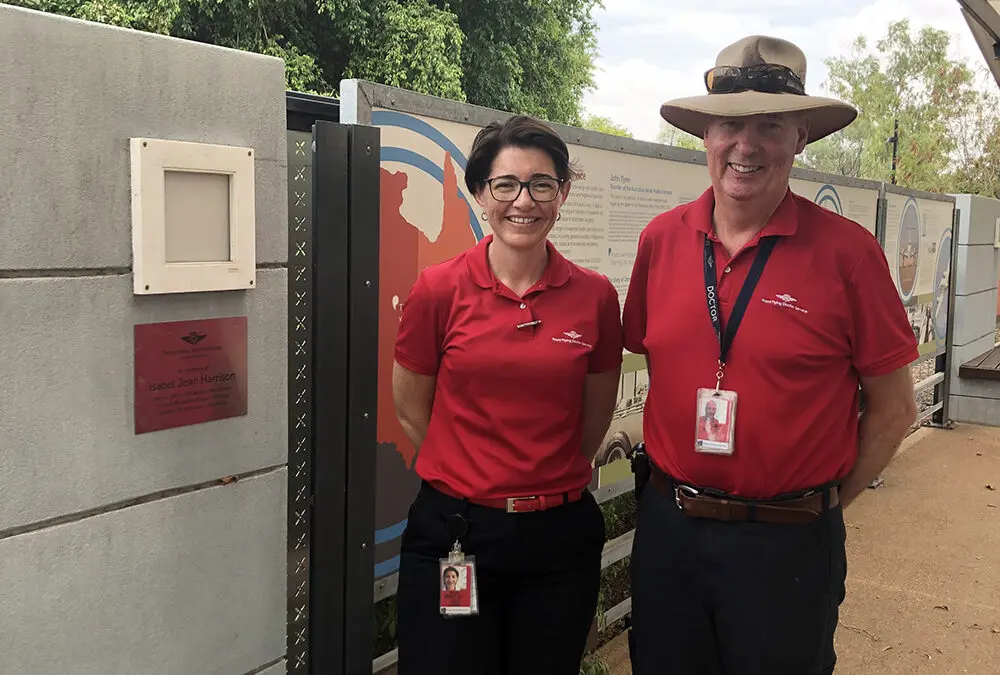
When a First Nations woman enters the ACT’s maternity ward in the not too distant future, she may automatically be greeted by someone who practices in a culturally safe way.
That is the aim of Birthing with Country, a proposed community-led model quietly reshaping maternity care in the Territory.
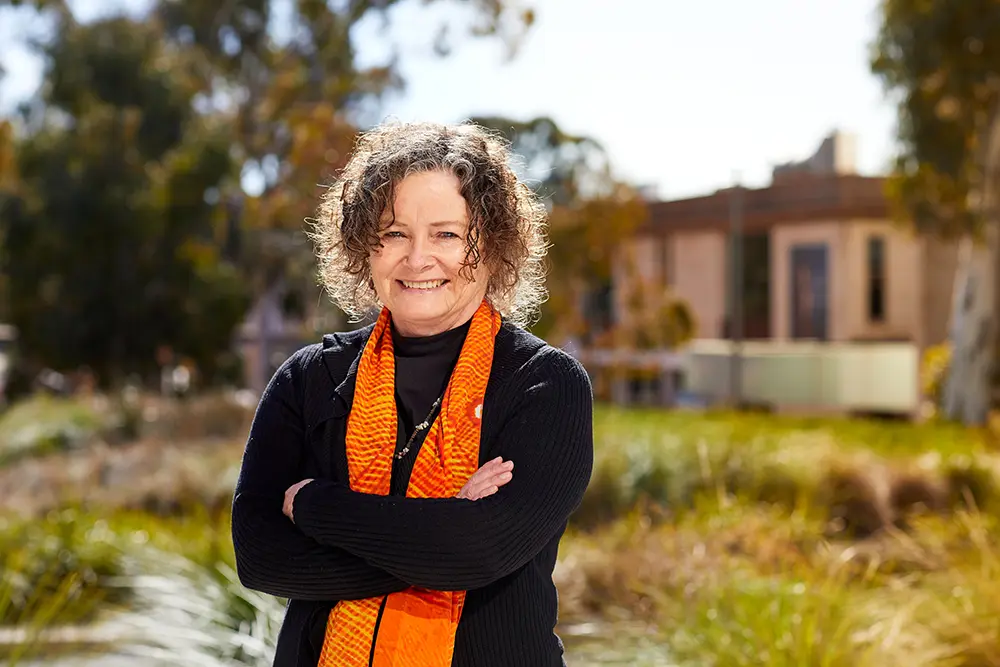
For First Nations midwife and researcher Karel Williams, the progress underway with this Birthing on Country model of care, a goal in the ACT’s Maternity in Focus Action Plan, reflects years of advocacy, consultation, and groundwork. She points to strong support from senior leadership, including the ACT’s Chief Nursing and Midwifery Officer and her team.
Improving maternity care for First Nations women has long been Karel’s focus. In the ACT, that focus has taken a unique form: she was instrumental in renaming the proposed model from Birthing on Country to Birthing with Country, ensuring the name reflected the Territory’s diverse First Nations population and countered the misconception that “Birthing on Country” only applies to ancestral lands or remote areas.
“Country isn’t just land, it’s identity, law, culture, language, family, spirituality. We are Country, and Country is us.”
The proposed model is designed for all First Nations women in the ACT and for women carrying First Nations babies – not solely for Ngunnawal women. Senior Ngunnawal elder Aunty Violet Sheridan was clear about this broad availability from the start.
Karel entered midwifery through the University of Canberra’s first direct-entry cohort. Her commitment deepened through her experiences as a mother and a First Nations woman working in maternity care. “The passion came from seeing what women were going through,” she says.
Around six years ago, she contributed to a major inquiry into maternity services in the ACT, prompted by complaints from both consumers and staff. The inquiry documented trauma, gaps in care, and systemic failings, findings which were later echoed in larger jurisdictions.
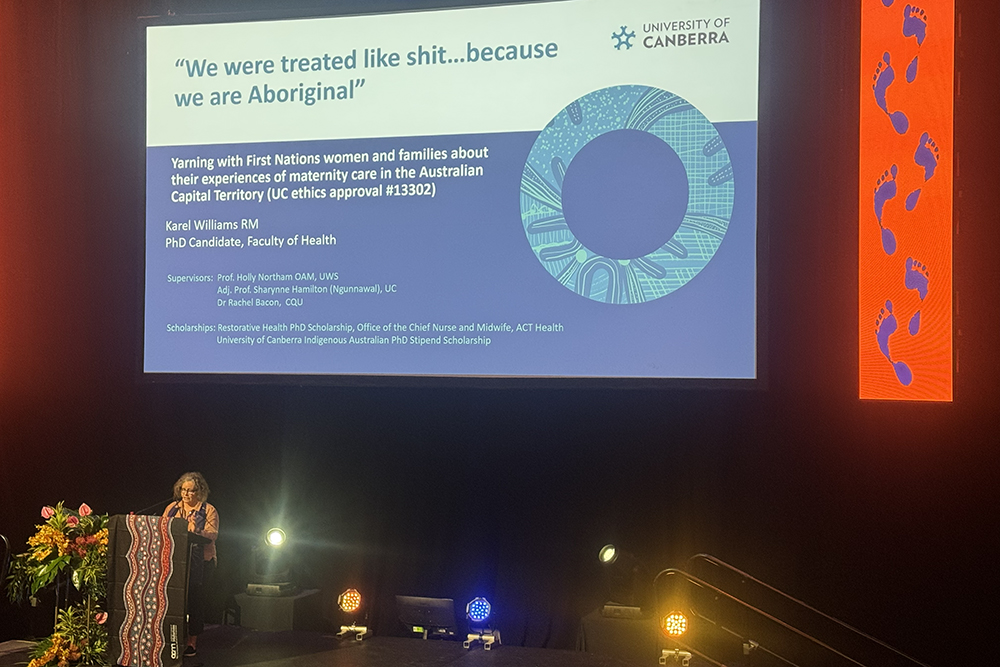
In 2022, Karel began a PhD exploring First Nations women’s and families’ experiences of maternity care in the ACT through storying, centering women’s voices: what they value, what has harmed them, and what genuinely safe, supportive care looks like.
The governance of the model’s development now rests with a community-led Birthing with Country Working Group, bringing together First Nations mothers, First Nations midwives, Aboriginal Liaison Officers, midwifery leadership, and representatives from the two local Aboriginal Community Controlled Health Organisations (ACCHOs).
Consultation has been central from the start: instead of building new structures, the team listened to existing yarning circles, following conversations wherever they led. A community listening report was produced and returned to participants – a step Karel notes is often overlooked in policy projects, but crucial to trust.
Evidence shows that when First Nations women receive care from First Nations midwives, outcomes improve: higher engagement with antenatal care, healthier birthweights, fewer interventions, increased breastfeeding, and reduced rates of child removal.
While community-driven, the proposed model aims to work within existing services. In the ACT’s public hospitals, continuity of care already exists; the working group hopes to have a dedicated First Nations stream, staffed by First Nations midwives, with cultural governance and cultural supervision embedded.
The proposed model would also include an “aunties and nannies” programme providing cultural support for women who want or need support during pregnancy and birth.
According to Karel, Birthing with Country can be implemented wherever a First Nations baby is born. It is built on principles that are simple but profound: continuity of midwifery care, culturally safe and anti-racist care, holistic wrap-around services, and the privileging of First Nations knowledges with Western clinical practice.
Despite progress, she warns of the biggest threat. “Racism is still the number one barrier,” she says.
Her research and community engagement reveal women avoiding maternity care due to poor experiences, fear of judgement and fear of child protection involvement. First Nations midwives have also left the profession due to racism from colleagues.
Workforce shortages compound the problem. Nationally, around 600 First Nations midwives are needed just to reach population parity; current numbers sit closer to 300 – well below what’s required, especially given higher birth rates and greater health complexity.
Still, Karel sees reasons for hope. The alignment of community leadership, evidence, policy backing, and senior support is creating fertile ground for real change.