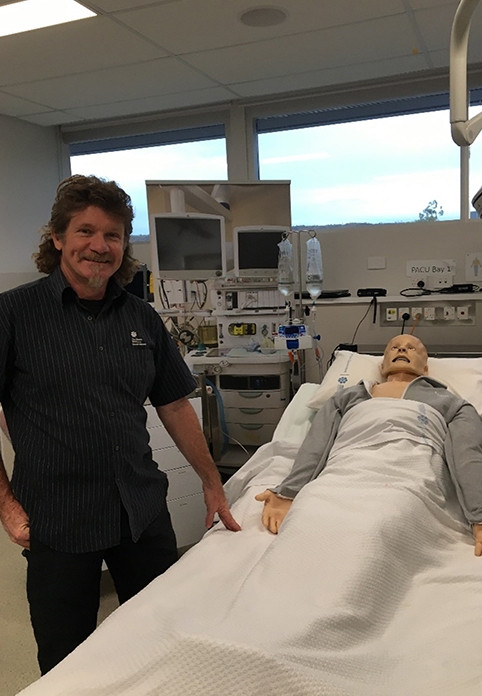
“It’s a hard gig nursing in a remote location, as there is the need to be a generalist and at the same time to have specialist knowledge and skills,” says Mark, who has been facilitating CRANAplus Remote Emergency Care (REC) courses since 2008.
Demystifying electrocardiogram (ECG) results is one focus he has while facilitating.
“ECG is a major area to study when it comes to the heart, and you need to make sense of those squiggly lines and relate them to the patient’s condition,” Mark says.
“Treating patients with chest pain can be stressful. Those pains can cover a variety of heart diseases or conditions, and sometimes it’s nothing to do with the heart at all.”
The (ECG) records the electrical signals in the heart, giving information about heart rate, heart rhythm, evidence of a previous heart attack or one happening now, blood and oxygen supply to the heart and clues to diagnose an enlarged heart, heart defects and other heart problems.
Continuity of care is an important factor in remote areas, but unfortunately it’s often difficult to provide.
“If the health care manager has been in a community for a number of years they know the community really well,” Mark says.
“They’ve been around at the birth of the youngsters, and maybe some of the adults, and developed a good understanding of the relationships of the community residents.
After a while they are often accepted as a member of the community family and given a skin name and place.
“There are so many reasons for the transient nature of health workers. Many communities rely on the great nurses who go out to remote communities for a short time, and they do a terrific job while they’re out there.
“Being prepared, being sufficiently prepared, is the key, and these courses that CRANAplus hold go a long way towards that. The other advice I’d give is making sure you have mentors, people who have your back, who are there to support you, especially when you don’t feel prepared. In some situations you can be overwhelmed by the scale and complexity of delivering good quality health care.”
Mark has lived in Alice Springs for 25 years, having grown up in Canberra and spending nine years nursing in Sydney, where he realised he wanted to specialise in cardiology and cardio-thoracic nursing.
Mark is happy to be once again facilitating face-to-face REC courses, in between his day job at the Alice Springs Hospital as a Nurse Educator Consultant within the Clinical Education Team.
For the past 14 years Mark has been a trainer/assessor, originally focussing on remote health workers.
“That’s now morphed into a more general role, training and assessing not only remote staff but also hospital staff, community workers and people from other organisations, and being a facilitator with CRANAplus is an extension of that,” Mark says.