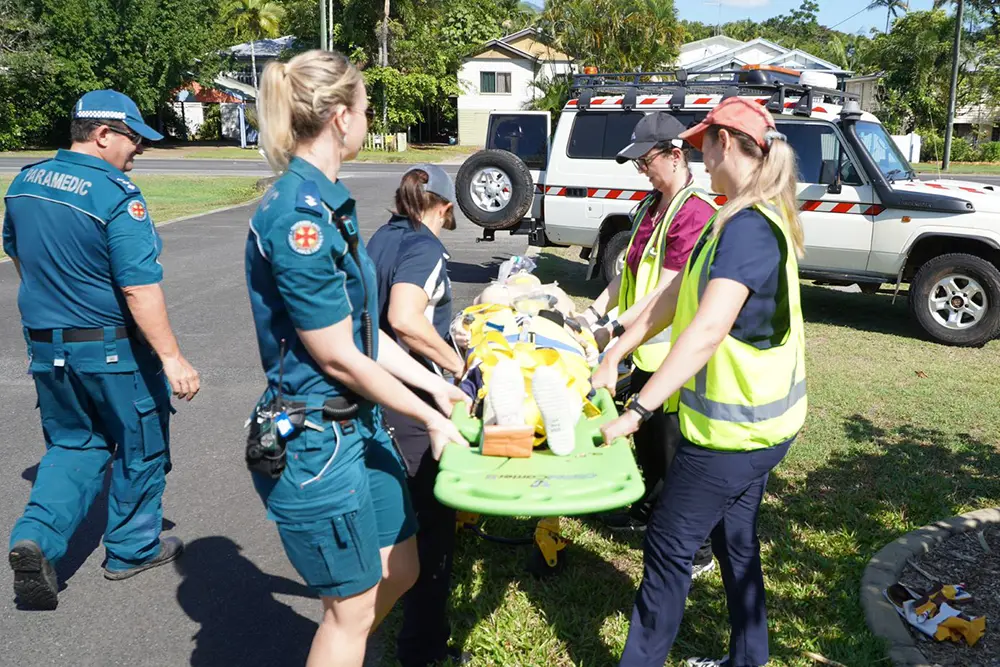
This Saturday, 10 October, is World Mental Health Day: a day to raise awareness around mental health issues and mobilise support. It’s a reminder to check in, reach out, and prioritise wellbeing. Whilst the message is aimed at the general public, people whose entire profession revolves around other people’s mental health are often forgotten. In rural and remote healthcare, that gap matters more than it might elsewhere because there’s often no one else to fill any shortfalls or to redistribute the load to.
Burnout has become a common explanation whenever a health worker describes feeling depleted. Burnout may sometimes be the reality, but sometimes it might be something else, such as secondary traumatic stress (STS). STS is an acute, PTSD like response to indirect trauma, and differs from vicarious trauma, which is a gradual and profound transformation of a person’s core beliefs and worldview due to long-term exposure to traumatic material. STS can be described as the natural behavioural and emotional result of being exposed to someone else’s traumatic material. Think of it like emotional residue you accumulate from bearing witness to distress, crisis and suffering that isn’t your own, but that you carry nonetheless. Symptoms experienced are the same as Post-Traumatic Stress Disorder symptoms, such as nightmares, emotional numbness, loss of interest, hypervigilance, avoiding reminders of the event, or a heightened startle response, to name a few.
This matters as burnout and STS require different responses. Whilst burnout is largely a function of chronic mismatches in workload, control, reward, fairness and values, STS is exposure-based and can occur even if the workplace is well-designed and well-resourced. STS stems from the nature of the work itself, and mixing the two up can mean reaching for the wrong intervention. For example, offering only workload adjustments (such as working in a different setting) to someone who also needs trauma-informed supervision.
Working in rural and remote locations can often reduce or remove buffers that protect us, such as professional connection, access to regular clinical supervision, or capacity to debrief informally in between clients or patients. When we also add the dual relationships that come with working in smaller communities, it’s often hard to find anywhere for that emotional load to go.
STS doesn’t always look dramatic and can show up as intrusive images of a client’s story resurfacing unexpectedly; a growing hypervigilance about the world outside of work, hypervigilance, irritability and emotional exhaustion. None of these indicates weakness or unsuitability for the work; it simply shows exposure to trauma, much like a physical injury would indicate the occurrence of physical strain. Most people’s instinct is to feel ashamed if they are experiencing symptoms, or to tell themselves things such as, “I should be used to this by now,” but that’s part of the problem as well. You experience this because you are a caring and compassionate human being.
This is why self-compassion is extremely important. Self-kindness rather than self-judgement, common humanity rather than isolation, and mindful awareness rather than over-identification with the distress.1 You are not the only person in the world experiencing this right now, so ask yourself what you would say to a friend going through this. For someone experiencing STS, it can function as a kind of counterweight to the ‘shame spiral’ that so often accompanies the feeling that you are the only one who is affected, that you’re failing at this type of work, and not able to cope. Recognising that this response is a common and almost predictable feature of the work, and not a personal deficiency, is a great start to allowing recovery to begin.
A wellness email or an extra day off doesn’t address any of these challenges. What helps protect rural and remote health workers from the cumulative cost of STS is structural. Things such as regular, trauma-informed clinical supervision, peer consultation networks and workload design that accounts for exposure load, not just patient numbers, are all helpful inclusions to any workplace.
Protective actions that you yourself can take include:
- Regular clinical supervision. This includes specifically debriefing the emotional impact of exposure, not just the decision-making involved in treating the person. Whilst a clinical supervisor is preferred, you can also informally debrief with safe colleagues to help unpack what comes up for you, particularly after a critical incident.
- Closing rituals. Between patients or clients, or at the end of the day, have a small ritual you can do, such as stretching or going for a brief walk, to prevent it bleeding through to the next person or your personal life.
- Practice self-compassion. Notice how you are talking to yourself, and be kinder and more understanding, especially given the work you do.
- Maintain connection. Nurture your outside-of-work identity and relationships and reduce your isolation.
Workplaces can help support their workers by providing some of the following:
- Trauma-informed supervision. Don’t make it optional or self-initiated, but mandate and fund it appropriately.
- Peer support structures. Deliberately build structures that allow for debriefing (not just in the corridor). This could include virtual peer consultation groups across sites.
- Training. Train managers or team leaders to recognise STS so they can identify early signs and respond, rather than only addressing it once a worker is in crisis or has resigned.
- Reducing professional Isolation. Build cross-site collaboration, telehealth-enabled supervision networks, and funded attendance at professional development opportunities or conferences to build and maintain professional community.
This World Mental Health Day, the most useful action might be a small one, such as recognising that supporting people who support everyone else isn’t an act of generosity, but basic workforce sustainability. Take care of the carers, including yourself.
Be kind,
Dr Nicole Jeffery-Dawes (she/her)
Senior Psychologist, Mental Health and Wellbeing.
- Neff, K. What is Self-Compassion. Self-Compassion Institute. Accessed 11 September 2026 at https://self-compassion.org/what-is-self-compassion/#what-is-self-compassion