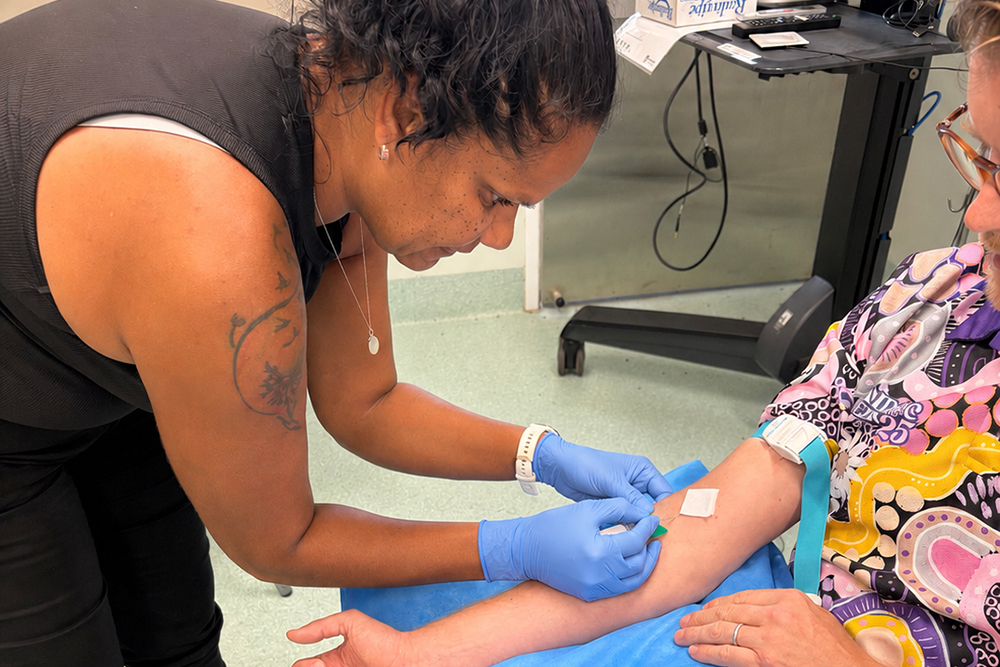
Remote health professionals have long been at the forefront of Australia’s response to syphilis. In this article, Laura Berry, Workforce Support Coordinator and sexual and reproductive health Nurse Practitioner, shares practical insights to support clinicians in recognising the signs, initiating timely treatment and confidently navigating partner notification and follow-up.

In 2025, syphilis was declared a Communicable Disease Incident of National Significance in Australia following rising rates nationally and increasing concern around congenital syphilis. While this brought national attention to the issue, remote communities have been carrying the burden of this outbreak for many years, noting that Aboriginal and Torres Strait Islander peoples have been disproportionately affected since the outbreak began in Queensland in 2011 before spreading across the Northern Territory, Western Australia and South Australia.
For those of us working in rural and remote health, syphilis is now something we see, hear about and manage regularly. Despite this, it is still very easy to miss.
Many people are asymptomatic and when symptoms do occur, they can look like almost anything, which is why syphilis is known as the “great pretender”. A painless genital ulcer may be dismissed as trauma or irritation. Syphilis may also present as painful genital lesions and be mistaken for herpes. A rash may look viral or fungal. Sometimes people just present generally unwell with swollen lymph nodes, fatigue or vague symptoms that do not immediately trigger the thought, “That’s syphilis”.
One of the most important things we can do as remote clinicians is maintain a low threshold for testing and treatment. In remote communities, people may only engage with healthcare services intermittently, making every presentation a valuable opportunity to identify and treat syphilis as early as possible. Testing is easy and requires serology for syphilis antibodies. If there is an ulcer or lesion present, a dry swab (NAAT or PCR) will allow for testing.
Making syphilis testing a routine part of consultations, including adult health checks, antenatal care, contraception visits, STI screening and routine blood collection, can improve case detection. Antenatal screening remains essential to prevent congenital syphilis.
What to look out for
Primary syphilis – highly infectious
- Single painless ulcer (chancre)
- Genital, anal or oral lesions (this can include the cervix)
- Local lymph node swelling
If you notice any of these symptoms, swab the lesion for confirmatory testing.
Secondary syphilis
- Rash, often involving palms and soles
- Fevers, malaise and lymphadenopathy
- Mucosal lesions (mouth and/or genitals)
- Patchy hair loss
Early latent syphilis
- Usually asymptomatic
- Diagnosed on serology only
Treatment for syphilis is usually straightforward. Benzathine benzylpenicillin 2.4 million units IMI as a STAT dose remains first-line treatment*, with dosing dependent on the stage of infection.
One practical tip is to warn clients about the Jarisch-Herxheimer reaction before treatment. This commonly occurs in primary and secondary syphilis around 6–12 hours after treatment and can cause fever, headache, malaise, rigors and joint pain.
Symptoms generally settle within several hours and can usually be managed with rest and analgesia. Preparing people beforehand can prevent a lot of anxiety.
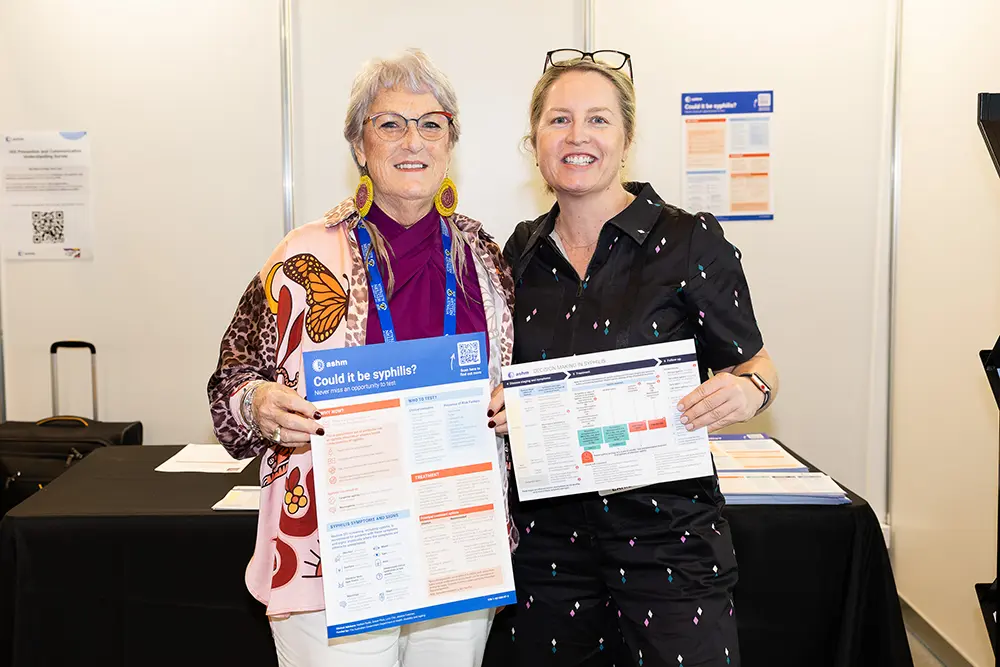
Contract tracing
I appreciate that partner notification can feel challenging, particularly in small communities where confidentiality and overlapping relation-ships are important considerations. These conversations require sensitivity, kindness and a non-judgemental approach. One thing I often do is leave a pen and paper with the client while I step out to organise treatment. I ask them to write down anyone they have had sexual contact with during the contact tracing period and reassure them that everything is confidential. It sounds simple, but it often breaks down a barrier and makes the conversation easier.
Syphilis is a notifiable condition and contact tracing is an important part of reducing transmission and preventing reinfection.
Once you have the names of contacts, presumptively treat all sexual contacts from the last three months of patients with primary or secondary syphilis regardless of serology.
Current recommendations are:
- Primary syphilis: trace back three months plus duration of symptoms.
- Secondary syphilis: trace back six months plus duration of symptoms.
- Early latent syphilis: trace back 12 months or since last negative test.
Syphilis can be overwhelming. If you are unsure about staging, management or contact tracing, contact your local syphilis register. They are an excellent resource.
Syphilis Registers
- Queensland: 1800 032 238
- South Queensland: Qld-syphilis-surveillance-service@health.qld.gov.au
- North Queensland: North-qld-syphilis-surveillance-centre@health.qld.gov.au
- South Australia Syphilis Register: 1300 232 272
- NT Syphilis Register: Darwin (08) 8922 7818; Alice Springs (08) 8951 7552
We all play a huge role in the response to syphilis. Recognising the signs early, having open conversations about sexual health and making testing part of routine care can have a meaningful impact. Sometimes the most important thing is simply talking and testing.
*It is acknowledged that there is currently a shortage of Benzathine Penicillin with the shortage expected to last until 30 November 2026. Please discuss with a specialist regarding alternative treatment.