The huge success of the Hep B PAST project in the Northern Territory is what happens when the model of care is designed with communities rather than for them.

In less than a decade, Hep B PAST has tripled liver cancer survival rates for Aboriginal people – an outcome driven by earlier diagnosis, sustained engagement through education, and treatment uptake that far exceeds national targets set by Hepatitis Australia.
“We have not only closed the gap on Hep B, we have excelled,” says the program’s lead researcher, Professor Jane Davies, an infectious diseases physician who has devoted her career since 2012 to understanding and addressing the Hep B virus.
The project is led by Menzies School of Health Research in partnership with NT Health, Miwatj Health Aboriginal Corporation, Katherine West Health Board, Marthakal Homelands Health Service, Mala’la Health Service, Central Australian Aboriginal Congress, Sunrise Health Service, Wurli-Wurlinjang Health Service, Danila Dilba Health Service, Red Lily Health Board, Cairns and Hinterland Health Service, Top End Medical Centre, ASHM, NT Aids and Hepatitis Council, Hepatitis Australia, Hep B Voices, NACCHO and Cancer Council Australia and has received funding from the NHMRC, MRFF and The Australian Government Department of Health and Aging and the Australian Centre for Disease Control.
Jane describes the results as deeply encouraging. “We have shown that Hep B is a solvable problem for Australia over the coming decades,” she says.
She is now urging nurses in rural, remote, and regional areas across the country to include Hep B status as part of routine blood test ordering – a simple step with significant impact.
Established in 2018 after years of groundwork with remote communities, the project has trans-formed outcomes in the NT. Diagnosis rates have risen from around 60 per cent to almost 100 per cent, compared with a national target of 80 per cent. Engagement in Hep B care has reached 86 per cent, compared with the national target of 50 per cent, while antiviral treatment uptake has climbed from just 3 per cent to 24 per cent – exceeding the national target of 20 per cent.
Jane attributes the program’s success to several interconnected strategies, including a comprehensive training programme for Aboriginal Health Workers.
“There is a lot of specific training available for doctors and nurses,” she says, “But we realised there was very little designed for Aboriginal Health Workers.”
A key part of the project’s early development was co-designing the training, with Aboriginal Health Workers taking a lead role in shaping the content and delivery.
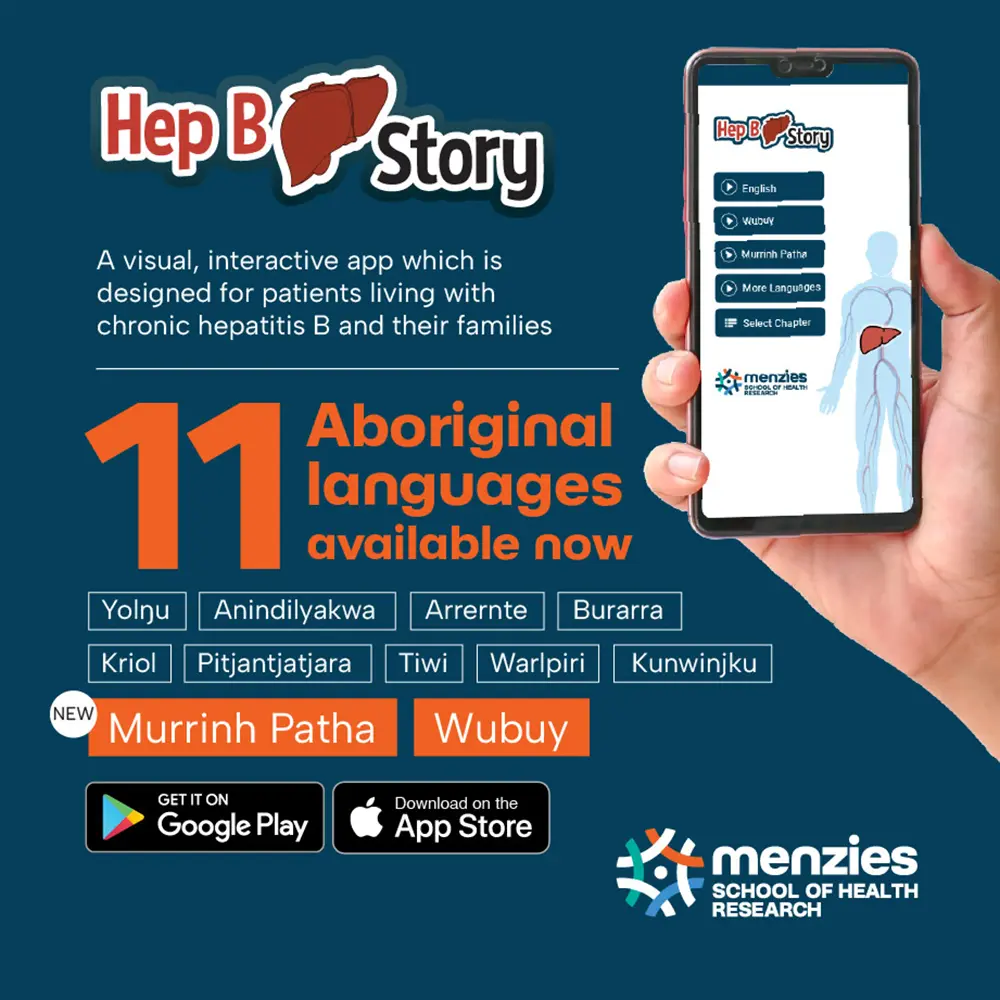
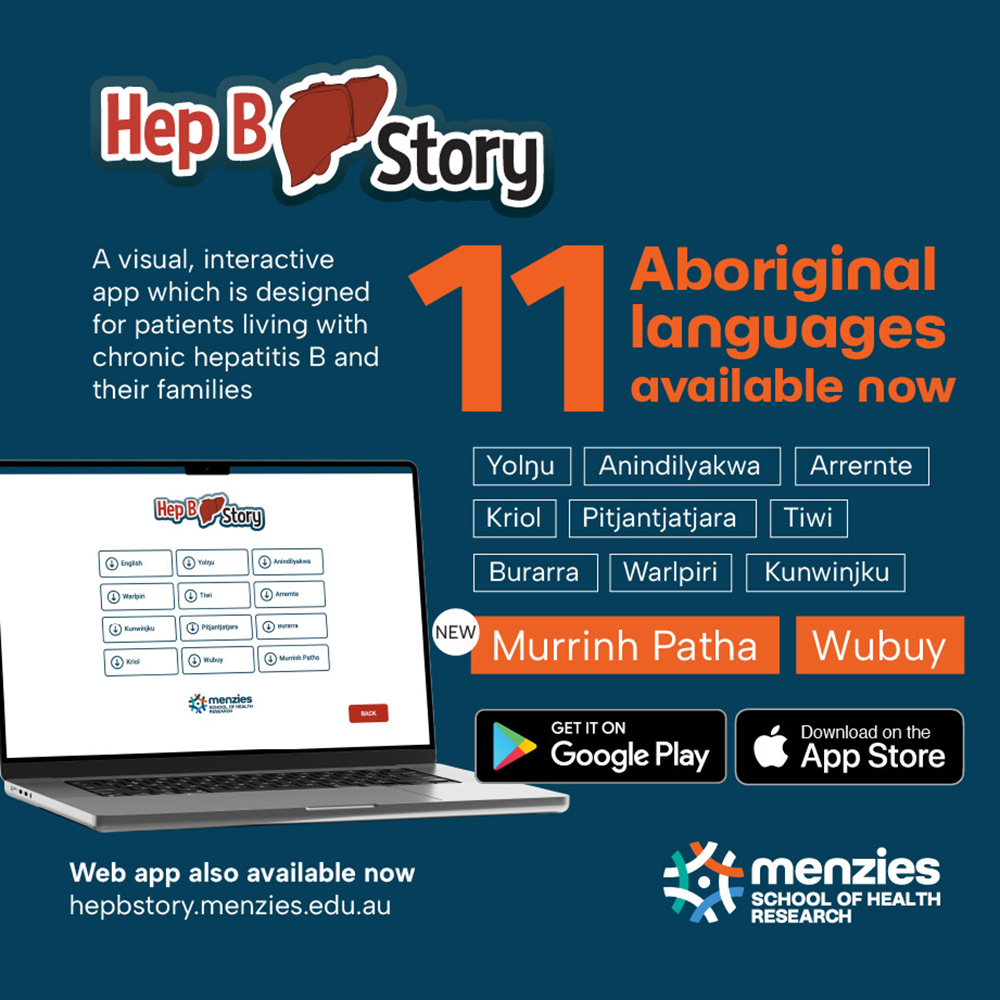
Equally critical has been the project’s community -led approach. Information and support are provided in 11 Aboriginal languages, helping to address misinformation, reduce shame or fear, and support people to understand their diagnosis and treatment options. HepB Story, a freely available app, explains how Hep B is transmitted and walks users through blood tests, treatment, and immunisation in accessible, culturally appropriate ways.
Another cornerstone of Hep B PAST’s success is the “one-stop liver shop” model, delivered in partnership with Aboriginal community-controlled health services (ACCHSs).
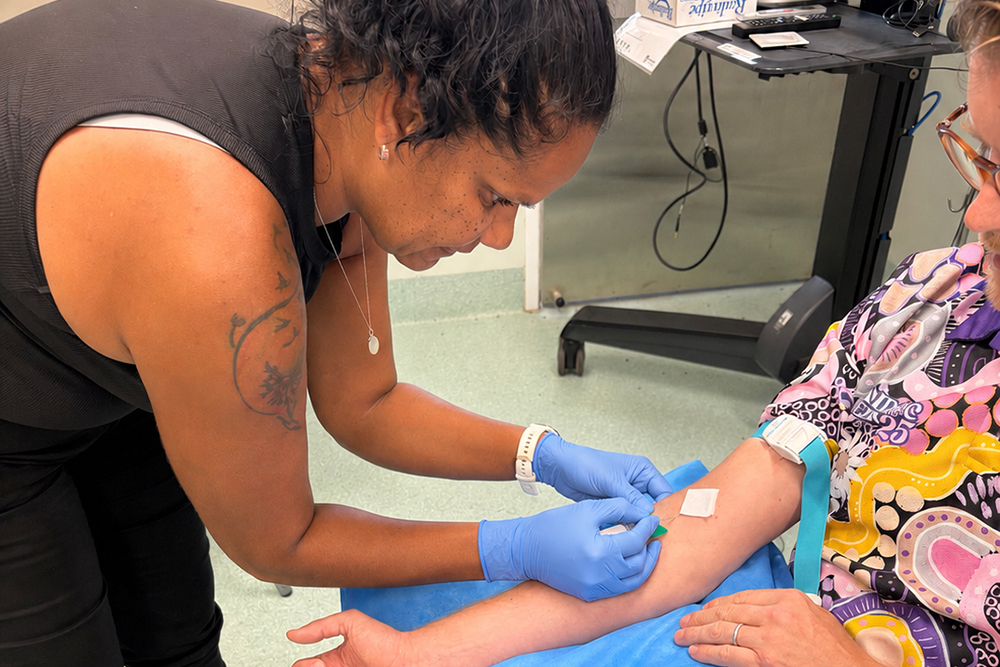
The model brings comprehensive care directly into communities, with blood tests, ultrasounds, specialist consultations, and follow-up planning all completed in a single visit.
By removing the need for multiple appointments or long-distance travel, the approach reduces the risk of people dropping out of care and supports continuity for local
health workers.
By combining this model with culturally safe care, language-appropriate education, and trusted local health professionals, the program has created an environment in which patients feel confident engaging in treatment, says Jane.
Looking ahead, the program has secured dedicated funding and is being taken up in parts of Far North Queensland, with interest also emerging in Western Australia.
In partnership, there are plans to extend the model to other regions nationwide, demonstrating that a community-led, culturally safe approach can be scaled effectively.
“We have a mission to eliminate chronic Hep B from the NT and would love to expand to reach as many people as possible.”
“There is no reason this project can’t be adapted for other settings.
“The Aboriginal communities we have worked with across the NT are all unique and differ in language, resources, and environment.
“You would approach any new setting—Aboriginal or non-Aboriginal—in the same way.”
Future plans include training non-ultrasono-graphers to increase access to liver imaging in remote areas, alongside a stronger focus on liver cancer screening, early detection, and timely therapy.