Australia has four Antarctic Stations, and each Station has approximately 20 winter expeditioners and up to 80 summer expeditioners.
There is one Doctor provided for each Station and it is his/her role to provide ongoing and emergency medical care for these expeditioners. Although there is no other medical staff provided, three or four fellow expeditioners volunteer to undergo two weeks surgical and anaesthetic training at Royal Hobart Hospital prior to their departure so they can be assistants to help the Doctor in times of medical emergency.
The Doctor receives training in various disciplines, to prepare for a range of services that may be required to be carried out on the Antarctic Station as part of the job –including surgery, anaesthetics, dentistry, pathology, radiology, emergency field work and public health. These courses are varied and cover a wide range, but are all very interesting and enjoyable.
On top of this, there are training courses for all Station personnel in outdoor survival, field travel, navigation and snow-vehicle driving. The entire training period is filled with exciting new challenges.
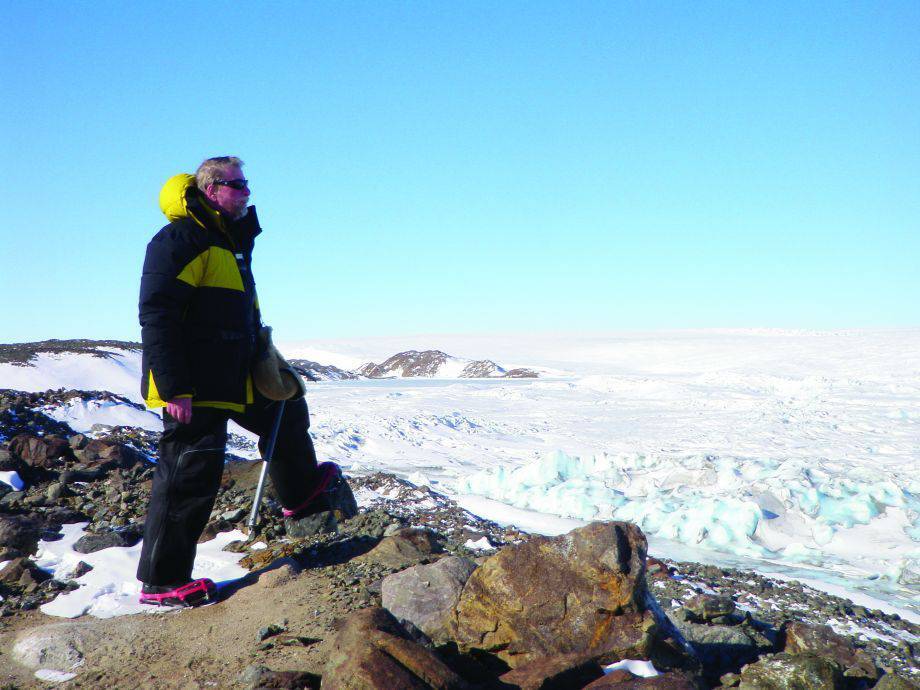
My year at Davis was medically rather quiet, a dislocated shoulder being the most exciting challenge that I met. However, as the dislocation had occurred following a slip on ice many kilometres away from the Station, by the time the patient presented at my surgery, he required a general anaesthetic to reduce the dislocation. This gave our lay-medical team some first-hand genuine medical experience.
In past years, some of the Antarctic Doctors have found themselves being tasked with performing laparotomies for appendicitis, peritonitis, retroperitoneal haemorrhage, a craniotomy for extradural bleeding and treatment of multitrauma after falls off ice cliffs.
One Russian Doctor even had to perform his own appendicectomy under local anaesthesia. It is a requirement of the job for Australian Doctors nowadays that they have their appendix removed electively prior to “going south”.
All in all, a year spent in Antarctica is a challenging, though utterly enjoyable experience, one which I would recommend to any colleague.
Dr Lloyd Fletcher
My name is Lloyd Fletcher. I am a Medical Practitioner. I graduated from the University of Western Australia in 1972 and, after undertaking several Residencies in appropriate disciplines (Medicine, Surgery, Psychiatry, Eyes, ENT, Anaesthetics, Obstetrics, Paediatrics), I have spent my entire medical career practicing Medicine in Remote Areas.
I have always enjoyed working in remote areas as this has allowed me to be my own boss, to make my own decisions most of the time, and to practice Medicine with the patient’s best interest at heart. The practice of remote medicine has also presented the ongoing challenge of meeting unexpected tasks, which might range from minor through to critically major. Also, remote-area medical practice has afforded me the privilege of practicing a wide range of medical skills. Some of my medical work has included jobs in Nhulunbuy, Cocos (Keeling) Islands, the RFDS, Saudi Arabia, Norfolk Island, Antarctica, and assorted locums throughout the States of WA and Tasmania.
I recently took part in the CRANAplus, 2½ day, Advanced Remote Emergency Care Course in Geraldton, WA. And what an excellent course it was. The Course allowed me to accumulate most of my PDPs (Professional Development Points) as required by ACRRM, the Medical College to which I belong. Also, it provided me with a refreshing look at the systemic approach to assessing a patient in an emergency situation. Wendy Bowyer, the Course Coordinator, asked me to write a brief profile of my career for the CRANAplus magazine.
The highlight of my medical life has been the practice of Medicine in Antarctica. This is a region of truly remote medical practice. No medivacs are available at all from Antarctica for 9 months of the year, and thus an isolated Antarctic Doctor is expected to fill all medical roles whilst there,to be the Anaesthetist, Surgeon, Pathologist, Radiologist, Lab Technician and Nurse for his patients whenever required. It is an exceptionally enjoyable challenge, and the rewards of the job are the phenomenal beauty, the magnificent wildlife, and the awesome majesty of the frozen lands and seas which make up that continent.