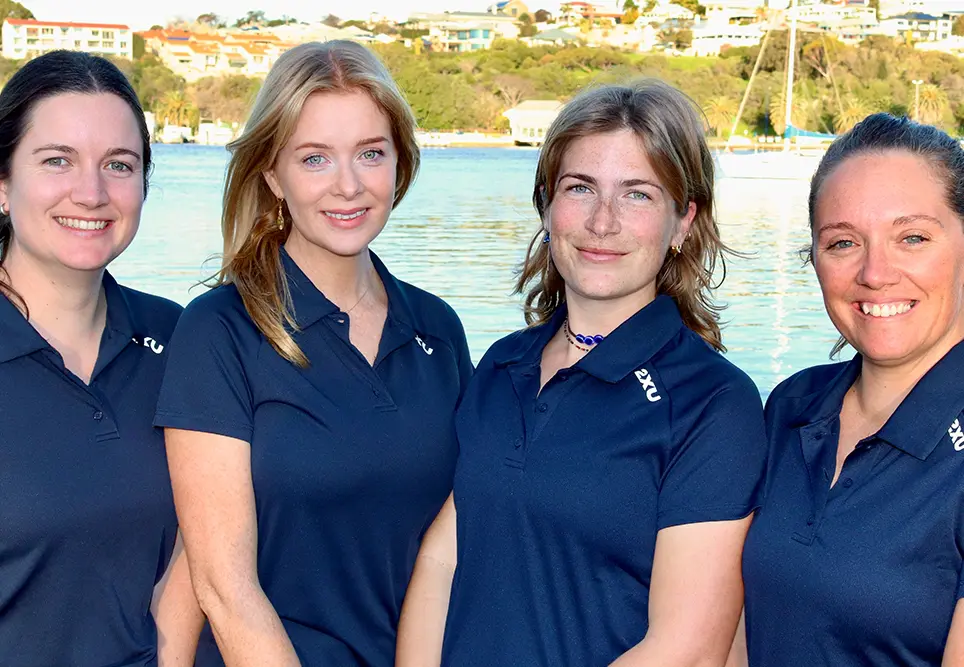
Cassie is part of ‘Blades of Oary’, a team of four Perth women rowing 4,800km across the Atlantic Ocean.
The World’s Toughest Row is an endurance race that sees teams from around the world pushed to the edge of their limits.
“We are beyond excited and are currently training six days a week,” Cassie says. “We’ll row for 40–60 days straight, carrying all our food, water, and medical supplies. Our ocean rowing boat has two cabins in it at the bow and stern where we will rest and bunker down in a storm.”
Their journey begins in La Gomera in the Canary Islands, from where they will row continuously in two-hour on two-hour off shifts until arriving in Antigua.
“There is no support boat, so we have a mandatory list of courses such as navigation, sea survival, VHF radio operation and marine first aid to complete prior to leaving.”
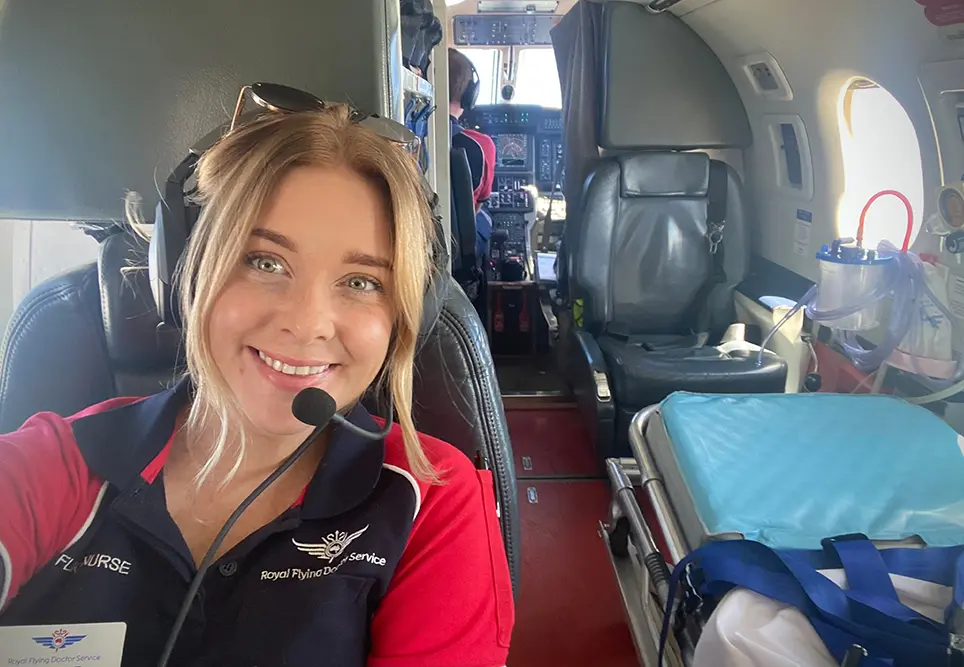
Cassie thrives on this kind of adventure, having worked as a medic for an Australian camel trek across the Simpson Desert and a 300km camel crossing of the Gobi Desert.
“I’ve always been completely obsessed with expedition medicine – a place where clinical practice meets wild places and human endurance,” she says.
“The skills I’d gained through remote health care, especially in planning, clinical prioritisation, and calm decision-making, helped me lead confidently.”
Cassie began her remote healthcare journey after being inspired by a remote area nurse at a young age, and still carries an admiration for her colleagues.
“Spending a small part of my childhood in the small coastal community of Maningrida in the Northern Territory had a big influence on me. I remember being inspired by a remote area nurse from Maningrida, which was crazy that even as a child, I knew I wanted to follow a similar path,” she says.
“Remote work has taken me everywhere – from the Top End to Cocos Keeling Islands, Norfolk Island, Central NSW, Christmas Island, and even Rottnest Nursing Post. In my role with RFDS, I mainly retrieve patients from these regions now and it’s clear: remote area nurses are the backbone of these communities.”
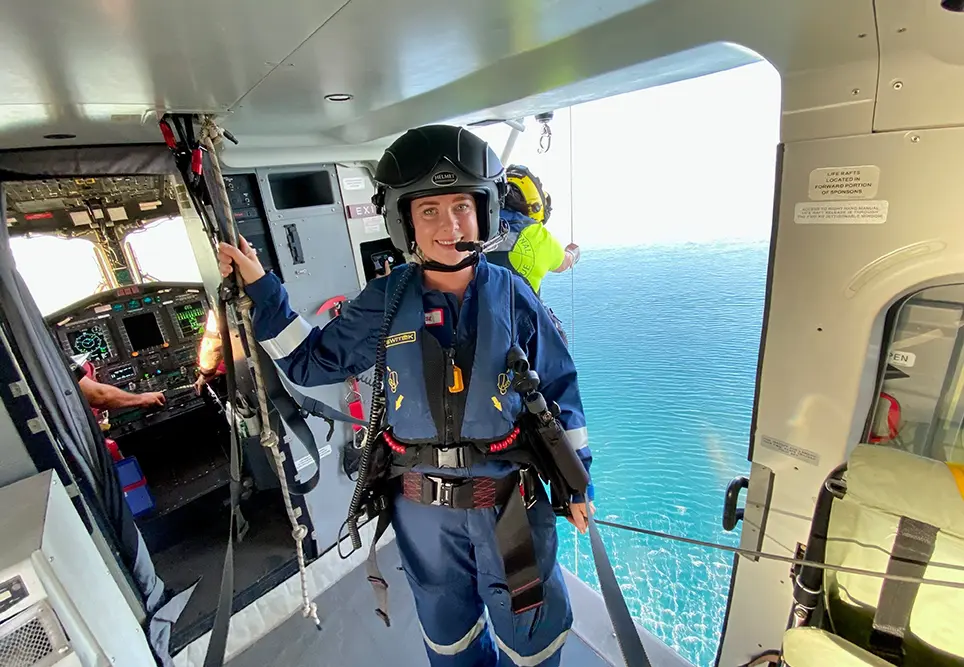
As the designated medic on board this expedition, Cassie is preparing for whatever may come.
“From a medical perspective, I expect us to be managing saltwater rubs, pressure sores, shoulder and back injuries from overuse, but could encounter anything from capsizing to a marlin strike into the boat!” she says.
“While I hope to spend more time rowing than triaging, CRANAplus has definitely given me the skillset to manage emergencies in the middle of the ocean.”
Cassie has completed CRANAplus’ Remote Emergency Care, Maternity Emergency Care and Midwifery Upskilling courses.
“All of this laid the foundation for me to fit the criteria and become the perfect candidate as a flight nurse – a role that perfectly matches my personality. I thrive on adventure, variety, and the challenge of working in different locations with diverse presentations.”
While the physical and emotional challenges of the row are monumental, the cause behind it gives the journey deeper meaning.
Cassie and her team are rowing to raise money for two organisations close to their hearts: the RFDS and Ruah Community Services, Perth’s oldest women’s shelter.
“This row is my way of giving back,” Cassie says.
“As women, our team hopes to send a power- ful message about equity, access, and the importance of supporting remote communities and vulnerable populations.”