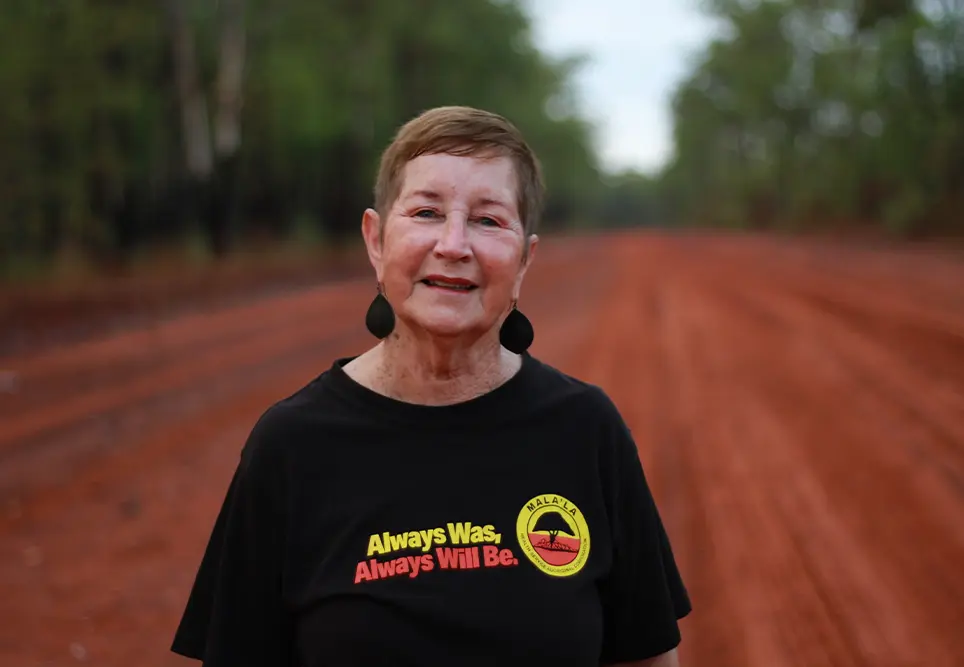
CRANAplus Member Lesley Woolf has been awarded the Medal of the Order of Australia (OAM) in the King’s Birthday 2024 Honours list for her service to Indigenous health and to rural and remote nursing. She sees this award as a recognition for the nurses who work in Aboriginal health, and those who work in rural and remote areas around Australia.
Lesley has been a nurse for over 50 years, 40 of those involved with rural and remote nursing and specifically in Aboriginal communities and for Aboriginal patients, a career which has taken her across Australia and also to the Western Province of PNG.
She is passionate about advancing and transitioning health services to Aboriginal Community Controlled Organisations and applauds the Northern Territory government for its support in this area.
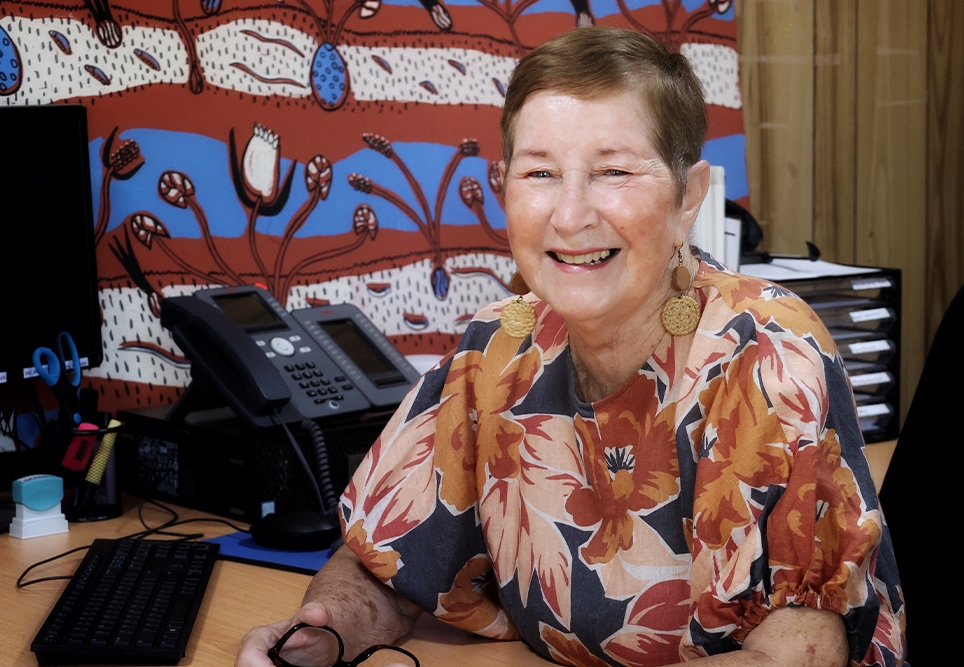
Her interest in Aboriginal health began shortly after her training when she was working in Mount Isa, which has a large Aboriginal population, and her focus increased not long afterwards, working with remote communities.
“You see the burden of disease and how sick people are and you want to do something,” she says.
Lesley has always championed nurses and, years before Aboriginal community-controlled health services became a reality, Lesley was involved in a registered nurse training program which involved two cohorts of Aboriginal students. The program which was run by the Deakin University in Mt Isa, was an opportunity to address the registered nurse shortage and to give students the opportunity to train at home.
“The response was amazing. We were inundated with applications. To support the students, we offered free student accommodation, seconded staff to provide specific training and there was a lot of in-kind support.
“They all finished their training and there are a number of the graduates working in senior nursing positions across Australia. This is what happens when you take away barriers and introduce support.”
While Lesley says she totally enjoyed all her roles in the mainstream public service, it is working with Aboriginal community-controlled health services that she feels she has landed in a place that suits her perfectly.
“When working in Katherine, I was approached by the then CEO of Sunrise Health Service to assist in the recruitment of a suitable person to facilitate their coordinated care trial to transition health services in the Katherine East region to community control.”
“I found I could make decisions, work withpeople on the ground, identify the real priorities and work with the teams on preventative health.”
“I knew this was an opportunity of a lifetime for me.” After three years, the health services in the region were transitioned to community control.”
Lesley has been at Mala’la Health Service Aboriginal Corporation, which services Maningrida and surrounding homelands in North East Arnhem Land, for the past nine years.
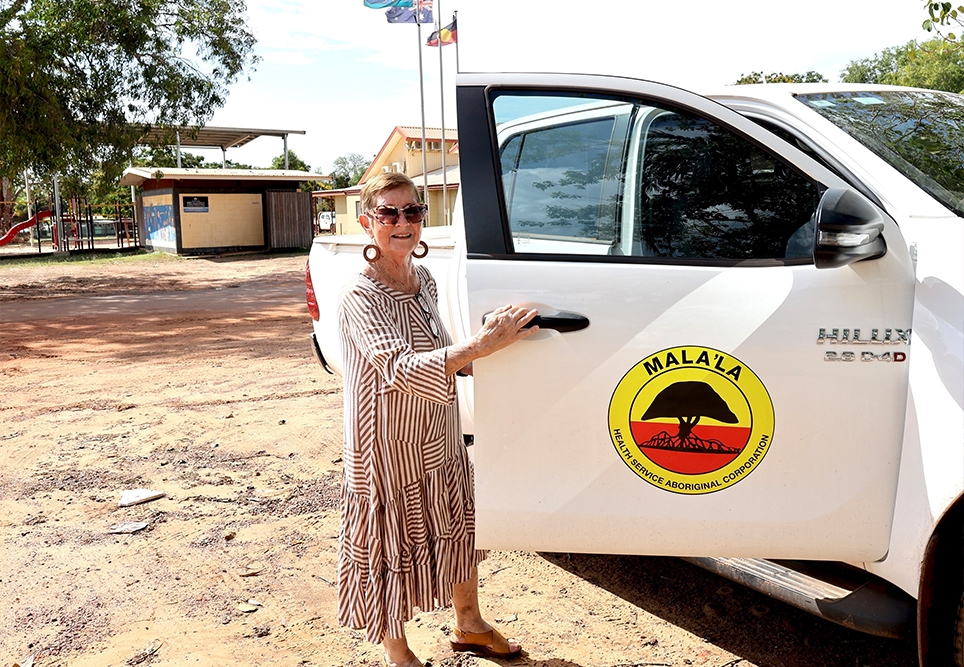
“Hospitals are great and there will always be a place for hospitals where really sick people go,” says Lesley, “but there is certainly a greater movement to do more in the communities particularly in the area of telehealth.
“For example, a sick mum who is the matriarch, the one holding the family together, has the ability to stay at home, thanks to telehealth.
“There’s a bit of a stereotype around health care, the suggestion that care is better in the bigger towns and cities. That is not always the case, perhaps particularly in times of quick access to that care.”
Lesley acknowledges that, until there are more Aboriginal nurses, Aboriginal Health Practitioners and managers, there will be the need for non-Indigenous staff in Aboriginal controlled health centres.
“At the head of our management structure is a board of directors consisting of Elders and traditional owners. The chair of the board has been an Aboriginal Health Practitioner for many years. They are the governing body providing direction and support and advice and they make the final decisions.
“The board can make all the decisions, and the managers can put them in place, but it doesn’t work without the right people. You need the best people and the most appropriate people for it to work well. We talk to every nurse and doctor prior to them coming to work for us, and make sure they know what they are coming to, and ensure their attitudes are appropriate.
“Our CEO has been here for 11 years, with a lot of experience and our managers are all very experienced and culturally sensitive.
“I think it is working because they are the right people, and we have a very strong workplace culture.
To illustrate the benefits of transitioning to Aboriginal community control, Lesley gives a summary of a program in Maningrida, during the time of transition, which was to address the very high incidence of rheumatic heart disease.
“We got additional funding in 2019 and we set up a programme and there was a lot community consultation,” says Lesley. “There was reluctance by some at the time, but we bit the bullet, utilised those who were committed and put their hands up to be involved. The school kids were screened, with 28 new cases identified, showing there was more rheumatic heart disease than we were aware of.
“This was the start of a highly successful RHD program which has gone from strength to strength. The great work continues to this day, with a dedicated Rheumatic Heart Disease team with a focus on Healthy Homes.”
Lesley, who is beyond retirement age, is not considering that path at the moment, although the organisation does talk about succession planning, she says.
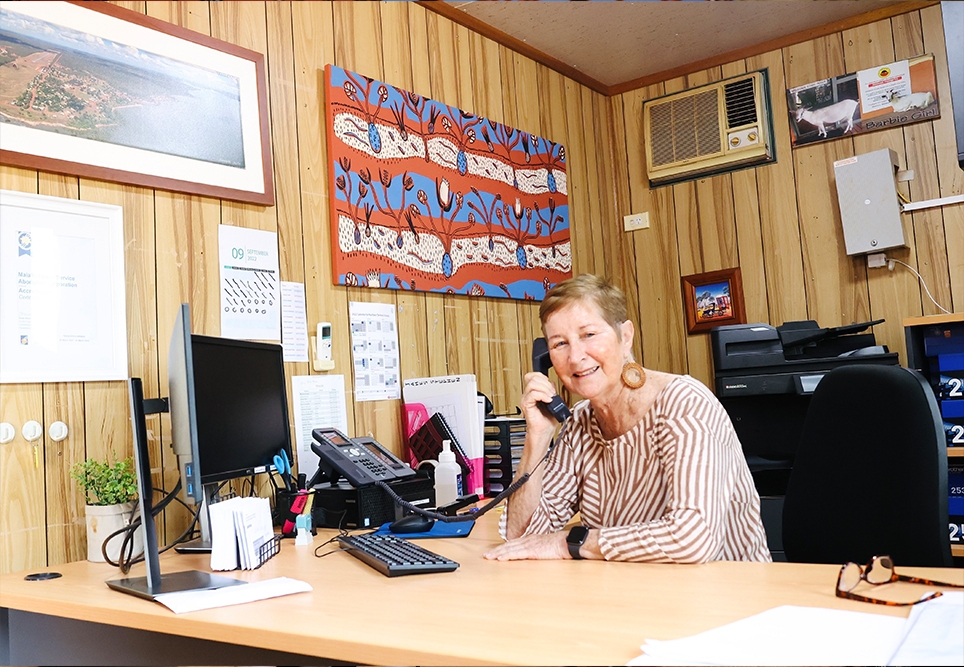
“There is so much to do and I love what I do. To leave it would be very hard. I’m proud of the work that I’ve done over the years, always being a cheerleader for nurses, as well as seeing the benefits of transition to community control.
“I have plans for this place: to increase the number of aged-care beds and support in this community, really to deal with the waiting list which is quite long. And I also want to see improved renal services here.”