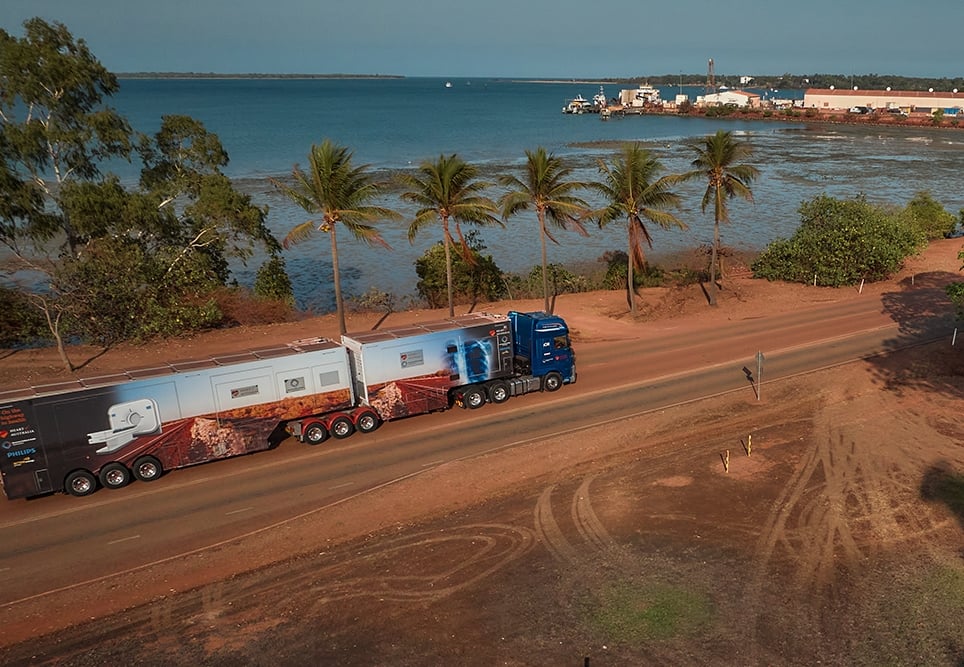
Its innovative fleet of trucks with custom-designed clinics has travelled over a million kilometres, delivering critical health care to nearly 20,000 people, helping patients avoid 40 million kilometres in travel for appointments, and saving more than 800 lives. We sat down with Heart of Australia Founder, Director, and Cardiologist,
Dr Rolf Gomes on the organisation’s 10th anniversary, where he reflected on the program’s achievements and its newly announced national expansion, including the rollout of the National Lung Cancer Screening Program.
As Heart of Australia celebrates its 10th anniversary, the organisation has already had a profound impact on Queensland’s remote communities. Its innovative front-line medical service has delivered specialist healthcare services to the regions, including, but not limited to, cardiology, urology, neurology, gastroenterology, diagnostic testing and more.
So when the Federal Government announced in May 2023 that it was establishing the National Lung Cancer Screening Program (NLCSP) and it needed to find a way to deliver the program to people who don’t live in the cities, Heart of Australia and its trucks with soon-to-be-patented battery-operated CT scanners was the solution.
When the Government mentioned the possibility of mobile CT scanners to make the screening program accessible to country Australians, it was a case of the “right place, right time, right technology,” recalls Dr Gomes.
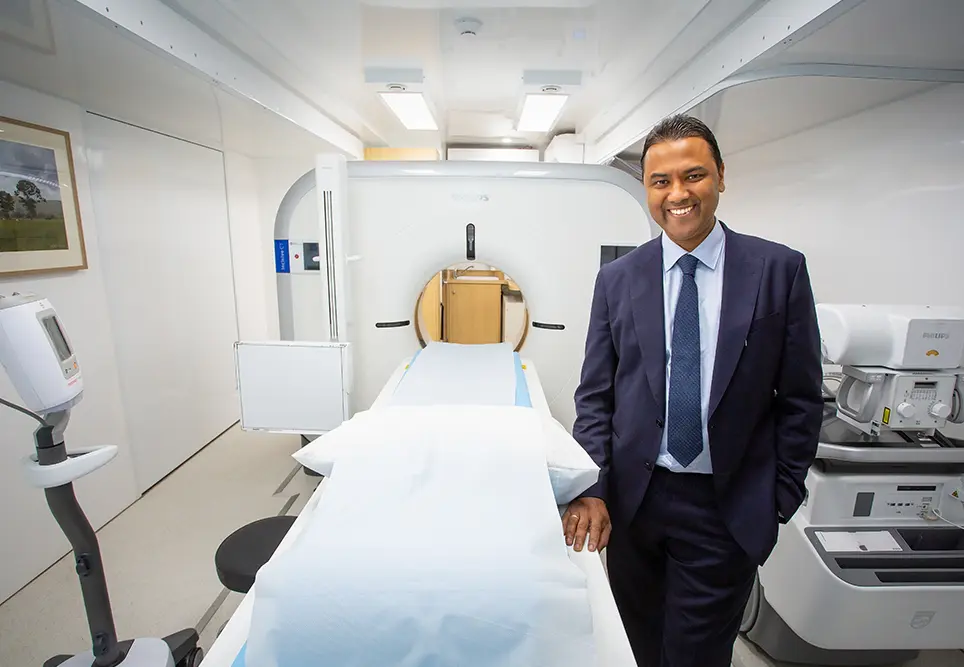
“Two years ago we launched our mobile CT scanner which allows us to do hospital-grade CT scans in the middle of nowhere, which is actually quite unique.
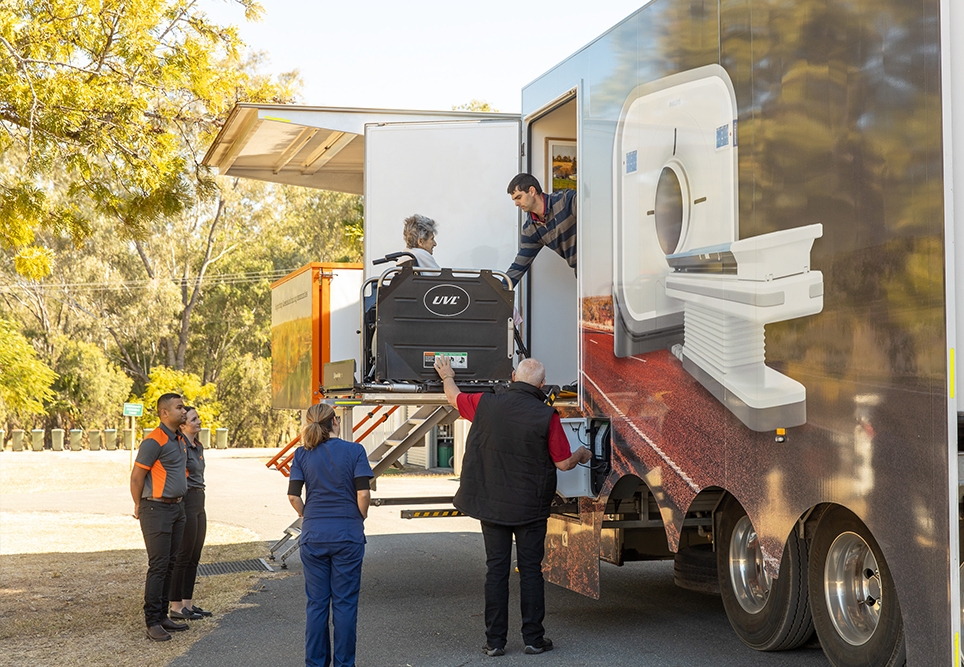
“What it means is you can drive that truck out to anywhere in the middle of the desert, in the cane field, at the showgrounds, and people can walk up the stairs and have a CT scan of their chest or a CT scan of any part of their body. It’s a hospital grade CT scanner. You don’t need to have any dedicated, fancy power supply at the other end…”
As Dr Gomes talks about the Heart of Australia trucks’ mobile CT scanners, he proudly states that the first one was actually manufactured in Queensland, and the world’s first battery-operated CT scan was actually performed in a car park in Narangba, a suburb of Moreton Bay.
Lung Cancer is Australia’s fifth most common cancer and the leading cause of cancer death.
Currently, only 26% of lung cancer patients survive beyond five years, primarily because the disease is often diagnosed too late.
“By finding this disease earlier, we can significantly improve survival rates,” explains Dr Gomes.
The Heart Trucks, of which there have been six generations, were all designed, and manufactured or modified in Queensland too, featuring all the things you’d expect from a medical clinic.
One of the key advantages of Heart of Australia’s mobile clinics is their ability to provide immediate care. And in the case of diagnostic testing for the Lung Cancer Screening program, the trucks serve as a hybrid of a mobile radiology service and a comprehensive diagnostic testing facility, allowing specialists to conduct various tests on-site. This eliminates the need for patients to make multiple trips and wait weeks for results.
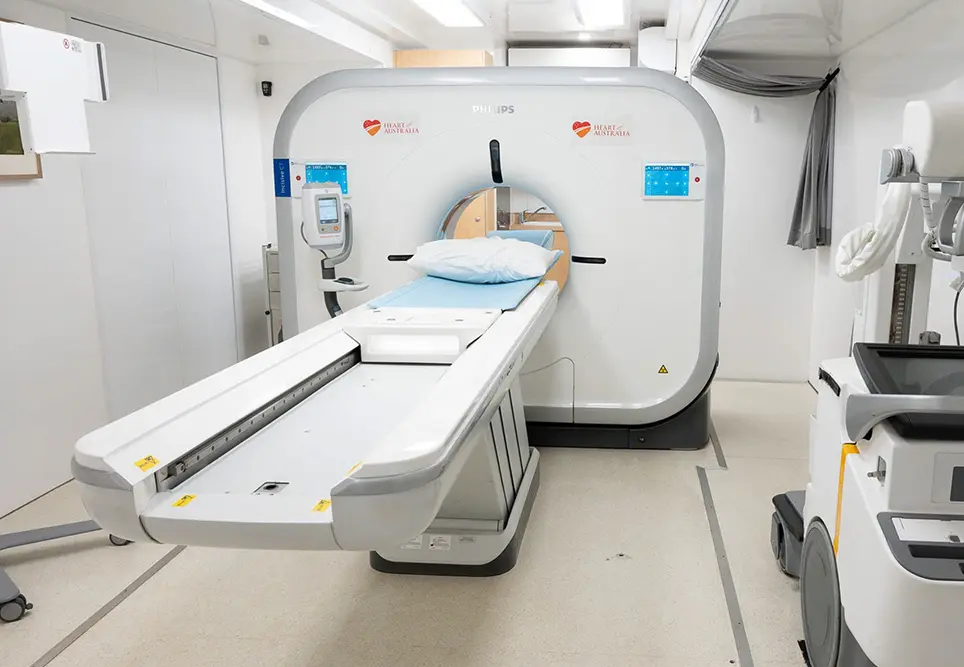
“So the beauty of having the trucks is you have your entire toolbox with you,” Dr Gomes notes.
“When I’m in really remote and isolated locations, which I often am, and talking to someone about pain in their chest, I don’t have to say, ‘I’ll write a referral for you to then ring up and make a 3-day trip to have a stress test and run on the treadmill for nine minutes.’ I can instead say, ‘Why don’t you step in the room next door?’ And I can do the stress test because I have the treadmill and the ultrasound machine and everything.
“You can close that loop very quickly.”
This immediate access to diagnostic tools streamlines the healthcare process, allowing for quicker diagnoses and treatment.
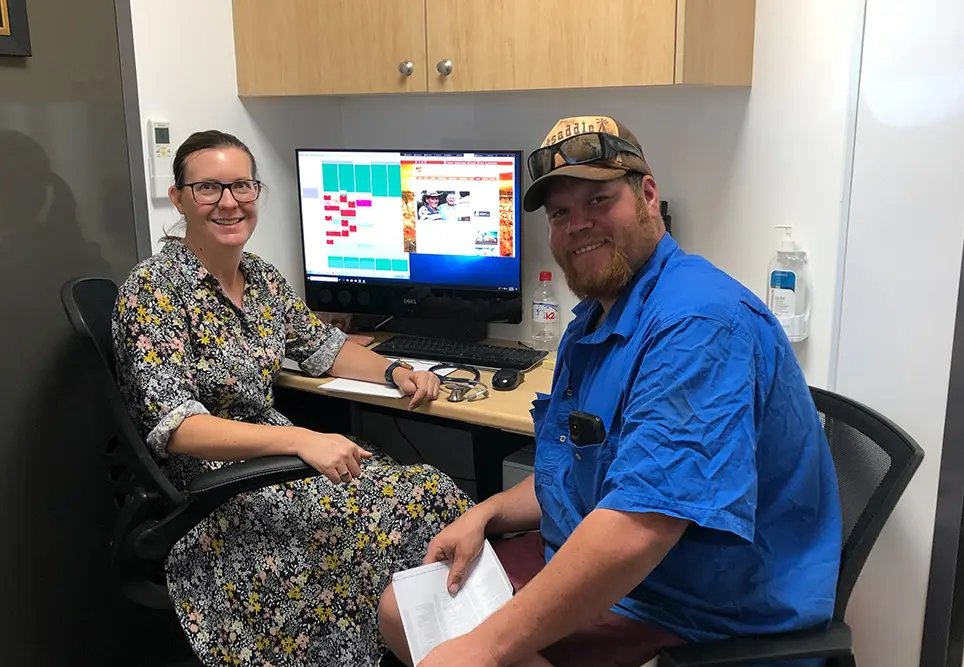
As part of the $45 million in Federal Government funding, Heart of Australia will expand its specialist care to all states and territories, taking their fleet of trucks from six to eleven, ensuring that ‘far-flung’ communities of Australia receive the critical care they need. The program’s expansion from Queensland to other regions is particularly crucial for First Nations communities that face higher lung cancer rates and have limited access to medical facilities.
“This national expansion is a testament to the success of our model and the undeniable value of delivering specialist health care in rural and remote Australia,” Gomes proudly states.
Key to the program’s success in addressing healthcare disparities, has been the increasing involvement of medical specialists. Gomes acknowledges that it used to worry him when he’d travel to country medical practices and discover the same issues.
“You’d hear the same story – ‘that we used to have a gynecologist, but then they retired’. Or ‘we used to have an ophthalmologist, and their city practice became too busy,” Gomes says.
“We wanted to establish a sustainable model that could continually provide specialist services to regional areas, ensuring that they don’t lose access as providers retire or relocate.”
Gomes explains that what has started to take shape is a sustainable pathway to bring specialists to the regions in the land version of the Royal Flying Doctor Service, but not for emergency retrieval.
“Initially, when I started the program, it was myself and two other cardiologists. But now we’ve got over 30 specialists. They’ve heard about the program. They’ve picked up the phone or sent an email saying, ‘We’ve thought about doing this ourselves.’”
Alongside specialists, one of Heart of Australia’s fundamental workforce roles historically was a hybrid role called a Medical Aide. This role did everything from reception support, helping a patient with an ECG, driving a support vehicle, and shuttling staff between airports.
As Heart of Australia prepares to expand its reach, the workforce is broadening to include nurses, cardiac thermographers, respiratory technicians, radiographers and more. Dr Gomes invites healthcare professionals, especially those looking to make a difference in rural settings, to get involved: “We are really looking for anyone who would like to get out of the city, who’d like to do something for country Australians where those services are really appreciated”.
With the first of the new Heart of Australia’s trucks launching in August 2025 and subsequent trucks rolling out every three months, Heart of Australia is set to truly transform health care access across the nation.
Reflecting on the expansion into other states, Dr Gomes proudly remarked, “So it’s great to see it become the Heart of Australia. Our team has worked so hard over the last 10 years. I’m a cardiologist, but when you’re covered in grease and sweat, reaching for your stethoscope in the middle of nowhere because an hour ago you were helping a driver under the truck change a flat tyre, you know, the work’s pretty real.”
The National Lung Cancer Screening Program will be available for eligible people from July 2025.