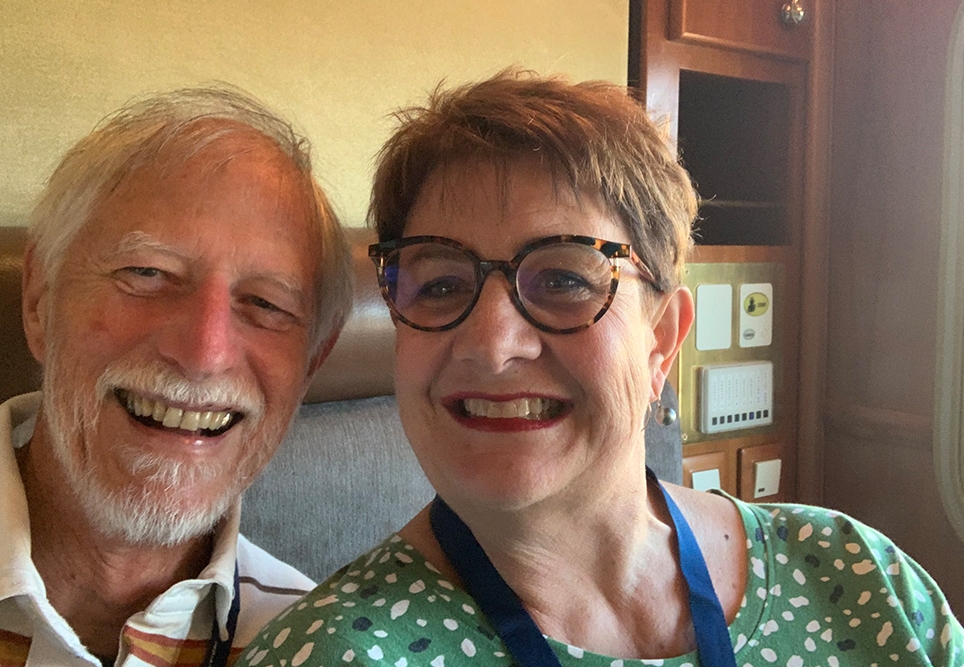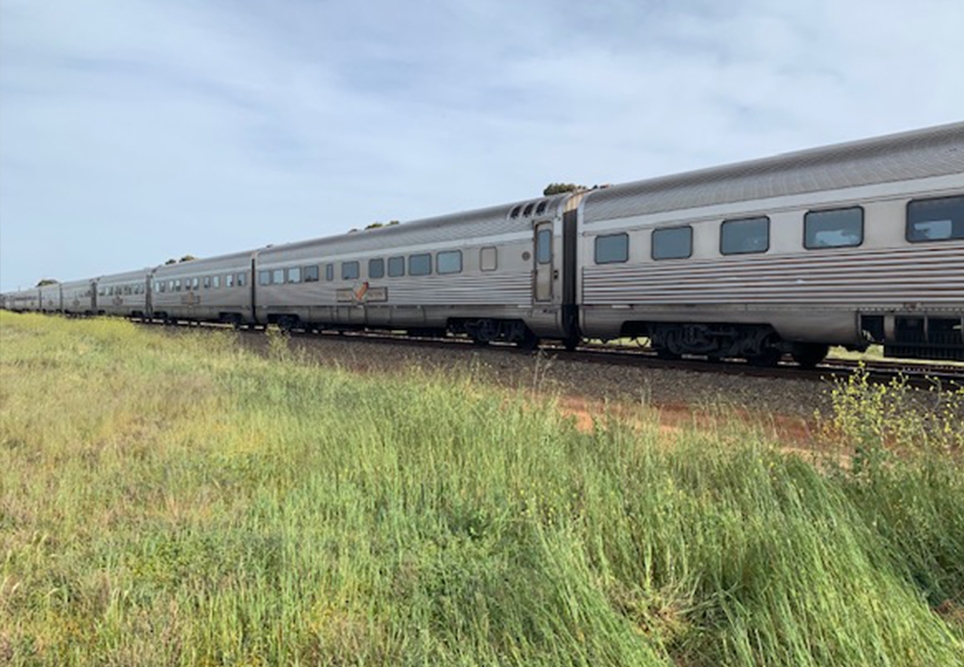
Ann Aitken and her husband were settling into their carriage when she was approached by a train steward. Their plans of how they would spend the time celebrating their wedding anniversary on a leisurely cross-country train journey were about to change dramatically.
For the next five hours or so, Ann would be tending to a person who was showing symptoms of an impending heart attack.
“I finished the Advanced Life Support (ALS) on the Monday,” Ann recalls. “On the Wednesday, my husband and I boarded the train, excited about the trip. On the Friday, I was in a carriage with rudimentary medical equipment putting all I’d learned on that course into action.
“One of the stewards had heard that I was a nurse and approached me. There was a person who wasn’t feeling great, they told me. They had chest pains, and would I have a look at them?”
Ann soon took control of the situation with the support of the CPR and First-Aid trained staff. The train halted in an old railway settlement with a handful of residents, while Ann liaised by phone with the retrieval service, two hours away by plane.
Ann had at her disposal a medical chest of the sort found on remote sheep and cattle stations.
“This wasn’t your normal clinic situation. I wasn’t able to cannulate the patient. I was working with a very basic blood pressure machine – like the one you might buy at the chemist for home monitoring.”
“But I could use the drugs in that medical chest, progressing the use as the person’s condition progressed. I could give them morphine for the pain and there were also a couple of drugs, in patch and spray form, for heart conditions.
“My job was to keep the patient calm and as pain-free as possible until additional support arrived.”
Having just done the ALS course was a huge bonus, says Ann.
“I don’t generally work in cardiac situations and I’ve never worked in a heart ward,” she says.
“The main benefit was that it gave me structure. I had a structure to be able to continue to assess and keep them calm, using the information I was gathering to decide on the next steps, using critical thinking to make those decisions.
“Doing that training refreshed my knowledge and reassured me I did have the skills to find my way through.”
And what happened to the fellow traveller Ann cared for? The retrieval plane landed and a resident picked up the doctor from the airstrip, took them to the train, and then transported the doctor and patient to the plane.
The patient did have a heart attack in a regional hospital and was then transported to a major city where a stent was inserted.
Ann and her husband were back in Atherton a couple of days later, and the patient was ultimately able to resume their planned holiday.
“They Googled me to get my contact details – and I received a beautiful bunch of flowers in thanks,” Ann says with a smile.