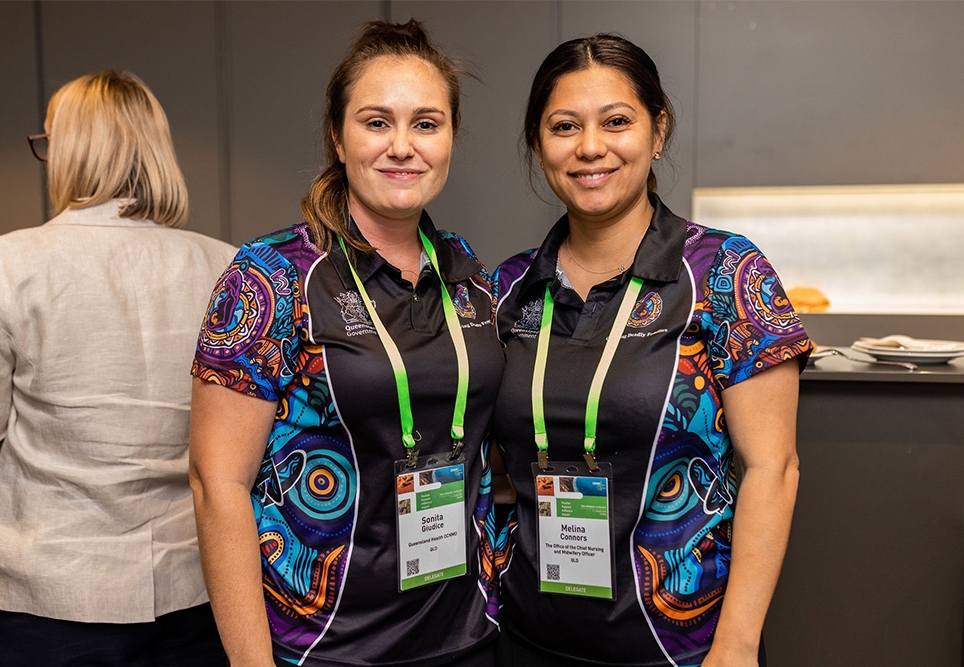
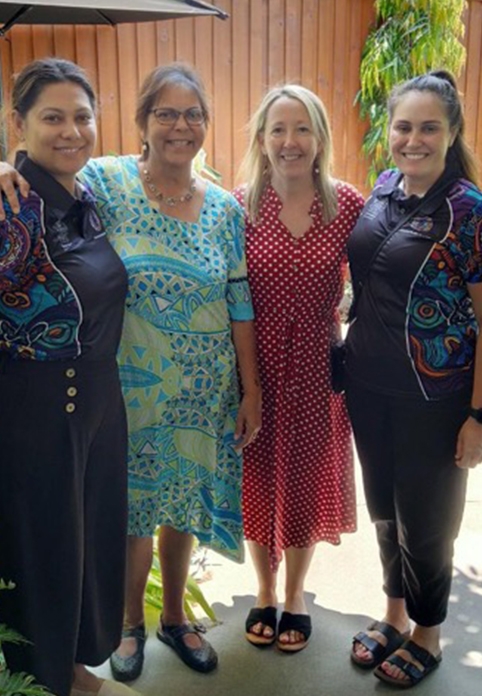
The extensive road trip by Sonita, a Gunggari and Wakka Wakka woman, and Melina, a Gurindji woman, took place over almost a year as they visited Queensland’s 15 maternity Hospital and Health Services (HHS). During this time, the pair, which has over 10 years’ experience as midwives each, scoped each HHS’s model of care to understand if there were partnerships and co-design between the HHSs, the local Aboriginal and Torres Strait Islander Community Controlled Health Services and community.
The Strategy
The Growing Deadly Families Aboriginal and Torres Strait Islander Maternity Services Strategy 2019-2025 sets out the vision that all Aboriginal and Torres Strait Islander babies in Queensland are born healthy, into strong resilient families.
This requires every woman in Queensland giving birth to an Aboriginal and/or Torres Strait Islander baby to have access to high quality, clinical and culturally capable maternity services. As the Strategy states, 42 per cent of Queensland women miss out on early and frequent antenatal care.
There’s a clear opportunity to improve access, and when engagement in care improves, particularly midwifery continuity of care, positive outcomes will be achieved for women and families across the first 2,000 days of life.
The GDF Midwifery team undertook an analysis to check the HHS’s resources and capabilities within the clinical services capability framework, to determine what measures HHSs could take locally to support local birth.
Participants discussed the many issues and barriers of maternity services that exist for Aboriginal and Torres Strait Islander families. The following key areas for improvement emerged: culturally appropriate and equitable access to care, care close to home, continuity and relationship-based care to reduce retelling and repeating health story, care to be provided by an Aboriginal and Torres Strait Islander workforce, and the ability to keep families together.
First-hand experience
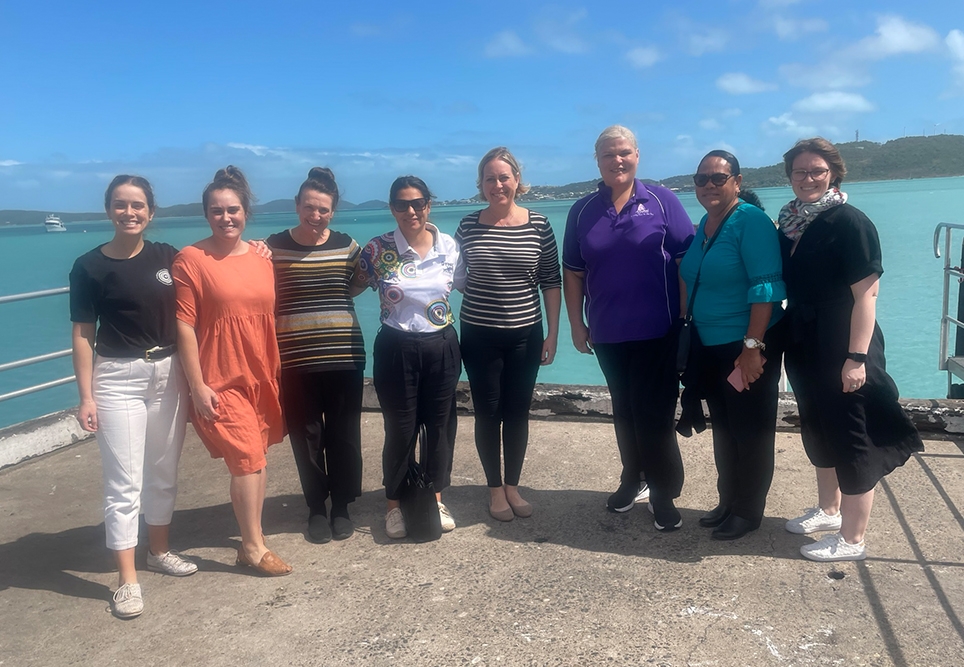
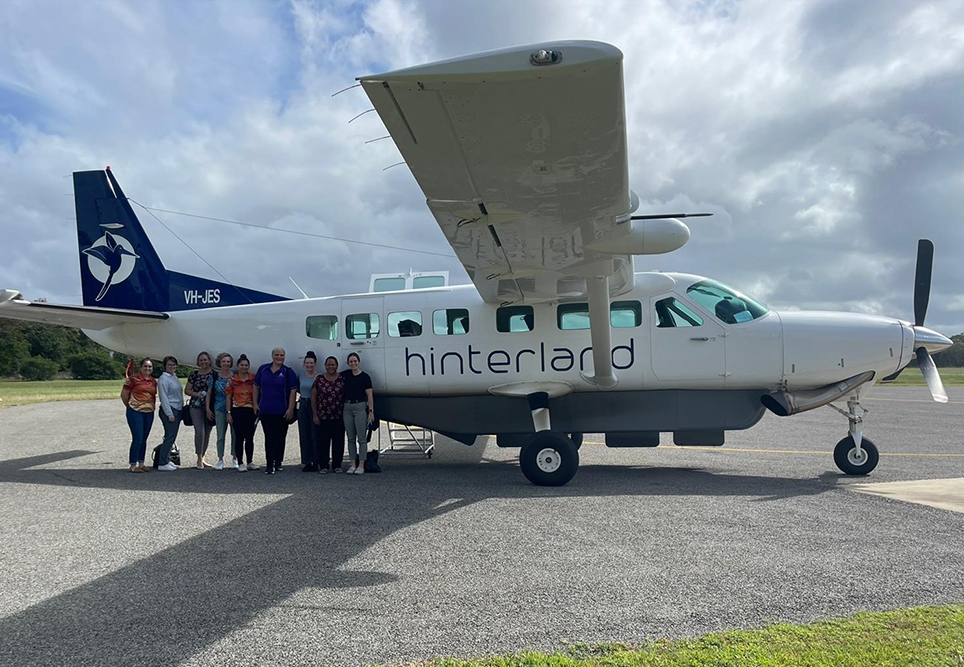
During the road trip, which at one time included eight flights in five days, Sonita and Melina were able to experience a small part of what it is like for women in remote locations who have to leave their home at 36 to 38 weeks of pregnancy and travel to another HHS to give birth.
“We experienced a little of what the women have to go through – with the travel, for example,” says Melina.
“On top of having to be away from family and community, women are often in a totally new environment, facing new experiences, travelling alone, and having to plan for the care of their other children back home.
“Being away from home, family and community not only has emotional impact, but there are financial impacts.”
The experience was invaluable for the midwives to be able to fully understand the impact of leaving Country at such a crucial time in women’s lives.
In addition, they learnt that urban health services also face challenges in achieving and delivering a culturally safe and appropriate service for First Nations families.
Culture, consultation, and continuity
On their road trip, Sonita and Melina repeatedly heard that the three outcomes of the strategy were fully supported:
- The need for maternity services to have the full input of the communities involved.
- The need for continuity of care from pre-pregnancy through to birth and beyond.
- A focus on educating and employing more Aboriginal and Torres Strait Island peoples within services.
“It was clear that First Nations people want to have First Nations people giving them care where possible,” Sonita says, noting that women talked about a need for understanding of cultural knowledge and practices to make them feel secure, safe, and connected when they arrive in hospital.
Melina shared how a tertiary facility was excelling in continuity of care. This facility operates a continuity of care model from conception to five years. The midwife/maternity group practice leans into child health which continues with parenting classes and activities such as cooking and swimming lessons. They also have Welcome Jarjums to Country ceremonies for their new babies, connecting them to Country.
While continuity of midwifery care is vital for the mums and babies, Sonita points out that midwives themselves are recognising the improvement in their own work-life balance and sense of satisfaction when they can follow a mum and baby along the whole journey.
“Midwives who experience how rewarding continuity with a woman and her family can be frequently state they do not want to go back to another way of providing midwifery care,” Sonita says.
The desire to return to birthing on Country was a thread throughout their road trip, and Sonita and Melina were impressed with how communities adapted to the current situation, while also campaigning for change.
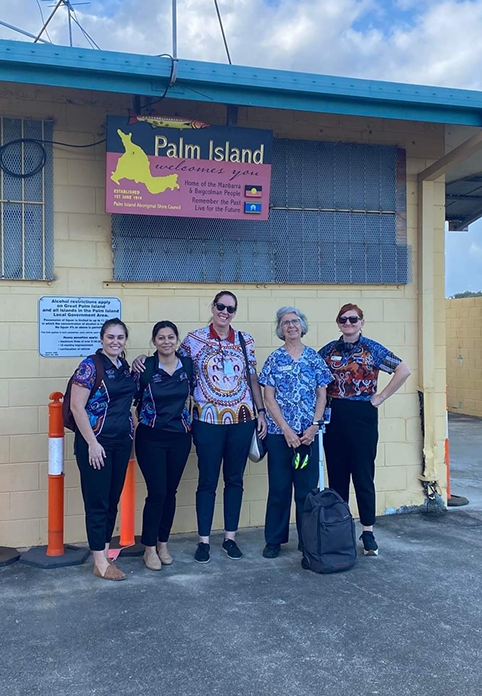
“One of my favourite examples is Palm Island,” says Sonita.
“This is a community 60 kilometres out to sea from Townsville where historically First Nations people were sent as punishment. I was so impressed by how resilient they are, their very strong advocacy for their communities on birthing issues. Palm Island community’s ultimate goal is to give birth on Country.”
Sonita has another example. A rural site in the north of Queensland, one of many mining towns, is planning to open birthing services locally. Once birthing opens, a number of women will still travel from Country to the hospital.
“To support these women with connection to their land, the hospital – with consent – [has] had soil provided and transported from different Country lands to the hospital grounds to enable parents to place the soles of their babies’ feet into this soil. This connects them to their land.”
Next steps
The Growing Deadly Families Strategy is intended for policy makers and for those who deliver maternity services to Aboriginal and Torres Strait Islander families in Queensland. It is expected that all health professionals who contribute to the maternal care of Aboriginal and Torres Strait Islander mothers and babies will be able to draw on the Strategy to support their practice and model of care.
Sonita and Melina are now off on the road again, undertaking phase two of strategy implementation, which involves supporting and advising targeted health services to review their co-design processes and explore the redesign of services, identify where there are gaps or where changes over the years mean new goals need to be considered and met.
“We are conscious that each community is different, and how important it is for us to yarn with the communities and all stakeholders, because the community know what they need and want, and will invest more into the models of care when they are involved in establishing them,” Melina says.
“This is true co-design. For First Nations mums and families to have a say in their care is something that I wholeheartedly will always advocate for. I really believe in this. We are growing deadly families!”