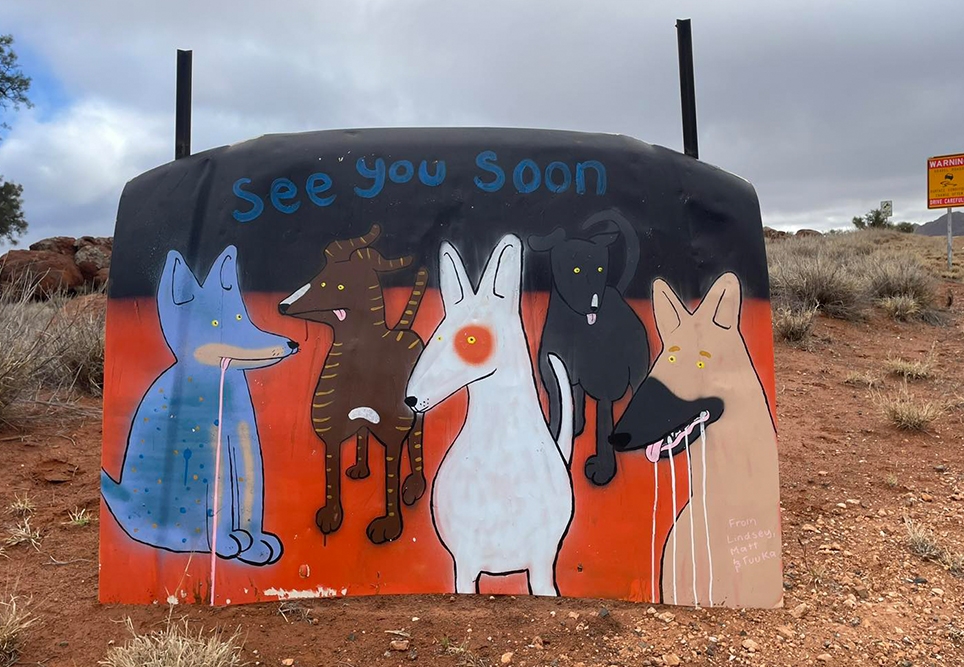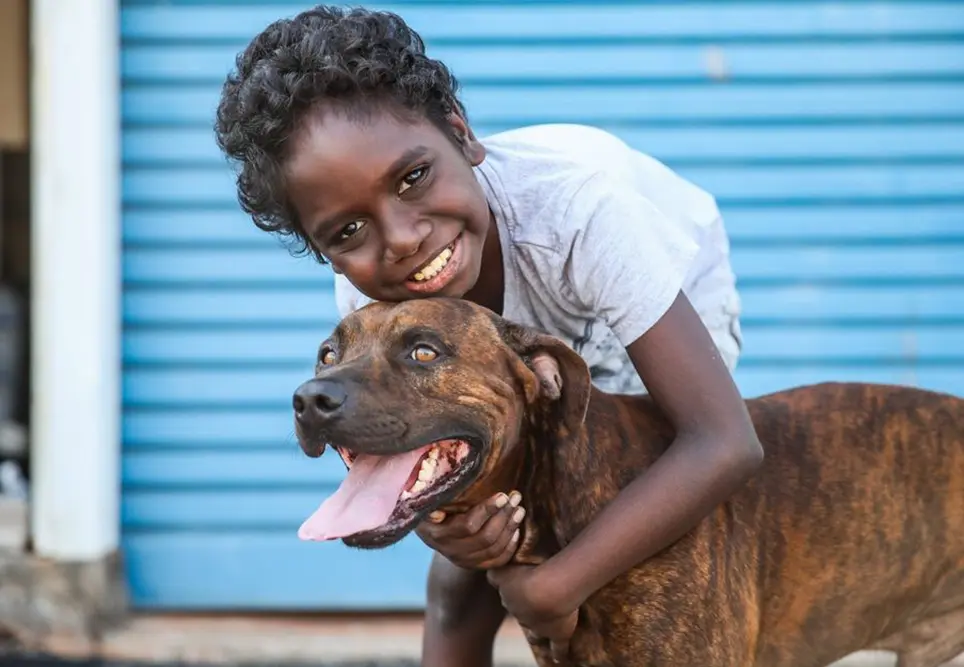
Picture a remote Aboriginal or Torres Strait Islander community scene – camp dogs are sure to spring to mind! They are an ever-present part of life for most remote Aboriginal and Torres Strait Islander communities. Despite their free-roaming nature, they are by no means un-owned strays! The vast majority are beloved family members, and they can also be valued hunting aids, protectors against physical and spiritual intrusion, incorporated into Kinship systems, and for some communities, interwoven into creation stories, cultural responsibilities, and ceremonies.
While camp dogs regularly bring moments of joy, and play an important role in culture, when they suffer poor health and management, they can detrimentally impact both the physical and mental health of communities. Dog attacks can result in significant physical and mental trauma for victims, zoonotic pathogens can transmit from dogs to people (particularly immuno-compromised people), and for dog lovers, owning or witnessing sick and injured dogs yet having limited access to services that can assist them, may bring about distress.
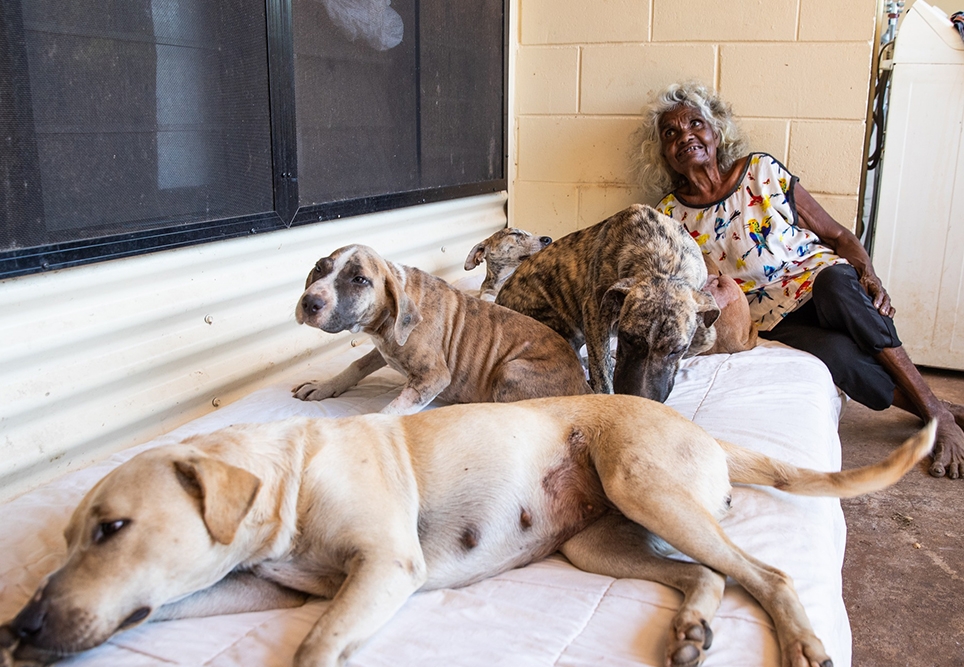
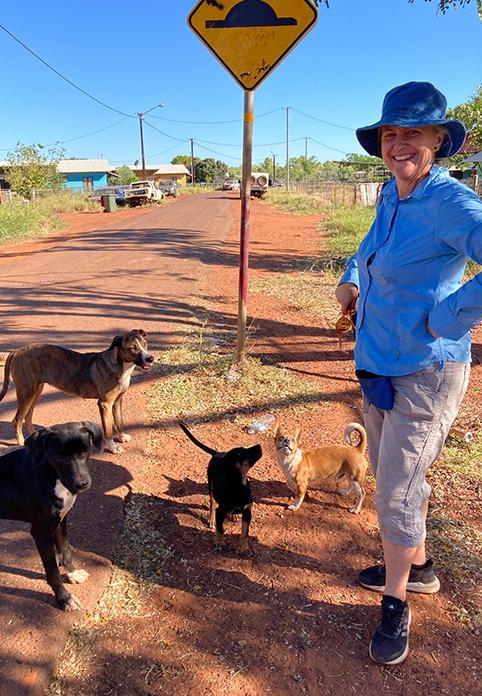
Limited access to animal health services and resultant overpopulation are the underlying drivers of the majority of these concerns and are something that AMRRIC works hard to address through direct veterinary and animal health service delivery, capacity-building training and support, and advocacy for sufficient and sustained resourcing for these important services.
We also regularly provide remote advice to community members and service providers who have concerns for either an individual dog (or cat) or a whole population.
We understand what it is to be an animal lover but restricted in your ability to access veterinary services, and we thank the many health clinic staff who come to the aid of injured and ill animals in the absence of veterinary services.
Many people who work in or visit remote communities have reported feeling threatened or intimidated by community dogs. When it comes to dog safety, learning to read and respond to dog body language is key. To assist, AMRRIC has developed a range of dog safety educational resources for audiences ranging from children to adults, all freely available on our website. For anyone new to communities, our Staying Safe Around Dogs videos and online module are particularly useful resources that discuss dog behaviour and body language, as well as how to recognise the danger signs and tips and tricks to de-escalate threats.
Remember, each community and each dog is different. When interacting with free-roaming dogs, practice caution, particularly during early mornings and evenings when dogs are most active. By understanding dog behaviour, you’ll go a long way to avoiding dangerous situations.