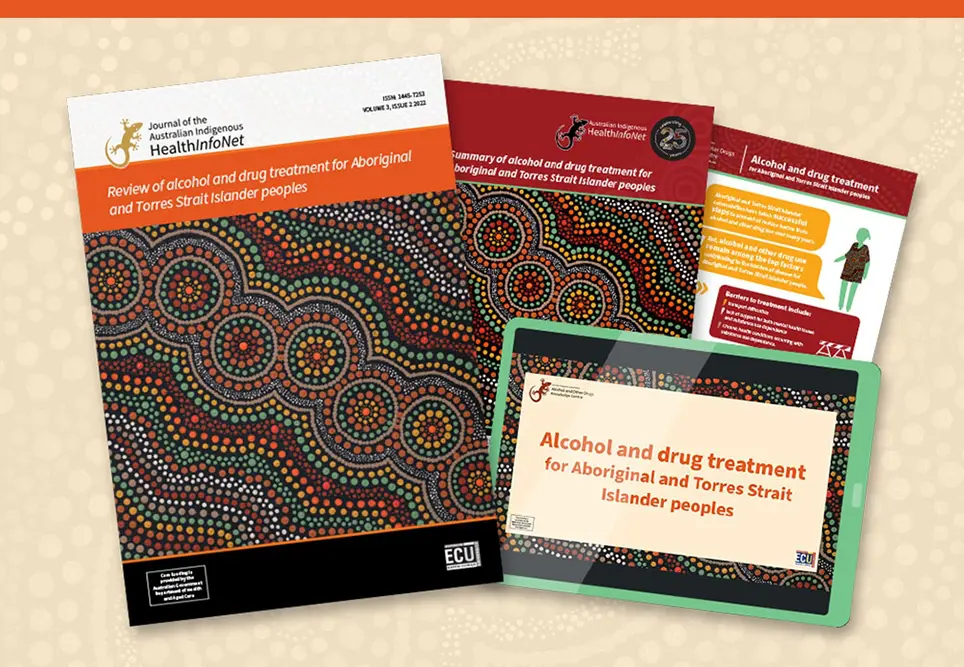
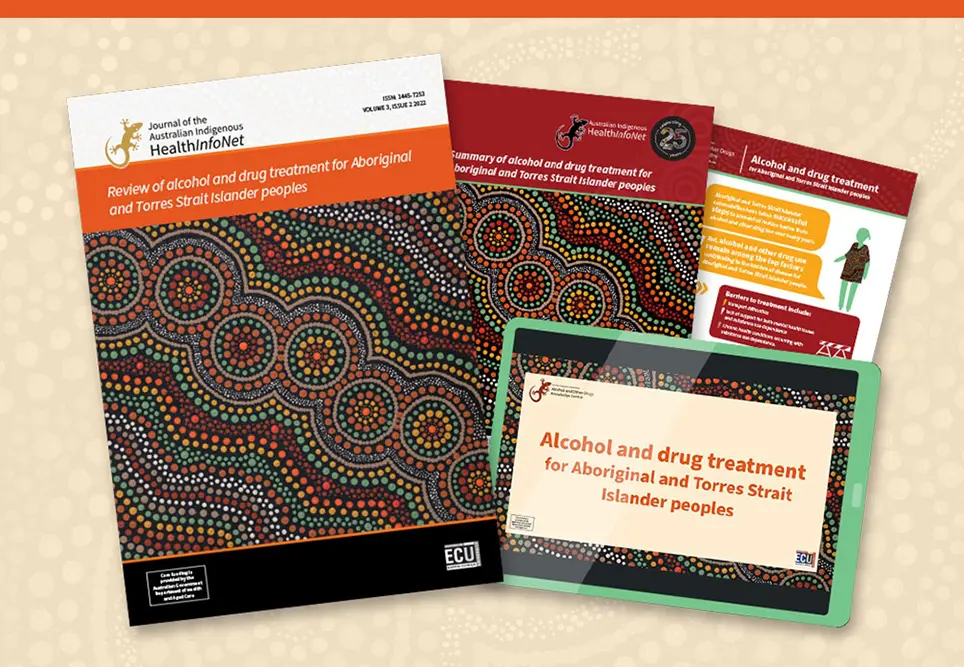
Julie, a Menang woman from South Western WA, was one of the authors of the Australian Indigenous HealthInfoNet’s recent review of alcohol and drug treatment for Aboriginal and Torres Strait Islander peoples, along with Marguerite Tracy, Bradley Freeburn, Kylie Lee and Kate Conigrave.
The review points to the value of combining the best of cultural approaches with best-evidence western medicine, with strategies such as collaboration and two-way learning.
It emphasises the importance of culturally secure treatment and points to the importance of cultural awareness training for non-Indigenous staff, and for mainstream services to recognise the strategies that engage and build trust between health workers and potential clients.
Barriers affecting the potential for successful treatment include stigma linked to long-held attitudes and stereotypes around substance misuse by Aboriginal and Torres Strait Islander peoples.
People who need help may have experienced or witnessed discrimination in the past. The stigma can be internalised as shame. Fear of involvement of government child protection authorities can also pose barriers.
The review also emphasises the lack of available research examining the effectiveness of different treatment approaches, remarking upon the dearth of research providing definitive conclusions and the methodological limits of existing research.
“Given the widespread agreement of the key role of trauma in contributing to problem alcohol and other drug (AOD) use, there is surprisingly little Australian research on trauma-informed or trauma-focused approaches to healing, outside of tobacco management, and there is a need for work examining current and potential approaches,” the review states.
Working with and for communities
While the value of Aboriginal and Torres Strait Islander staff is widely recognised, the emphasis on the importance of Aboriginal and Torres Strait Islander services and staffing is timely, Julie says.
“The key is using Aboriginal health workers, respecting their knowledge, experience and expertise and making sure that becomes part of the daily practice within all medical centres.”
She adds that this includes the need for respect to be extended to people within communities.
“If people are not listened to, it minimises their authority,” she says.
“The best approach is including people within the communities you are hoping to help in conversations about prevention or treatment services.
“Talk to the people, listen to them, and respect the experience of Elders within communities, the people facing these issues every day, grandparents looking after the kids.
“Make full use of their expertise. The Aboriginal health workers and members of the community know what their community needs.”
Many improvements in alcohol and drug use treatments have been made over the 25 years or so since Julie began working in this field.
“We’ve come a long way,” she says.
“The holistic approach, moving away from treating excessive alcohol and drug use as a disease, is now much more widely accepted, moving to treating the whole person, and extending the focus to look at the wider community.
“If you look at smoking, a lot of young people are not smoking any more. If we can get the same result with problem alcohol and drug use that would be fantastic. I can see it happening in the future.”
Julie Woods puts forward a request: “I want specialists, people working in the field of problem alcohol and drug use to take notice of all the recommendations in this review. I want these professionals to read it. It makes sense. I want them to reach out and ask for more information.”