
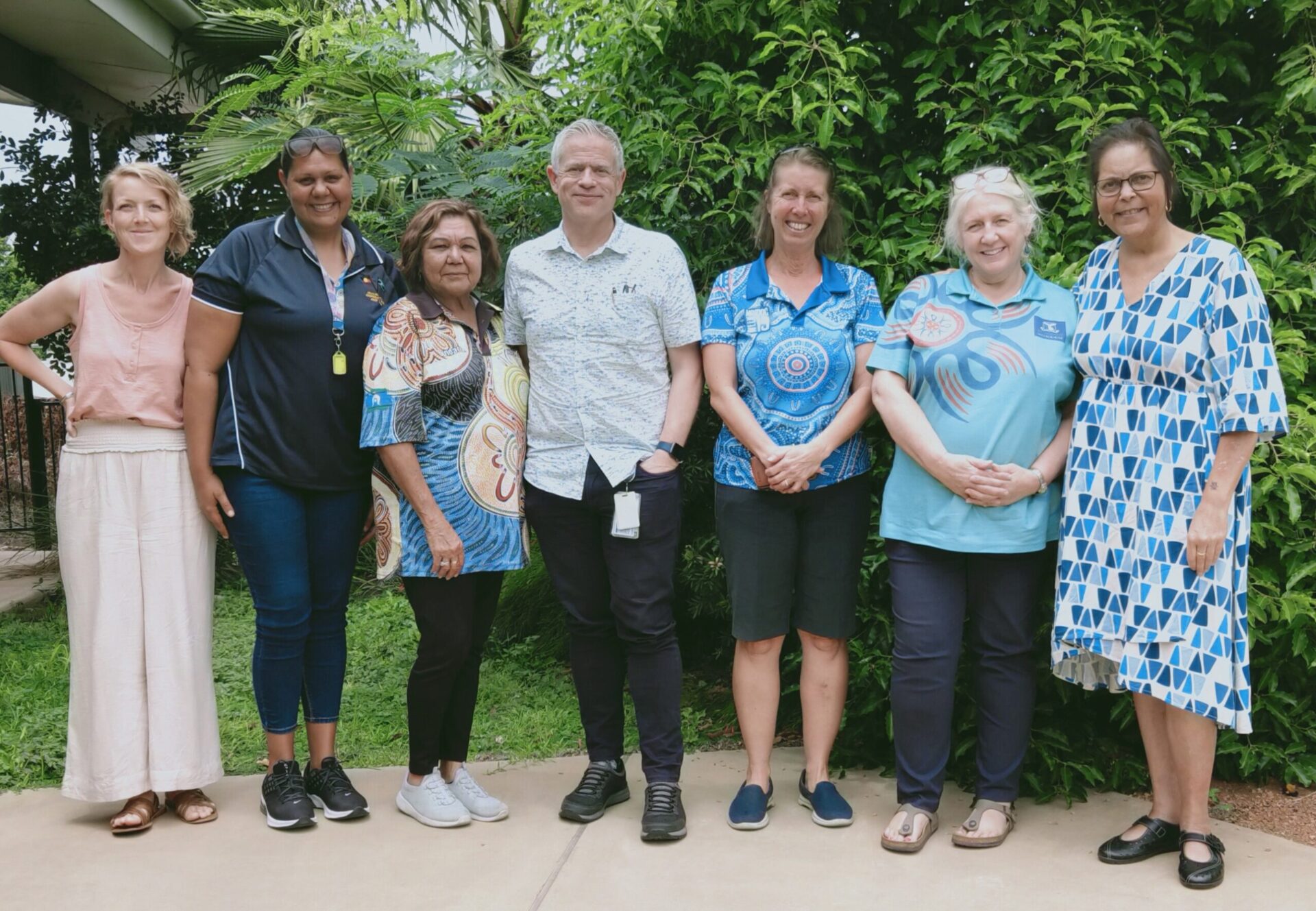
Twelve Aboriginal Community Controlled Health Services (ACCHSs) from regional and remote Victoria, New South Wales, North Queensland and Western Australia are currently participating in the Let’s CHAT (Community Health Approaches To) Dementia in Aboriginal and Torres Strait Islander Communities project, conducted by The University of Melbourne.
The collaborative project aspires to improve the detection of cognitive impairment and dementia, the quality of dementia care in the primary care context, and the quality of life of older people and their families, by co-designing a culturally responsive best practice model and rolling it out in the health services of the project’s ACCHS partners.
Dallas McKeown, Director of First Peoples’ Strategies at CRANAplus, is a member of the research team and a representative on the Indigenous Reference Group, which advises on data collection activities, resource development and the implementation of the best-practice model of care. She has been providing advice and input into the project and has provided presentations to ACCHS staff and other stakeholders regarding cultural determinants of healthy ageing.
Gidgee Healing in Mount Isa, north-west Queensland, is a project participant and in late November the Cairns-based team lead by Dr Eddy Strivens, a Chief Investigator of the research project, undertook a range of project activities including:
- Six-monthly audits of 150 client files to identify current practice regarding assessment, detection, and management of cognitive impairment, dementia and dementia risk.
- Comprehensive Geriatric Assessments (CGA) of clients identified through the audit process as having cognitive/memory concerns. These patients will then be reviewed every six months through the life of the project. For each client, two controls matched on age and gender, are also assessed.
- GP workshops and staff workshops.
CRANAplus continues to support the research project and envisages that it will have an impact on policy development and program implementation in rural and remote areas in the forthcoming years.