The initial assessment and management of a wound – be it a burn, dog bite or deep gash – has a huge bearing on the final outcome for the patient.
This is a key message from Dr Richard Barnett AM, the Chairman of the Australasian Foundation for Plastic Surgery providing Wound Care training workshops across the Top End of the Northern Territory to remote health practitioners.
Leading a team of volunteer specialist plastic and reconstructive surgeons, Dr Barnett’s aim is for rural and remote health practitioners to improve their skills and confidence, providing treatment that will result in faster-healing wounds, less infection, fewer transfers out of Country and better scars.
Thanks to a Commonwealth Government grant, the Foundation has already conducted 20 workshops, attended by 300 health practitioners, plus students at Bachelor Institute undertaking the Certificate IV in Aboriginal and Torres Strait Islander Primary Health Care Practice.
The Foundation’s plans are to expand the program throughout the NT and across the borders into Far North Queensland and the Kimberley region in Western Australia.
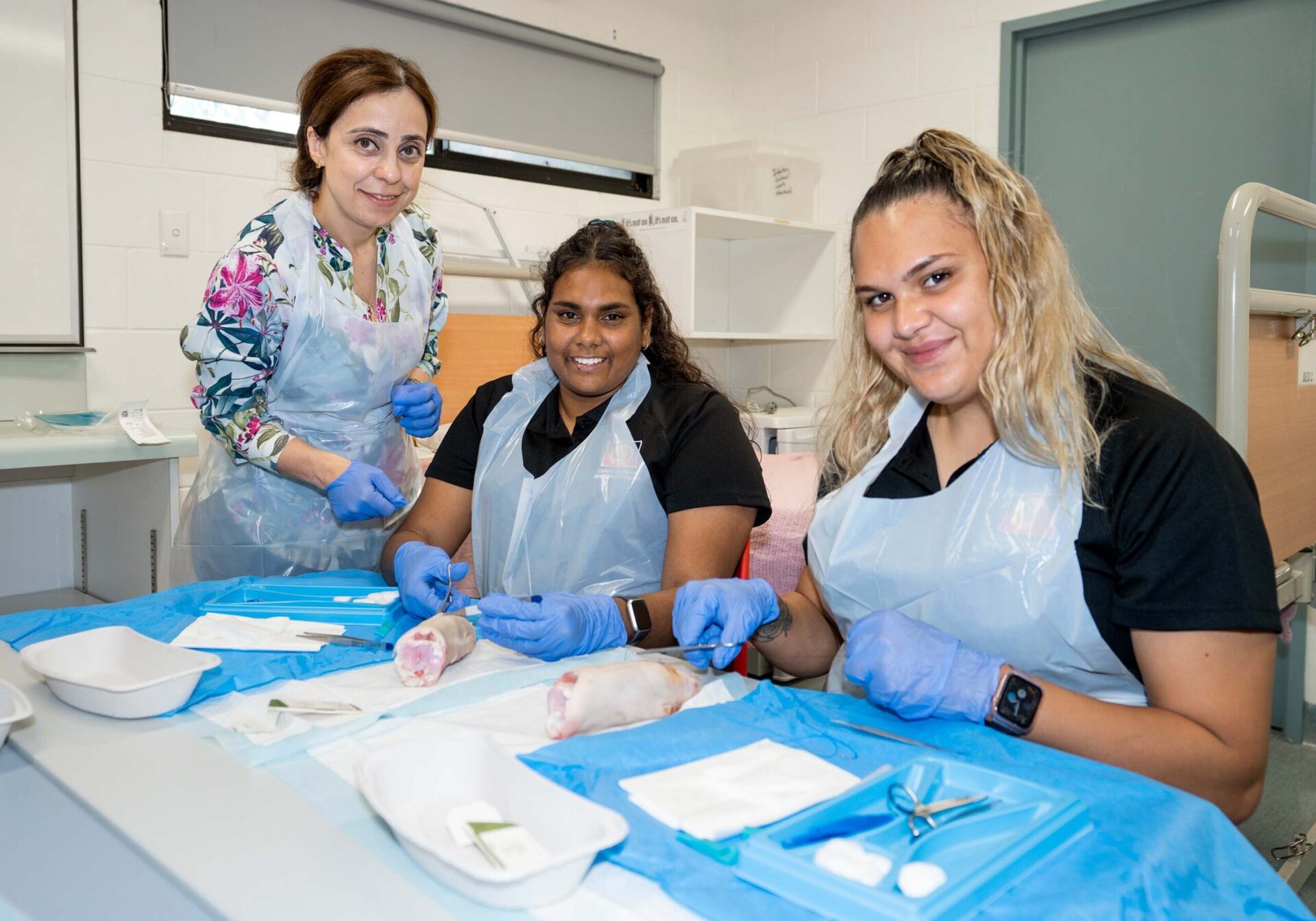
The hands-on suturing class is by far the most popular part of the training, Dr Barnett says, with pig trotters the ideal ‘patients’ for practising cleaning wounds and applying anaesthetic, learning how to hold the instruments, and inserting various types of skin sutures.
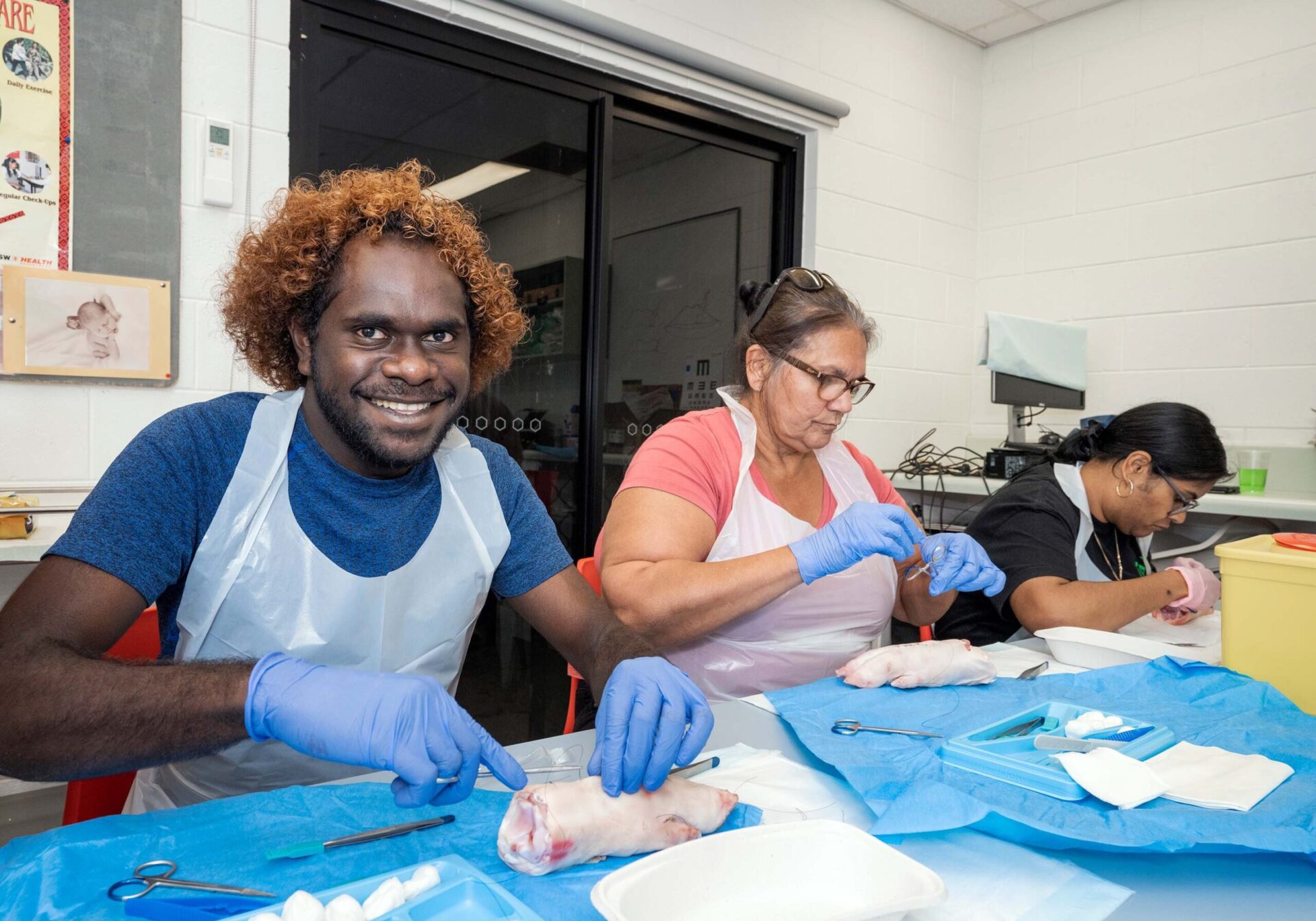
“Pig skin is very similar in structure to human skin. To handle and stitch a trotter is almost identical to dealing with a person,” he said.
And so a pile of frozen pig trotters can be found thawing in the sink when-ever the team arrives at a workshop location – in preparation for cleaning and stitching.
The first lecture of the day is wound assessment, with a list of things to think about.
“Out of that comes understanding,” Dr Barnett said, “Whether it should or could be treated locally, how to apply first aid and then how to manage the wound, including stitching it up. Or perhaps it’s more appropriate to be treated in a bigger centre.
“After the very first workshop on the Tiwi Islands, a remote area nurse was faced with a young man whose cheek was split open badly.
Normally, that patient would be sent to Darwin, but the nurse decided: ‘I think I can safely assess and stitch’ and she did a beautiful job,” Dr Barnett said. “There are many stories like that.”
“Burns, dog bites, and facial and hand wounds topped the list when health practitioners were asked what topics they’d like covered.”
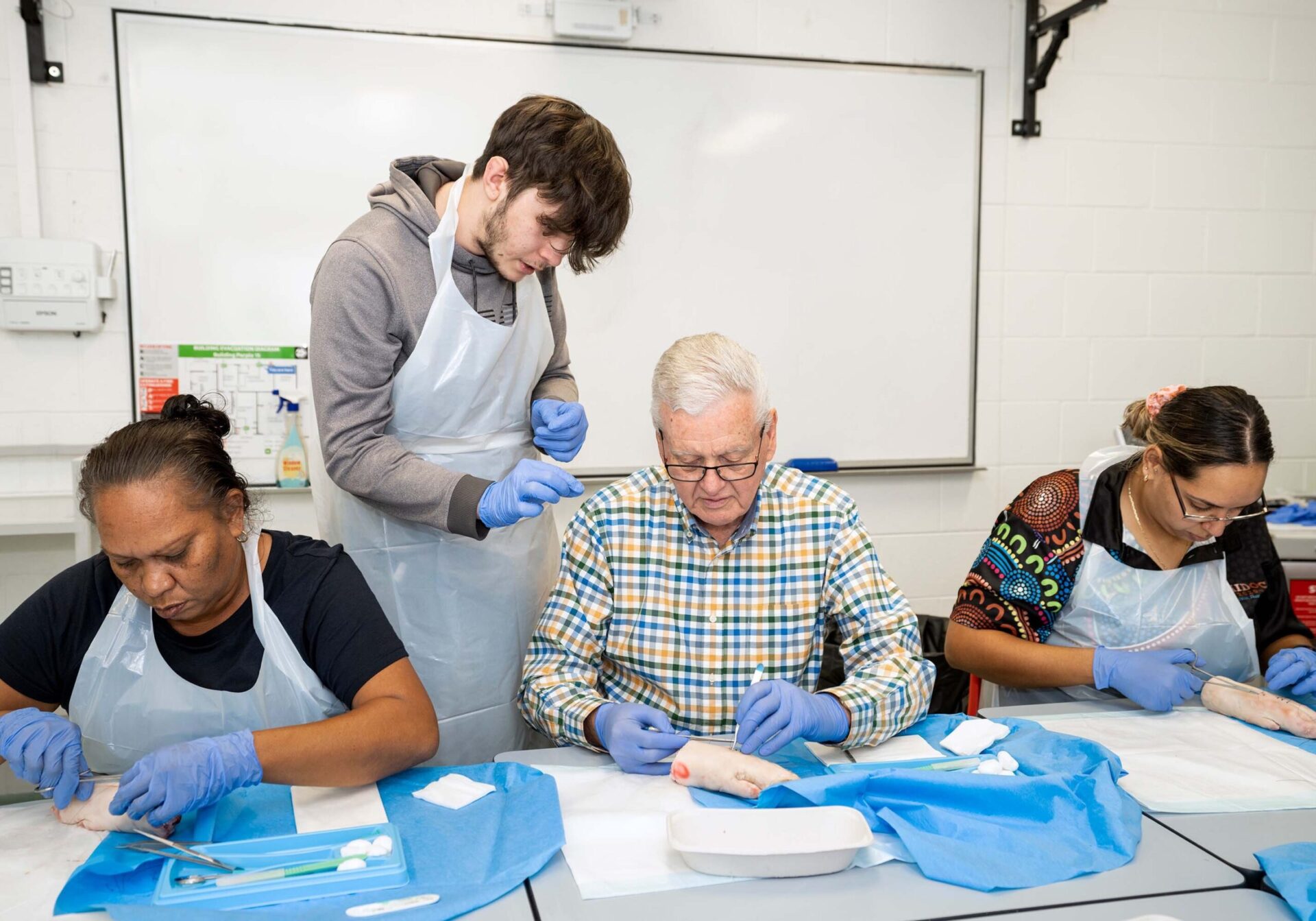
Dr Barnett said it was always a two-way learning process at the training workshops at remote clinics. As well as providing new skills to local people, the surgeons gain new knowledge about traditional and local approaches to wound care.
While acute wounds is the focus of the training, the team also touches on chronic wounds, which disproportionately affect remote Indigenous communities and are the second most common reason for hospitalisation, Dr Barnett points out. “If not treated correctly, a chronic wound can take years to heal or may lead to amputation.”
Dr Barnett took the opportunity during his presentation on the Foundation’s Wound Care Program at the CRANAplus Virtual Symposium in September to launch a suite of online materials to augment the training workshops. The materials include e-learning modules for self-directed continuing education and videos showing the various types of sutures as well as general wound care. There is also a specific COVID-safe module focusing on the needs and challenging situations faced in remote areas.