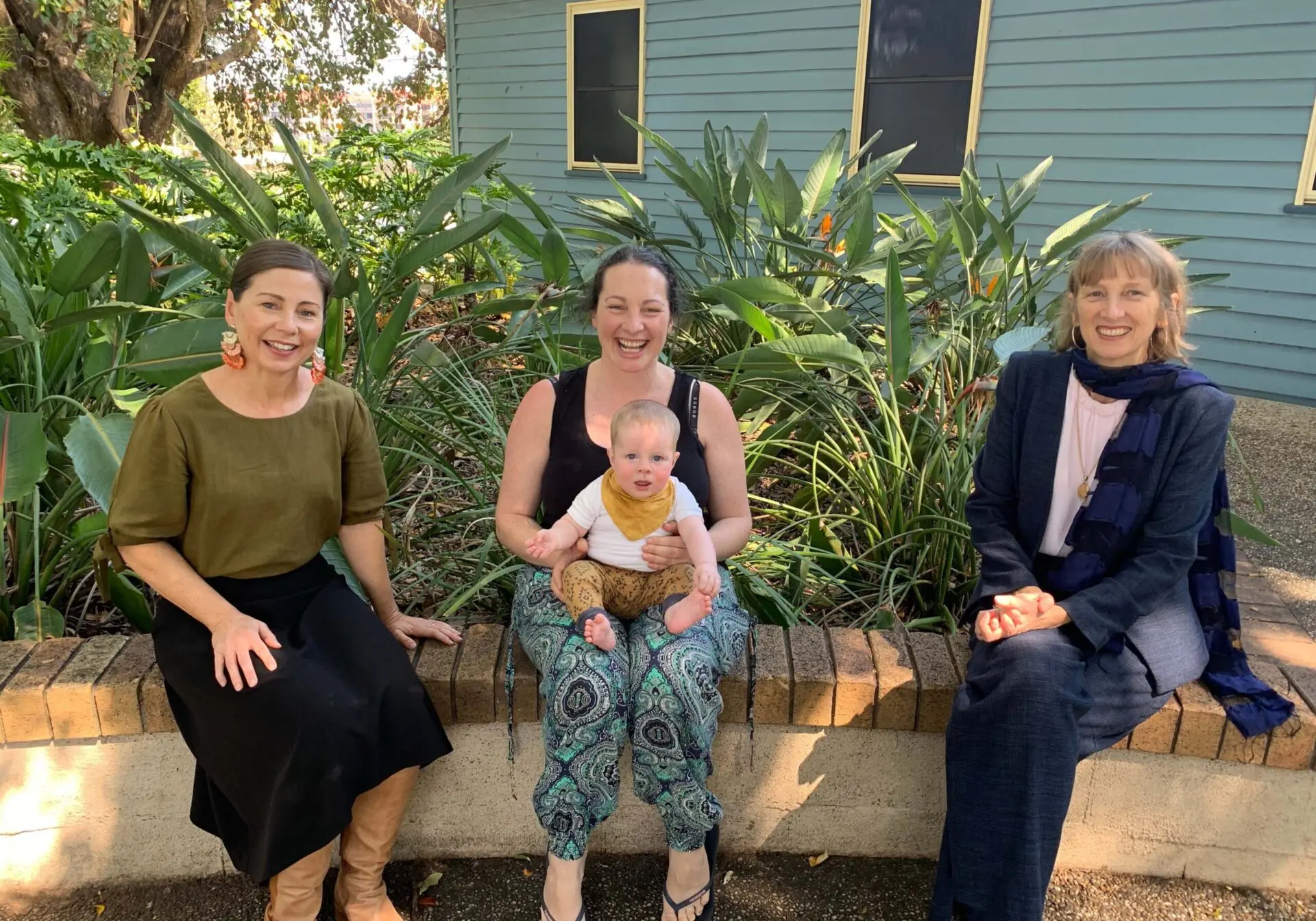
Midway through 2021, the charity Possums & Co. received a $824,450 grant to deliver the three-year Neuroprotective Developmental Care (NDC) Rural Project, as part of the Commonwealth Government’s Perinatal Mental Health and Wellbeing Program.
“We are delighted that the Government is support-ing us in bringing NDC to rural and remote practitioners and their patients,” says Dr Pamela Douglas, who founded the charity in 2013.
“We’re able to offer 300 scholarships over the next couple of years to health professionals located in rural and remote settings between MM 3 to MM 7 on the Modified Monash Model.”
The scholarships cover the approximately $1000 costs of the Possums Program, which teaches an evidence-based approach to breastfeeding, cry-fuss issues, sleep issues, and perinatal mental health. Successful applicants will receive NDC accreditation upon finishing the program, which can be completed fully online.
Dr Douglas says the project recognises that parents in rural and remote settings are disadvantaged in terms of access to resources and support.
“It addresses the problem of the conflicting advice that parents receive, by setting up a network of health professionals in rural and remote communities who are on the same evidence-based page,” she says.
“It also allows 10 parents who are consulting with successful applicants to access our Parents Hub, a non-judgmental safe place for peer support, monitored by parent mentors and also a full-time perinatal mental health expert, who can coordinate peer support groups through various rural and remote localities.”
What is the Possums Program?
The NDC Program is backed by about 30 peer-reviewed publications in medical literature, Dr Douglas says. It focuses on setting up life- long neural templates for secure attachment and good mental health, as well as gut, immune and metabolic health, during the “exquisitely neuro-plastic first weeks, months, and years of life”.
“All [of these factors] have great epigenomic sensitivity and can be affected by problems that emerge in breastfeeding, sleep, and fussing,” she says, listing three major focus points for NDC.
CRANAplus asked Dr Douglas to give a few examples of how NDC flips common advice on its head in these domains.
“The sleep approaches we’ve all been trained in and what parents find online are generally a ‘sleep training’ approach,” Dr Douglas says.
“A sleep training approach is built on the philosophy that we can entrain the baby’s biology around sleep, by not responding to babies’ cues or by delaying response to babies’ cues.
“There’s been five systematic reviews now to show that [traditional sleep recommendations] don’t decrease night waking… and emerging evidence to suggest the dominant sleep approach can exacerbate anxiety within families.
“The big difference with Possums is that we go back to all the science,” Dr Douglas says.
“Sleep is a biological process under the control of two sleep regulators, the circadian clock and sleep/wake homeostasis, so we want to work with our baby’s biology and support that responsive care or cued care day and night to optimise healthy sleep.”
Meanwhile, Dr Douglas points to over-medicalisation as a common fault with current practice in the domain of breastfeeding.
“Unsettled infant behaviour at the breast and nipple pain are often inappropriately attributed to medical causes, like allergy, reflux, tongue-tie,” she says. “Very often our babies are being unnecessarily medicalised and treated, which comes with unintended risks. Positional instability during breastfeeding may be a more likely cause.”
She also says that certain pieces of common advice can worsen breastfeeding problems.
“Women are often told, if they have blocked ducts or mastitis, that they should massage out the blockage in the milk duct. That will cause microvascular trauma in what’s already very vascular tissue, which increases stromal swelling, which causes ducts to compress, which causes rising pressures in the alveolar glands, which causes worsening inflammation.”
She also noted that all Possums & Co. Programs integrate a modern form of Cognitive Behavioural Therapy known as Acceptance and Commitment Therapy, which is supported by “a very strong evidence base internationally, including for depression and anxiety, and an emerging evidence base in the perinatal period.”
Who should apply?
Dr Douglas said Possums & Co. were hoping to award scholarships to a wide range of health professionals, including but not limited to GPs.
“Wouldn’t it be wonderful if there was a team in a town – a midwife, a lactation consultant working with the GP, a local child health nurse – who all registered and became accredited, because then we’re starting to seriously deal with the problem of conflicting advice,” Dr Douglas says.
“Or it may be a community where it’s just the midwife, or the child health nurse, in a situation where there’s not that local care collaboration. We’d love to think that those people could also join us and access peer support online.
“We’d also love to invite our Aboriginal health workers and First Nations health professionals to participate and feed back to us… helping us shape what we’re doing so that it is culturally responsive and culturally appropriate.”