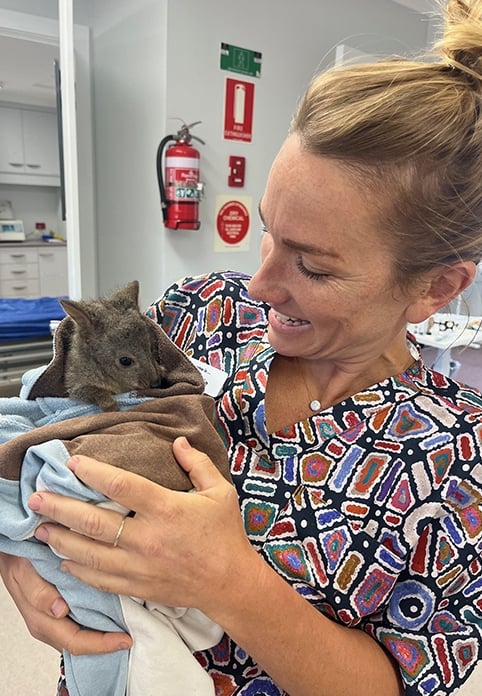
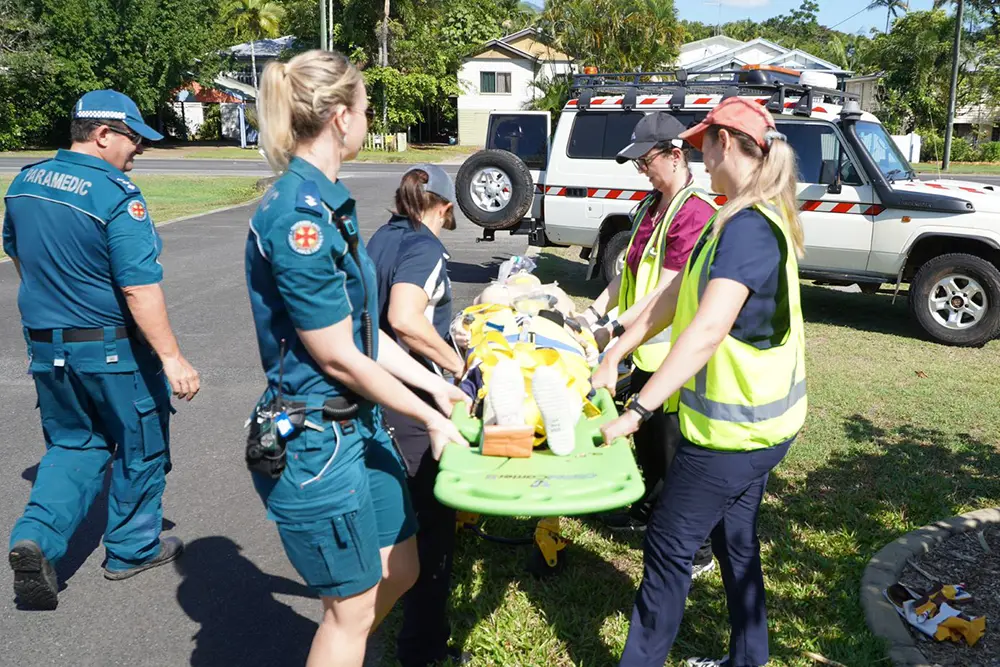
When Stephanie Pastula-Ramadier first flew into wild Truwana/Cape Barren Island, a 20-minute flight from Tasmania, she knew it would become home.
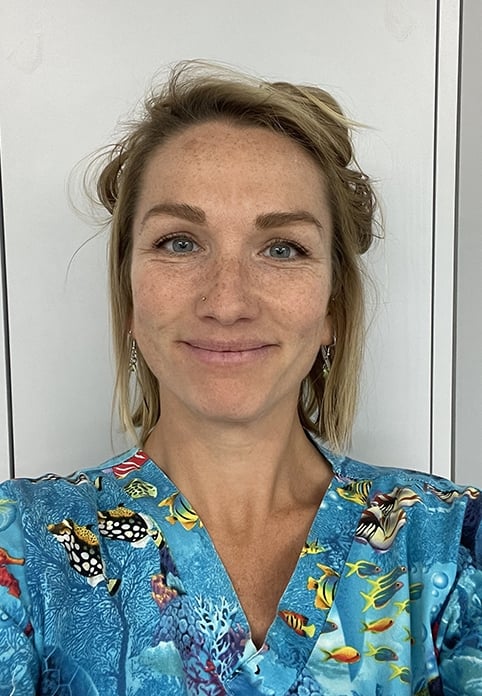
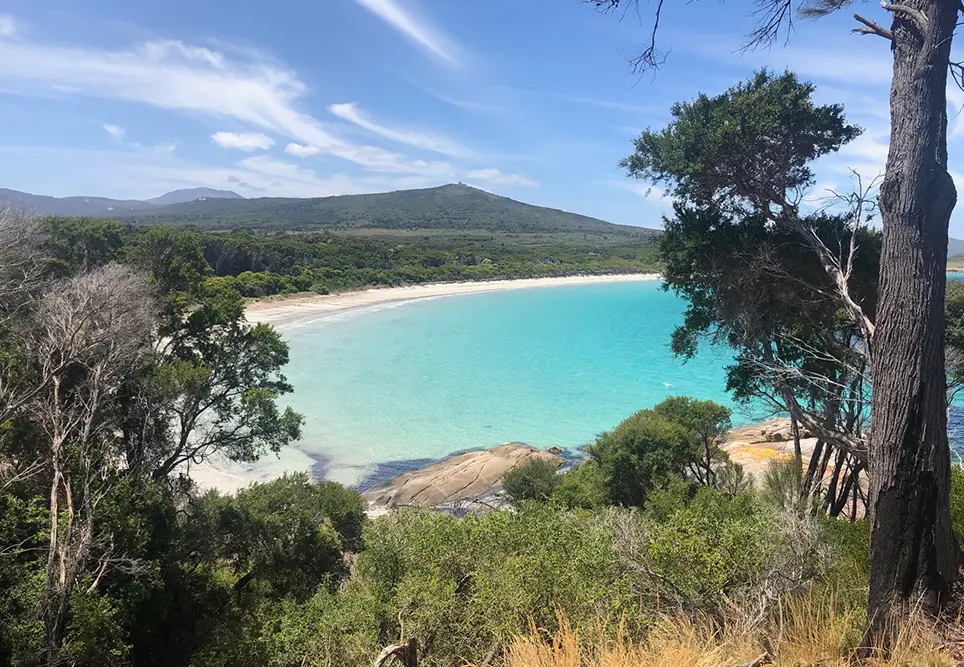
“As soon as you see the island out the plane window,” she says, “you think – how can I come back here?”
Now, three years later, Stephanie splits her time between Bicheno on Tasmania’s east coast and this small, isolated community of about 100 people, where she’s found purpose, challenge, and deep connection as the community’s Clinical Nurse Specialist. The clinic she works in sits within view of Strzelecki Mountain on neighbouring Flinders Island.
“It’s a spectacular setting,” she says, “but it’s the community and the work that make it so special.”
“It is an honour to come over here and I feel incredibly lucky. Like any kind of remote area nursing, your whole world expands in a way it never would otherwise.”
One of the most significant developments Stephanie has witnessed is the creation of the first Aboriginal and/or Torres Strait Islander Health Worker role within Tasmania’s state health system – right here on the island.
“In the NT, WA and SA, Aboriginal and/or Torres Strait Islander Health Workers are instrumental in the clinics. They’re not just part of the team – they’re the ones who make our presence appropriate and culturally safe. It validates the whole model of care.”
“It’s taken until 2022 to begin that journey in Tasmania, and I feel incredibly lucky to be part of it.”
Stephanie’s passion for supporting the development of this role is clear.
“It’s still evolving, but it’s vital. The island now has three permanent Aboriginal and/or Torres Strait Islander Health Workers and two casuals. I want to be an ally in that progress. It’s one of the most important things I can do.”
Stephanie’s path to remote nursing was shaped 15 years ago when she joined WA Country Health Service (WACHS) rotational programme.
“I realised how varied nursing was in remote communities. And with the hurdles of limited access to resources and other health professionals, it makes you more creative, you’re not just a cog in the hospital machine.
“I love being challenged and pushed to the maximum of my scope as a nurse, and it is deeply satisfying. You feel like you’re actually making a difference.”
“That experience changed everything,” she says.
“Tertiary care has its place, but it’s the last page in the book. I’m more interested in primary health – keeping people well, picking up issues early, before someone ends up in emergency with a heart attack.
“Someone might come in with early diabetes and not really understand the risks. But if you can work with them, if they want to engage, you can change the whole trajectory. That’s the most satisfying part for me.”
On returning to Tasmania from WA, Stephanie embarked on more study to give herself the skills she felt she needed for remote nursing. At the Royal Hobart Hospital, she undertook the Critical Care course, and followed up with postgraduate studies in International Health, with a strong focus on Indigenous health; Maternal and Child Health, and Emergency Nursing.
Before that first visit to Cape Barren Island three years ago, when she filled in at the clinic on a casual basis, Stephanie had spent time volunteering overseas and on remote sailing trips and working with the national locum assistance programme, Rural LAP, with stints in remote locations throughout Australia.
“This is the first time I’ve lived within a community for a long period of time, and I love being part of the community,” says Stephanie.
“I take my dog around to people’s homes, have yarns overlooking the beach, visit the school to chat with mums. When you’ve been here a while, people know you. You’re not just the clinic nurse – you’re part of their world.
“The ladies here are amazing. They make kelp baskets and long shell necklaces. Shells are treated and stripped back and look like motherof-pearl. We have a lot of fun.”
Stephanie’s commitment to upskilling hasn’t stopped, and CRANAplus has played a key role in that.
“The AREC course is a great crash course that refreshes you for those emergency presentations and advanced skills,” she says.
“And as a non-midwife, the MEC was an absolute lifesaver for me. When someone walks into the clinic and says, ‘I’m having my baby,’ you need to be ready.
“I’ve thanked the CRANAplus education midwives a thousand times. The skills they gave me were essential – and they made sure I could be calm and capable when it mattered.”
As a member of the CRANAplus Clinician Roundtable, Stephanie has also found professional solidarity and inspiration.
“It’s a privilege to be part of something that connects nurses across remote Australia. This island is incredibly isolated, and yet through the Roundtable, I’m in conversation with people working in Arnhem Land, the Kimberley, Cape York. It reminds you that you’re part of something bigger.”
Looking back, Stephanie says remote nursing has expanded her world in ways she never imagined.
“It’s not always easy – but you leave every week changed, and come back ready again.”
“And each time I see the island from the plane window, I feel that same pull all over again.”