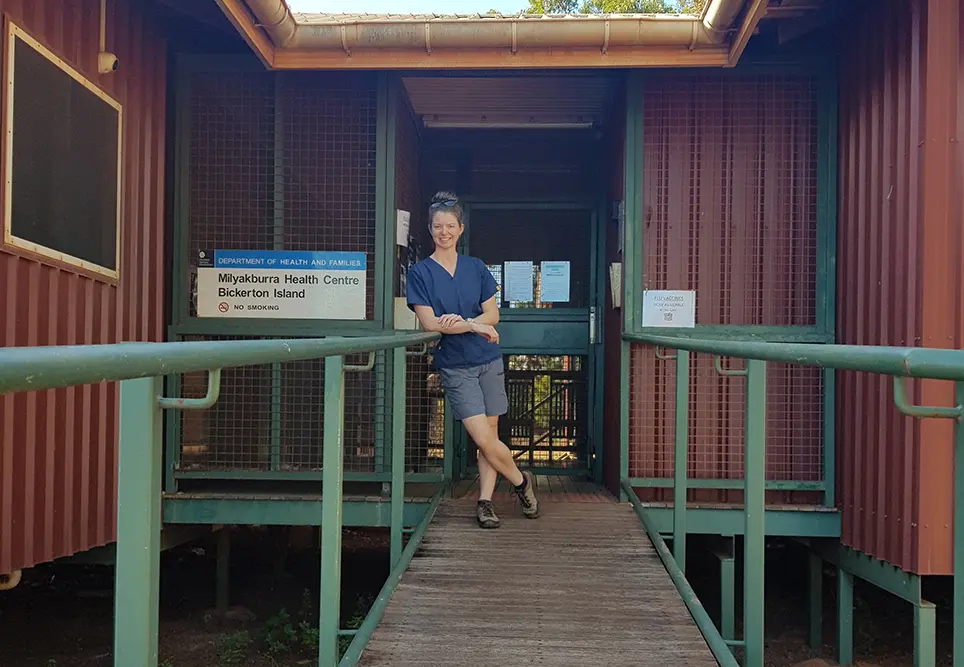
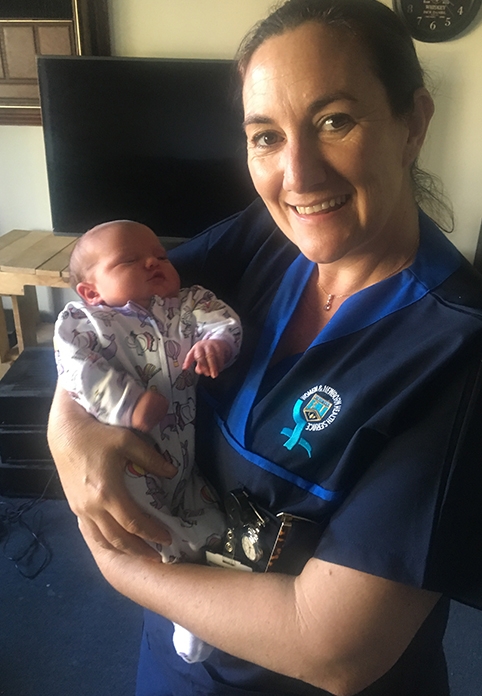
Beck Peck, Registered Nurse and Midwife, took full advantage of her CRANAplus Nurses Memorial Foundation of SA Grant to undertake the Advanced Life Support course with CRANAplus.
“The skills I learned in the ALS course are definitely something that will be very useful in the future,” says Beck, who is currently working in maternity at the Midwifery Group Practice in Broome in Western Australia as a graduate Midwife.
As an agency nurse, Beck has to pay for her own professional development in courses and study, which she is more than happy to do to maintain best practice standards and knowledge.
“I’ve done many CRANAplus courses and I find each one great,” she says. “I am involved in an organisation called Survive First Aid, helping to run five-day wilderness survival first aid training courses, and the ALS course will certainly be useful in passing on skills and sharing knowledge.”
Beck, from Perth in WA, has for many years worked in regional, rural and remote locations and, because her four daughters are now adults, she is stretching her reach further than a few hours from home.
During COVID-19 she bought herself a motorhome to undertake regional COVID-19 work on the road.
She has now swapped that motorhome for a Troopy – her sights still firmly set on nursing in more remote locations in the future.
Beck also does some short stints on her breaks from Broome in multi-purpose sites staffed by only two nurses per shift, using emergency telehealth services for back-up and Royal Flying Doctors for transfers.
“Those multi-purpose regional sites are always short-staffed and I enjoy the work in different locations seeing many parts of WA.”
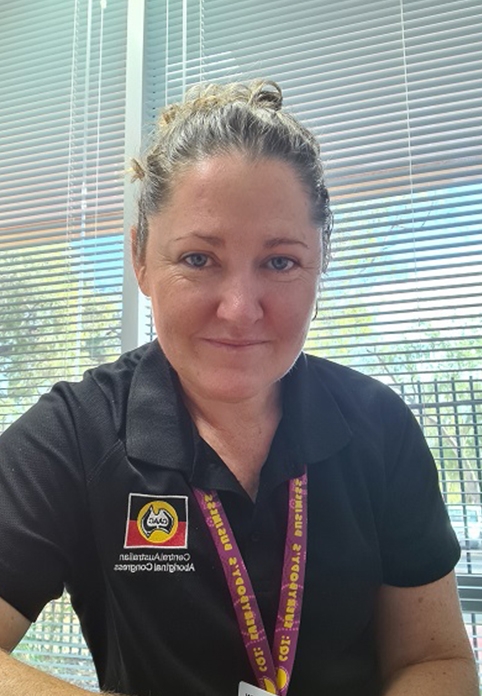
Michelle McGuirk, an Alice Springs girl, currently working for Central Australian Aboriginal Congress in the area of Continuous Quality Improvement, has used her grant to fund a Remote Emergency Care (REC) course, which is part of her plan to get back into clinical practice.
Michelle, a nurse since 2007, originally trained in the area of alcohol and drug misuse and worked at the Alice Springs hospital before moving into the hospital’s digital and telehealth arena.
“I recognised the paramount importance of good communication with remote communities and saw the benefits that digital and telehealth could provide,” she says.
“I am so glad we got the systems up and running before the pandemic. Digital health and telehealth are so important in keeping care plans on track, avoiding inconsistencies, providing essential care.”
Having been with the Congress for a year now, looking at quality assurance within systems, performance and resources for the Aboriginal Community Controlled Health Services, Michelle is keen to work in the organisation’s remote clinics. The Congress currently has five remote clinics but expansion is on the radar.
“I have wanted to get back into the clinical scope and into primary health care in particular for some time, and I’ve started doing some nursing shifts,” she says.
“I think CRANAplus is really well suited for someone like me who has specialised in a particular area and is ready to go back into clinical practice. The REC course was terrific, and I am now doing a lot of the CRANAplus assessment packages, completing as many as I can.
“By the end of the year, when the clinics are short-staffed, I hope to be out there.”
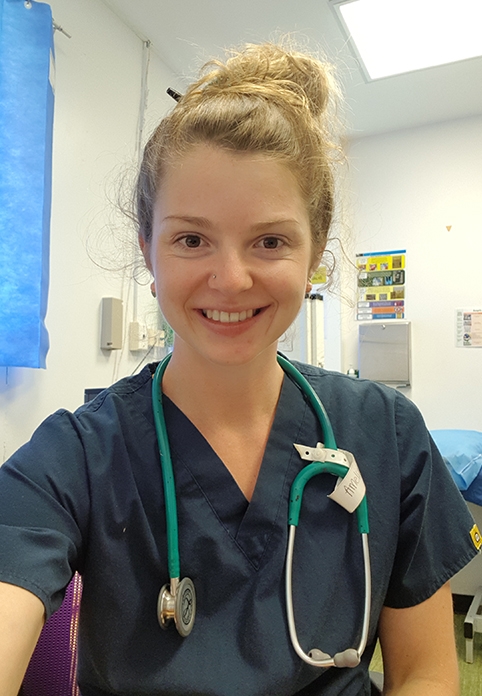
For Registered Nurse Amelia Robson, the grant money was used for a Remote Emergency Care (REC) course to maintain the remote skill set she developed over two years out on Groote Eylandt.
Amelia had moved to Nhulunbuy on the mainland to work in the rural hospital when she undertook the REC course in Darwin, and is now working in the regional town of Bunbury in WA.
“I will be stepping back into the remote space when the timing is right,” says Amelia.
“On Groote Eylandt, I was so fortunate to have a manager and a team who supported my transition to remote. I had excellent orientation, learned heaps about what it means to be a remote area nurse, and I was encouraged to do a number of courses as part of its New to Remote Program.
“I know of nurses who haven’t been so fortunate. And they don’t last. For me it was a gradual introduction, always working with someone else and a good six months before I was on-call.”
Amelia had worked in the emergency department in Darwin Hospital and was with WA Country Health Service before this post, but says it was very different to remote.
“I think the biggest difference as a RAN is that you need to think a lot more comprehensively for each patient,” she says.
“Using the CARPA manual and other resources you are expected to think and work at a higher level of practice. For each patient, you need to decide what assessments are required, what is the priority, what can be done opportunistically and what further advice or treatment pathways may be required by referring to the clinic GP, on-call Rural Medical Officer, or arranging for emergency evacuation.
“It’s a difficult transition, leaving remote. When you move out of that space you obviously have a lot of transferrable skills so I use them when I can. I have also chosen to close a few gaps in my skill set so am currently undertaking a Postgraduate Certificate in Emergency Nursing.
“That will be very useful when I get back into the rural or remote space.”