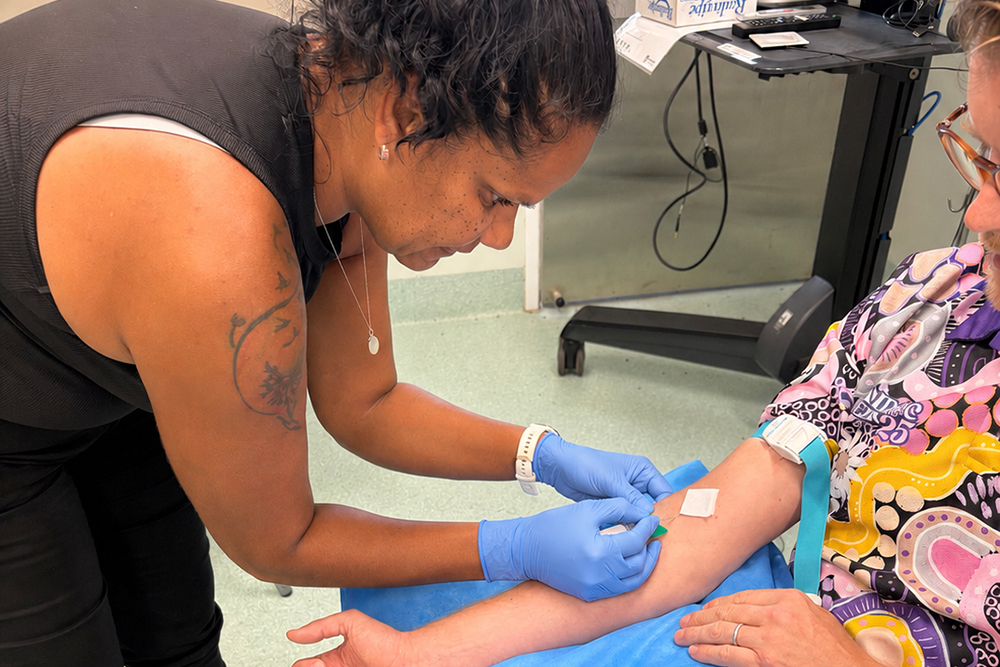
Pilot ‘Project Check Mate’ is taking a unique and sustainable approach to early skin cancer detection, by mobilising and upskilling regional nurses to assist local GPs in provisional diagnoses of skin cancer.
Recently awarded a grant from The Hospital Research Foundation, the pilot will launch in South Australia in early 2023 to address skin cancer screening barriers experienced in regional and remote Australia.
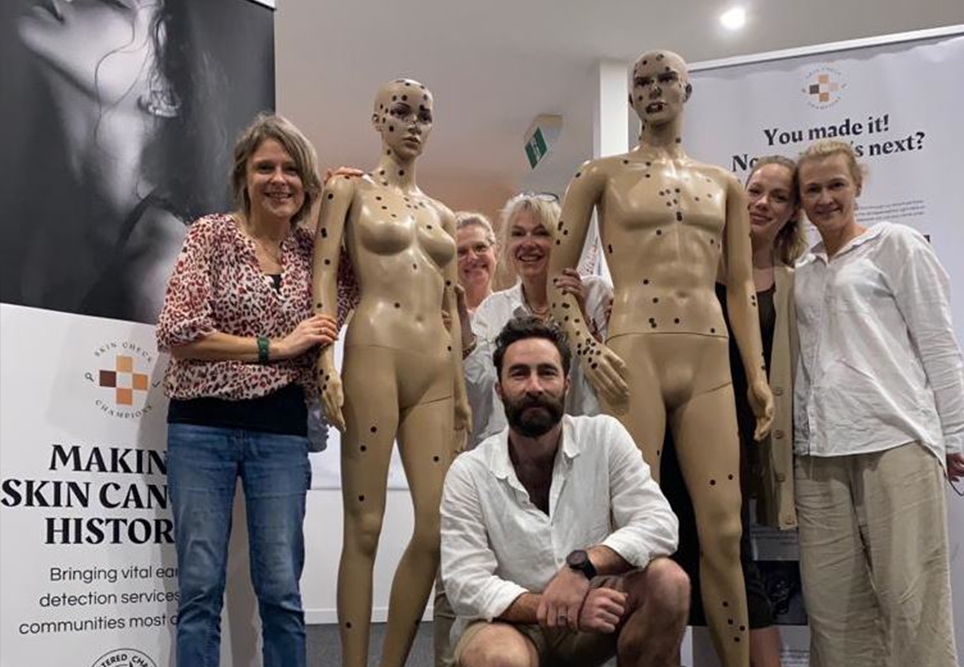
The funding was generously matched by health promotion charity Skin Check Champions, who for around 10 years have organised pop-up, nurse-led skin check clinics across Australia.
Greg Sharplin, Senior Research Fellow, emphasises that collaboration is at the heart of the project.
“Hopefully at the end of the pilot we can tell a really good story about how many checks we’ve conducted, how many potential lesions we picked up, and also how many nurses we were able to train,” he says.
Higher rates of skin cancer in regional Australia
Skin cancer rates are around 30 per cent higher in regional areas than they are in metropolitan areas. Barriers to having skin checks in regional and remote areas include distance, reduced access to services, and the demands and responsibilities of lifestyle taking precedence over health care.
In September of this year, at a Skin Check Champions’ pop-up screening in regional Queensland, nurses scanned 630 people and detected 300 lesions, and of those, 50+ lesions had features suspicious of Melanoma.
“Nurses have a real opportunity to own a bit of this space because no one’s really doing that work at all in regional areas,” says RBRC Director Prof. Marion Eckert.
“There are only around 550 dermatologists across the country, so it’s just not possible [for them to deliver the services that communities require].”
The nurse-led screening approach
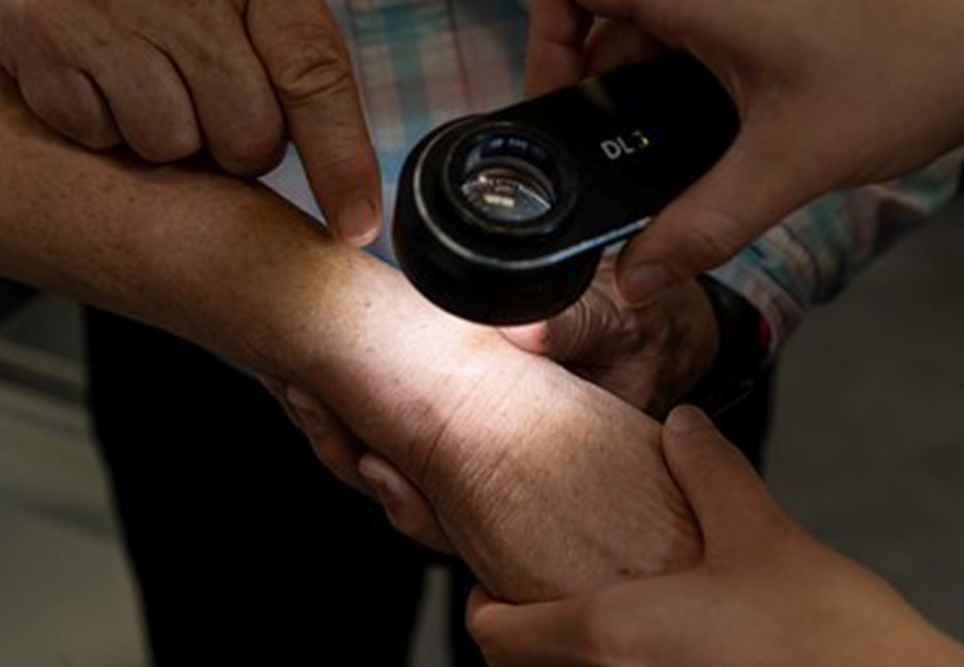
Nurses will be trained by Skin Smart Australia to use a dermatoscope, a handheld, non-invasive instrument that magnifies and illuminates the skin surface and allows for the visualisation of subsurface skin structures that are not visible to the naked eye. The instrument will capture digital images that can be forwarded to a GP or dermatologist to follow up, diagnose or monitor.
Skin cancers, as a primarily visual diagnosis, are considered one of the prime areas for technological health interventions. The pilot program will also be testing artificial intelligence (AI) to assist clinicians with provisional diagnoses.
Pop-up clinics will be established at three or four large regional events, in regional SA between 2023-24. Screening at each event will be free for anyone who would like to be checked, though there will be a strong focus on attracting high-risk groups including farmers, people who haven’t had a skin check before, and people who tend to work outside.
Melanoma Institute Australia’s 2022 State of the Nation – A Report into Melonoma, details a five-point strategy to achieving zero deaths from melanoma by 2030.
“One of their recommendations is that first of all, we need to have a standard of care for actually doing skin exams,” says Research Fellow Pam Adelson.
“We don’t have that in Australia. A lot of GPs don’t use a dermatoscope.
“[Pictures taken by it] can be transferred to a dermatologist, so it’s ideal, especially for those who are not located near services.”
An opportunity for rural and remote nurses to lead the way
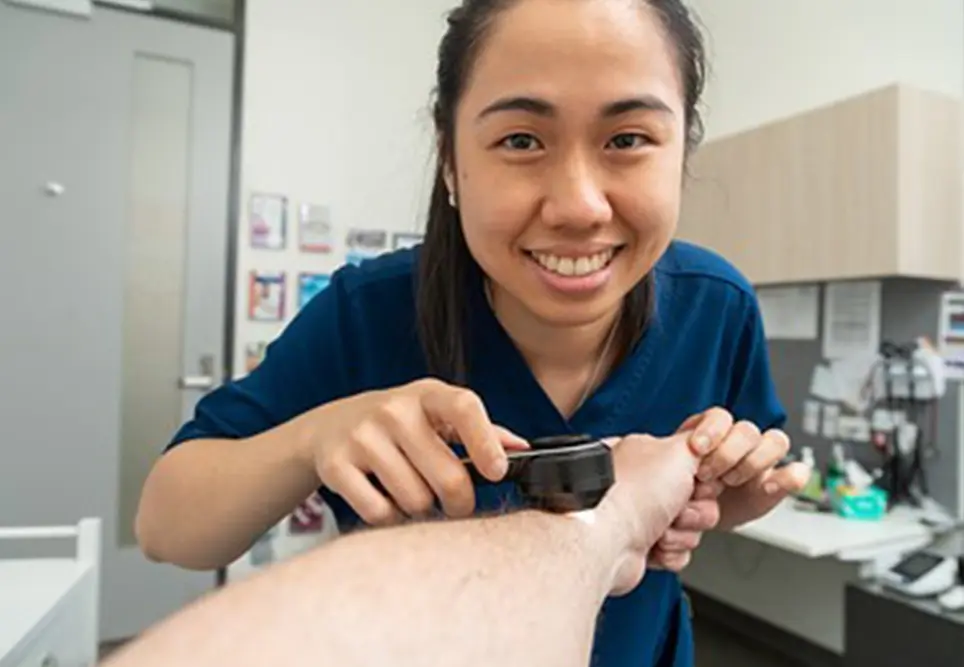
In partnership with Skin Smart Australia, UniSA also hopes to develop a skin cancer screening training program aimed to upskill regional and remote nurses.
“Dermatologists are largely city-based, and we know that GPs are stretched. Nurses [are] the largest workforce that can do dermoscopic assessments and take pictures with the dermatascope. So, we’re quite keen to upskill nurses who are interested in working independently and with their GPs,” says Pam.
If you’re a nurse working in a rural or remote location, and you’d like to learn more, please contact Marion at Marion.Eckert@unisa.edu.au